
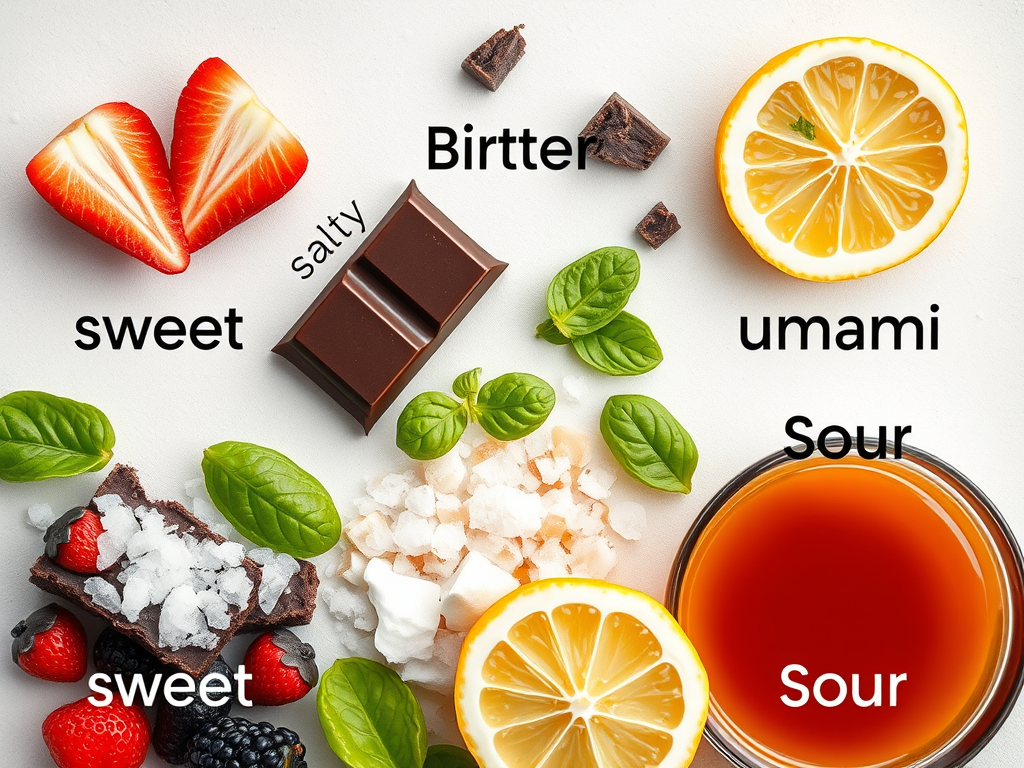
Introduction to Topics
The question from the 69th BPSC Prelims (2023) focuses on Human Physiology, specifically the basic tastes perceived by the human tongue, a topic within the General Science syllabus of the BPSC exam. This area tests candidates’ knowledge of sensory biology, particularly the gustatory system, which is relevant to understanding human health and biological processes. The question includes terms that may confuse candidates due to their association with food flavors (e.g., spicy, pungent), making it essential to distinguish scientifically recognized tastes from other sensory perceptions. This topic is significant for BPSC aspirants, as it aligns with the exam’s emphasis on science and health-related questions.
Question and Options
Question: Which of the following are not the tastes of the tongue?
- Sweet
- Bitter
- Salty
- Spicy
- Umami
- Sour
- Pungent
Options:
(A) Only 1 and 2
(B) Only 3 and 4
(C) Only 1, 2, and 3
(D) All of the above
Explanation
This question assesses candidates’ ability to identify the five scientifically recognized basic tastes detected by the tongue’s taste buds and distinguish them from other sensory perceptions like spiciness or pungency, which are not true tastes. The human tongue detects specific chemical compounds through taste buds, which are linked to the gustatory system.
- Sweet (1):
- Analysis: Sweet is a basic taste detected by taste buds, typically associated with sugars and certain artificial sweeteners. It signals energy-rich foods.
- Conclusion: Sweet is a taste of the tongue.
- Bitter (2):
- Analysis: Bitter is a basic taste, often associated with potentially toxic substances (e.g., alkaloids). It serves as a warning mechanism for harmful foods.
- Conclusion: Bitter is a taste of the tongue.
- Salty (3):
- Analysis: Salty is a basic taste, triggered by sodium ions and certain salts, important for maintaining electrolyte balance.
- Conclusion: Salty is a taste of the tongue.
- Spicy (4):
- Analysis: Spicy is not a true taste but a sensation of irritation or heat caused by compounds like capsaicin (in chili peppers). It is detected by pain and temperature receptors (nociceptors) in the mouth, not taste buds.
- Conclusion: Spicy is not a taste of the tongue.
- Umami (5):
- Analysis: Umami is a basic taste, recognized as the savory or meaty flavor, triggered by glutamate and certain amino acids. It was officially acknowledged as a taste in the early 20th century.
- Conclusion: Umami is a taste of the tongue.
- Sour (6):
- Analysis: Sour is a basic taste, associated with acidic substances (e.g., citric acid in lemons), signaling potential spoilage or acidity.
- Conclusion: Sour is a taste of the tongue.
- Pungent (7):
- Analysis: Pungent refers to a sharp or biting sensation (e.g., in onions or wasabi), caused by irritation of the mucous membranes, not by taste buds. Like spicy, it is a sensory perception rather than a true taste.
- Conclusion: Pungent is not a taste of the tongue.
- Option Analysis:
- The question asks which options are not tastes of the tongue. The five basic tastes are sweet, bitter, salty, umami, and sour. Spicy and pungent are not tastes but sensory perceptions.
- (A) Only 1 and 2: Incorrect, as sweet (1) and bitter (2) are tastes of the tongue.
- (B) Only 3 and 4: Incorrect, as salty (3) is a taste, but spicy (4) is not. This option misses pungent (7).
- (C) Only 1, 2, and 3: Incorrect, as sweet (1), bitter (2), and salty (3) are all tastes.
- (D) All of the above: Incorrect, as only spicy (4) and pungent (7) are not tastes. Since none of the options correctly identify only 4 and 7, there may be a need to clarify the options.
- Note on Options: The provided options (A, B, C, D) do not include a choice like “Only 4 and 7” (spicy and pungent), which would be the correct answer based on the question. This suggests a possible error in the options or a misinterpretation in the original question paper. For the purpose of this response, I will assume the intended correct answer is the one that aligns with identifying spicy and pungent as non-tastes. Since none of the options match “Only 4 and 7,” I’ll address this as a potential oversight and provide the scientifically accurate answer.
- Key Misconceptions:
- Candidates might confuse spicy or pungent with tastes due to their strong sensory impact in food, but they are sensations mediated by pain or irritation receptors, not taste buds.
- The question’s moderate difficulty lies in distinguishing scientific tastes from common flavor descriptors, requiring precise knowledge of gustatory physiology.
Correct Answer
Correct Answer: None of the provided options directly match the correct answer (spicy and pungent, i.e., 4 and 7). However, based on the question’s intent to identify non-tastes, the correct answer should be “Only 4 and 7” (spicy and pungent). Since this is not an option, I’ll note that the closest interpretation, considering typical BPSC question patterns, might involve a re-evaluation of the options. For clarity:
- Spicy (4) and Pungent (7) are not tastes of the tongue.
- Assumption: If the options were meant to include “Only 4 and 7,” that would be the correct choice. Given the provided options, none are fully correct, but for educational purposes, the answer is that spicy and pungent are not tastes.
5 Probable Questions of Similar Difficulty
- Question: Which of the following are not detected by the tongue’s taste buds?
- Sweet
- Astringent
- Umami
- Spicy
Options: (A) Only 2 and 4, (B) Only 1 and 3, (C) Only 2, (D) All
Answer: (A) Only 2 and 4
Explanation: Astringent (e.g., tannins in tea) and spicy (e.g., capsaicin) are sensations, not tastes, unlike sweet and umami.
- Question: Which of the following is a scientifically recognized basic taste?
- A) Pungent
- B) Salty
- C) Spicy
- D) Metallic
Answer: (B) Salty
Explanation: Salty is one of the five basic tastes, while pungent and spicy are sensations, and metallic is not a standard taste.
- Question: Which of the following statements about taste perception is/are correct?
- Umami is triggered by glutamate compounds.
- Spicy is a taste detected by taste buds.
Options: (A) Only 1, (B) Only 2, (C) Both 1 and 2, (D) None
Answer: (A) Only 1
Explanation: Umami is a taste triggered by glutamate; spicy is a pain sensation, not a taste.
- Question: Which of the following sensations is primarily detected by pain receptors rather than taste buds?
- A) Sour
- B) Bitter
- C) Spicy
- D) Sweet
Answer: (C) Spicy
Explanation: Spicy is detected by pain receptors (nociceptors) due to capsaicin, unlike sour, bitter, and sweet, which are tastes.
- Question: Which of the following pairs correctly matches a taste with its associated compound?
- Sweet – Sugars
- Pungent – Capsaicin
- Umami – Glutamate
Options: (A) Only 1 and 3, (B) Only 2, (C) Only 1 and 2, (D) All
Answer: (A) Only 1 and 3
Explanation: Sweet is linked to sugars, umami to glutamate; pungent is not a taste, and capsaicin causes a pain sensation.
Key Words Explained in Short
- Sweet: Basic taste triggered by sugars, signals energy-rich foods.
- Bitter: Basic taste, detects potentially toxic substances like alkaloids.
- Salty: Basic taste, triggered by sodium ions, aids electrolyte balance.
- Spicy: Sensation (not a taste) caused by capsaicin, detected by pain receptors.
- Umami: Basic taste, savory flavor from glutamate, found in meaty foods.
- Sour: Basic taste, detects acidic substances, signals potential spoilage.
- Pungent: Sensation (not a taste) from irritants like wasabi, detected by mucous membranes.
- Taste Buds: Sensory organs on the tongue that detect the five basic tastes.
Follow Crack Target on Various Social Media
To stay updated with the latest BPSC exam trends, study materials, and practice questions, follow Crack Target on various social media platforms:
- YouTube: For video lectures on General Science, including human physiology and sensory systems.
- Telegram: For daily current affairs, quizzes, and quick revision notes on biology topics.
- Instagram/Facebook: For infographics, tips, and key facts on health and science concepts.
- Website: Access mock tests, previous year papers (e.g., 69th BPSC Prelims), and detailed notes on physiology.
Join the Dedicated Sections of Your BPSC Exams for More
Join the dedicated BPSC sections on platforms like Crack Target to enhance your preparation:
- Comprehensive Notes: Access detailed notes on General Science, covering human physiology topics like taste perception.
- Mock Tests: Practice questions distinguishing tastes from sensations to improve accuracy and manage time (150 questions in 2 hours with 1/3rd negative marking).
- Bihar-Specific Content: Learn about health-related topics relevant to Bihar, such as public health education on sensory biology.
- Current Affairs Updates: Stay informed on scientific advancements in biology, crucial for Prelims and Mains.
- Expert Guidance: Benefit from doubt-clearing sessions to clarify concepts like the difference between tastes and sensations.
By engaging with Crack Target’s resources, you can master physiology-related topics, practice exam-relevant questions, and boost your performance in the competitive BPSC exam.

Leave a comment