
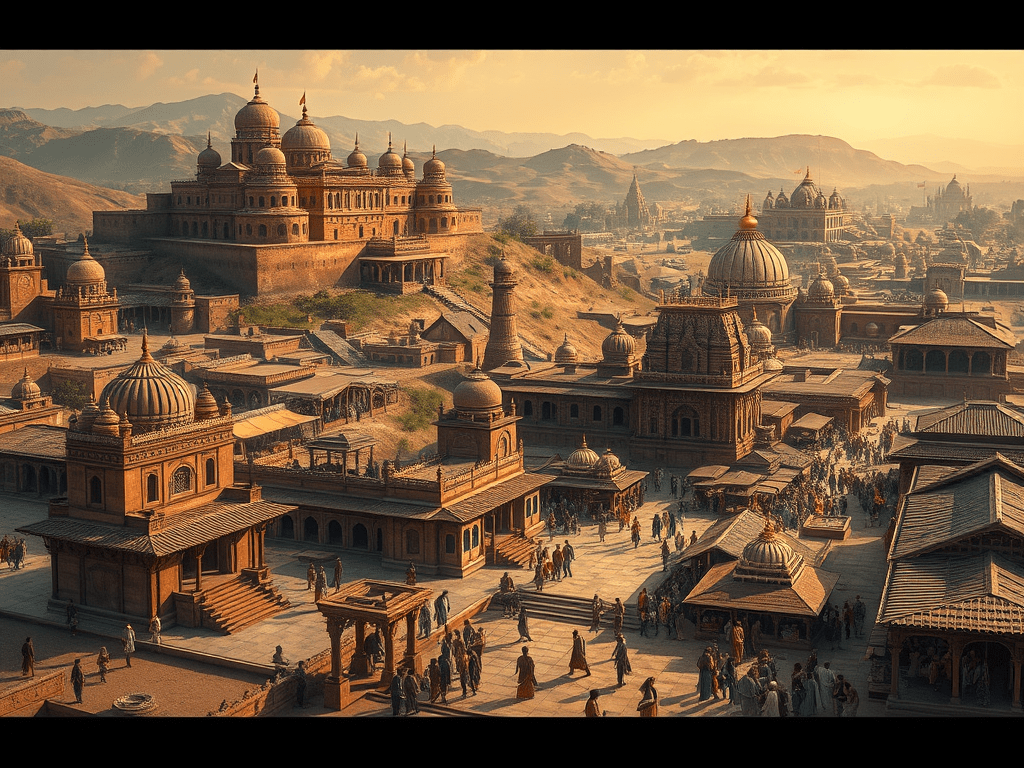
The Haryanka Dynasty was the first historically documented ruling dynasty of the Magadha kingdom, one of the sixteen Mahajanapadas in ancient India. Centered in the Gangetic plains, with capitals at Rajagriha (modern Rajgir, Bihar) and later Pataliputra (modern Patna), the Haryanka Dynasty played a pivotal role in establishing Magadha as the dominant power in northern India. This period, marked by political consolidation, military expansion, and cultural developments, laid the foundation for subsequent empires like the Nanda and Mauryan dynasties. Below is a detailed exploration of the Haryanka Dynasty, its rulers, achievements, social and economic context, and legacy.
1. Historical and Geographical Context
The Haryanka Dynasty emerged during the Mahajanapada period (c. 600–321 BCE), a time of political fragmentation and urbanization in northern India. Magadha’s strategic location in the fertile Gangetic plains, rich in resources like iron and timber, and its access to trade routes, made it a natural center for expansion.
Key Features:
- Geography: Magadha encompassed modern-day southern Bihar, with control extending to parts of eastern Uttar Pradesh and Bengal by the dynasty’s end.
- Capitals:
- Rajagriha: A fortified city surrounded by hills, serving as the primary capital.
- Pataliputra: Established as a secondary capital under later Haryankas, becoming the main seat under subsequent dynasties.
- Timeline: c. 544–413 BCE, though exact dates vary slightly in sources like Buddhist, Jain, and Puranic texts.
- Significance: The dynasty’s rulers, notably Bimbisara and Ajatashatru, transformed Magadha into a regional superpower through diplomacy, conquest, and administrative innovations.
2. Origins and Sources
The Haryanka Dynasty’s name is derived from Haryanka, possibly the clan or family name of its founder, Bimbisara, though some sources link it to an earlier figure, Bhattiya. Historical information comes from:
- Buddhist Texts: Anguttara Nikaya, Mahavamsa, and Digha Nikaya provide details on rulers and their interactions with the Buddha.
- Jain Texts: Bhagavati Sutra and other texts highlight the dynasty’s patronage of Jainism.
- Puranas: Offer genealogical accounts, though often mythologized.
- Archaeological Evidence: Excavations at Rajagriha and Pataliputra reveal fortifications and urban growth.
3. Rulers of the Haryanka Dynasty
The Haryanka Dynasty is best known for its three major rulers: Bimbisara, Ajatashatru, and Udayin, followed by weaker successors.
a) Bimbisara (c. 544–492 BCE)
- Background: Regarded as the founder or consolidator of the dynasty, Bimbisara (also called Shrenika in Jain texts) ascended the throne at age 15.
- Achievements:
- Territorial Expansion: Annexed Anga (modern Bhagalpur, Bihar), a key trade hub, strengthening Magadha’s economy.
- Diplomacy: Forged marriage alliances with:
- Kosala (married Princess Kosaladevi, sister of King Prasenajit, securing Sravasti as dowry).
- Licchavis (married Vaishali princesses, including Chellana, mother of Ajatashatru).
- Madra (married a princess from Punjab).
- Administration: Introduced a systematic bureaucracy, with officials like gramakas (village heads) and a council of ministers. Strengthened Rajagriha’s fortifications.
- Patronage: Supported Buddhism (met the Buddha before his enlightenment) and Jainism (patronized Mahavira), fostering religious diversity.
- Death: Imprisoned and possibly killed by his son Ajatashatru, who usurped the throne, according to Buddhist and Jain accounts.
b) Ajatashatru (c. 492–460 BCE)
- Background: Son of Bimbisara and Chellana, Ajatashatru (also Kunika in Jain texts) was an ambitious and militaristic ruler.
- Achievements:
- Military Conquests:
- Defeated the Vajji Confederacy (Licchavis of Vaishali) after a prolonged war, using innovative weapons like the mahashilakantaka (catapult) and ratha-musala (scythed chariot).
- Fought Kosala to reclaim territories, eventually annexing parts of it after Prasenajit’s death.
- Fortifications: Strengthened Rajagriha and built a fort at Pataliputra to counter invasions.
- Religious Patronage: Initially a Jain follower, he later embraced Buddhism, convening the First Buddhist Council at Rajagriha (c. 483 BCE) to preserve the Buddha’s teachings after his death.
- Diplomacy: Maintained relations with Gandhara and Kamboja, expanding Magadha’s influence.
- Military Conquests:
- Legacy: His aggressive policies made Magadha the dominant Mahajanapada, though his patricide tainted his reputation in some sources.
c) Udayin (c. 460–444 BCE)
- Background: Son of Ajatashatru, Udayin is credited with consolidating Magadha’s gains.
- Achievements:
- Pataliputra: Established Pataliputra as the new capital, leveraging its strategic location at the confluence of the Ganges and Son rivers.
- Expansion: Continued conflicts with Avanti and other neighbors, maintaining Magadha’s supremacy.
- Administration: Strengthened the bureaucracy and trade networks.
- Death: Assassinated, possibly due to internal conspiracies, marking the beginning of dynastic instability.
d) Later Rulers (c. 444–413 BCE)
- Anuruddha, Munda, and Nagasena/Darshaka: Weak successors who faced internal revolts and declining authority.
- End of Dynasty: The Haryankas were overthrown by Shishunaga, a minister or general, who founded the Shishunaga Dynasty (c. 413–345 BCE). Some sources suggest public discontent or a coup led to the dynasty’s fall.
4. Social Structure
The Haryanka Dynasty operated within the social framework of the Mahajanapada period, with Magadha reflecting Vedic and emerging urban influences.
a) Varna System
- The fourfold varna system (Brahmins, Kshatriyas, Vaishyas, Shudras) was entrenched:
- Brahmins: Served as priests, advisors, and scholars, benefiting from royal patronage.
- Kshatriyas: Included the ruling elite and military class, with the Haryanka kings as Kshatriyas.
- Vaishyas: Engaged in agriculture, trade, and commerce, forming the economic backbone.
- Shudras: Performed manual labor, with limited social mobility.
- Jati (caste): Occupational groups solidified, with merchants (shreshthins) and artisans gaining prominence.
b) Family and Gender
- Patriarchal families were led by the grihapati (householder), managing land and trade.
- Gotra rules governed marriage alliances, as seen in Bimbisara’s strategic marriages.
- Women’s status: Declined from the Vedic period, with roles largely domestic. However, royal women like Kosaladevi influenced diplomacy.
c) Urban Elites
- The rise of cities like Rajagriha and Pataliputra created a new class of wealthy merchants and administrators.
- Guilds (shrenis) organized artisans and traders, regulating economic activities.
5. Economic Life
a) Agriculture
- Magadha’s fertile plains supported surplus production of rice, wheat, and barley, aided by iron tools and irrigation.
- The grihapati managed large estates, employing Shudras and slaves.
b) Trade
- Magadha controlled key trade routes along the Ganges, connecting to ports like Champa (Anga).
- Goods included textiles, metals, and grains, traded with Gandhara, Kosala, and beyond.
- Punch-marked coins (silver and copper) emerged, facilitating commerce.
c) Urbanization
- Rajagriha was a fortified city with cyclopean walls, while Pataliputra grew into a major metropolis.
- Archaeological finds (e.g., Northern Black Polished Ware) indicate advanced craftsmanship and urban planning.
6. Political and Military Achievements
a) Administration
- The Haryankas introduced a centralized bureaucracy, with officials overseeing taxation, justice, and public works.
- Bali (tribute) and land taxes funded the state, supporting military and urban development.
- Village councils (gramakas) linked rural areas to the central authority.
b) Military Innovations
- Ajatashatru’s use of siege weapons and fortifications marked a shift to professional warfare.
- Magadha maintained a standing army, including infantry, cavalry, chariots, and elephants.
c) Diplomacy
- Bimbisara’s marriage alliances reduced conflicts and secured resources.
- Ajatashatru’s conquests, though aggressive, established Magadha’s hegemony.
7. Cultural and Religious Significance
a) Patronage of Religions
- Buddhism: Bimbisara and Ajatashatru supported the Buddha, with Magadha hosting key events like the First Buddhist Council. Rajagriha’s Saptaparni Cave was the council’s venue.
- Jainism: Both rulers patronized Mahavira, with Magadha being a center for Jain teachings.
- Vedic Religion: Continued to thrive, with Brahmins conducting rituals and composing texts.
b) Intellectual Developments
- Magadha attracted scholars, with debates on philosophy and governance shaping early Indian thought.
- The period saw the compilation of later Vedic texts and early Buddhist/Jain scriptures.
c) Urban Culture
- Cities like Rajagriha and Pataliputra fostered art, architecture, and literature, with stupas and monasteries emerging under Buddhist patronage.
8. Decline and Legacy
a) Decline
- The Haryanka Dynasty weakened after Udayin due to:
- Internal conspiracies and assassinations.
- Incompetent successors unable to maintain control.
- The dynasty was overthrown by Shishunaga, marking the rise of the Shishunaga Dynasty.
b) Legacy
- Political Foundation: The Haryankas established Magadha as India’s preeminent power, paving the way for the Nanda and Mauryan empires.
- Urban Centers: Pataliputra became the capital of subsequent empires, enduring as a political hub.
- Religious Impact: Support for Buddhism and Jainism helped spread these faiths across Asia.
- Administrative Model: The dynasty’s bureaucracy influenced later Indian statecraft, notably in the Mauryan Arthashastra.
9. Challenges in Studying the Haryanka Dynasty
- Textual Bias: Buddhist and Jain sources glorify their patrons, while Puranas mix myth and history.
- Chronological Uncertainty: Exact dates for rulers vary across sources, complicating timelines.
- Archaeological Gaps: Rajagriha and Pataliputra yield evidence, but early Haryanka remains are sparse.
10. Suggested Further Reading
- Primary Sources:
- Anguttara Nikaya, Mahavamsa (Buddhist texts).
- Bhagavati Sutra (Jain text).
- Vishnu Purana for genealogies.
- Secondary Sources:
- A History of Ancient and Early Medieval India by Upinder Singh.
- The Oxford History of India by Vincent A. Smith.
- Magadha by R.C. Majumdar.
- Online Resources:
- Ancient India section on JSTOR.
- Archaeological Survey of India (ASI) reports on Rajgir and Patna.
11. Conclusion
The Haryanka Dynasty was a transformative force in ancient India, elevating Magadha from a Mahajanapada to a regional superpower. Through the visionary leadership of Bimbisara, the military prowess of Ajatashatru, and the administrative foresight of Udayin, the dynasty laid the groundwork for India’s imperial age. Its patronage of Buddhism and Jainism, urban development, and political innovations left a lasting legacy, shaping the cultural and political landscape of the subcontinent. Despite its brief rule, the Haryanka Dynasty’s contributions were foundational to the rise of classical Indian civilization.

Leave a comment