
Overview
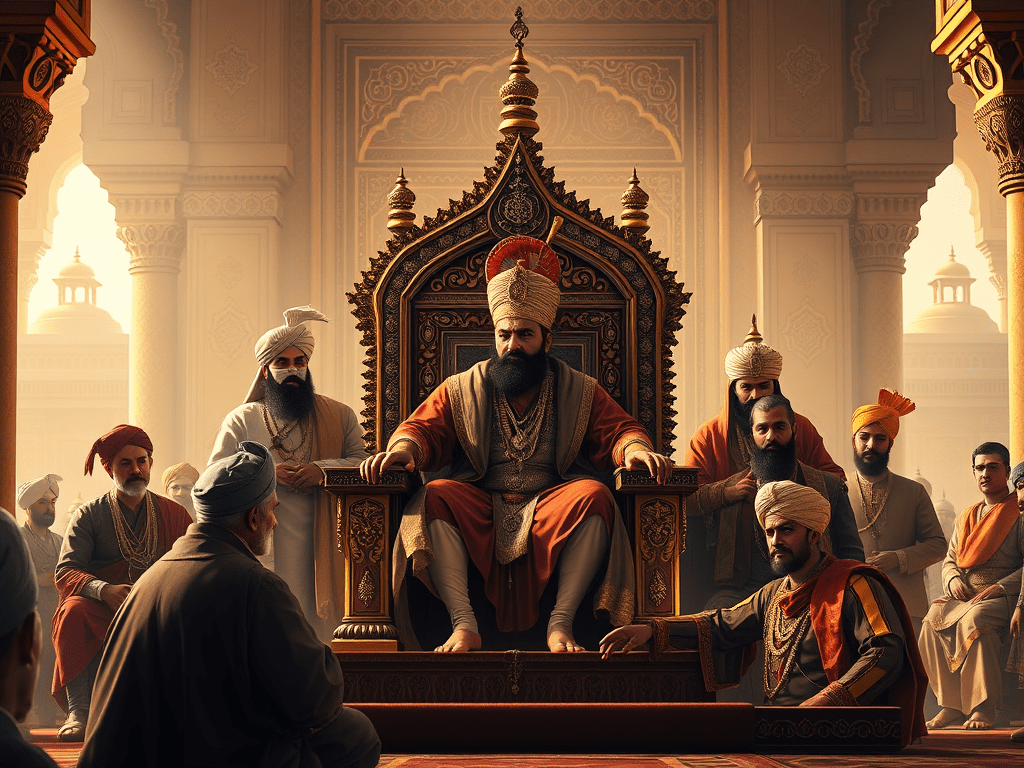
The Delhi Sultanate (1206–1526 CE), comprising the Slave (1206–1290 CE), Khalji (1290–1320 CE), Tughlaq (1320–1414 CE), Sayyid (1414–1451 CE), and Lodi (1451–1526 CE) dynasties, established a centralized Islamic administration in northern India, blending Persian, Turkish, and Indian elements. Its administrative system evolved from the Mamluk period’s rudimentary structure to a sophisticated framework under the Khaljis and Tughlaqs, with later adjustments by the Sayyids and Lodis. Key features included the iqta system, centralized revenue collection, a standing army, and Sharia-based judiciary, adapted to India’s diverse socio-cultural context.
For UPSC, this is a core topic in Medieval Indian History (Prelims) and Governance/Culture (Mains GS Paper I).
For BPSC, the Sultanate’s administration is relevant for its impact on Bihar, a key province integrated through iqtas and Sufi influence.
1. Central Administration
- Sultan:
- Supreme authority, considered Zill-i-Ilahi (Shadow of God), blending Persian divine kingship with Islamic caliphal legitimacy.
- Roles: Military commander, lawgiver, and chief judge; issued firmans (royal decrees).
- Key Dynasties’ Approach:
- Slave: Iltutmish (1211–1236 CE) gained Abbasid Caliph’s recognition (1231 CE).
- Khalji: Alauddin (1296–1316 CE) centralized power, curbed nobles.
- Tughlaq: Firoz Shah (1351–1388 CE) enforced Sharia strictly.
- Lodi: Sikandar Lodi (1489–1517 CE) balanced Afghan tribal loyalty with centralized rule.
- Council of Ministers (Majlis-i-Khalwat):
- Advised Sultan, included nobles (umara) and officials.
- Key Departments:
- Diwan-i-wizarat: Finance and revenue, headed by wazir (prime minister).
- Managed treasury (bait-ul-mal), revenue collection, and audits.
- Diwan-i-arz: Military, headed by ariz-i-mamalik.
- Oversaw recruitment, salaries, and equipment; formalized by Alauddin Khalji.
- Diwan-i-insha: Correspondence, headed by dabir-i-khas.
- Drafted firmans, maintained records.
- Diwan-i-risalat: Religious affairs and foreign relations, headed by sadr-us-sudur.
- Managed grants (inams, waqfs) and jizya collection.
- Special Departments:
- Diwan-i-amir kohi (Muhammad bin Tughlaq): Agriculture, failed experiment.
- Diwan-i-khairat (Firoz Shah Tughlaq): Charity, welfare.
- Diwan-i-wizarat: Finance and revenue, headed by wazir (prime minister).
- Nobles (Umara):
- Turkish (Slave, Khalji), Afghan (Lodi), or Indian Muslims; Chahalgani (40 nobles under Iltutmish) influential but later curbed (Alauddin, Balban).
- Held iqtas (land grants) or served as governors.
- Bihar Connection:
- Bihar’s governors reported to diwan-i-wizarat for revenue and diwan-i-arz for military contributions.
- Sadr-us-sudur oversaw Sufi grants in Bihar (e.g., Maner Sharif).
Details to Memorize:
- Sultan: Zill-i-Ilahi, firmans.
- Departments: Diwan-i-wizarat (wazir), diwan-i-arz (ariz), diwan-i-insha, diwan-i-risalat.
- Nobles: Chahalgani (Slave), curbed by Alauddin.
- Bihar: Revenue, military, Sufi grants.
2. Provincial Administration
- Structure:
- Divided into wilayats (provinces), shiqs (districts), and parganas (sub-districts).
- Governors (wali, muqti, or amir) managed provinces, responsible for revenue, law, and military.
- Iqta System:
- Land grants (iqtas) assigned to nobles (iqtadars) for military service and revenue collection.
- Types:
- Large iqtas: Provincial governorships (e.g., Bihar, Bengal).
- Small iqtas: Supported soldiers or officials.
- Evolution:
- Slave: Iltutmish formalized iqta for loyalty (e.g., Bihar under Lakhnauti).
- Khalji: Alauddin tightened control, audited iqtadars to prevent autonomy.
- Tughlaq: Muhammad expanded iqtas; Firoz made them hereditary, weakening central authority.
- Lodi: Bahlol and Sikandar Lodi re-centralized, but Afghan tribalism persisted.
- Revenue from iqtas remitted to Delhi after deducting expenses (khidmat).
- Local Officials:
- Shiqdar: District officer, maintained law and order.
- Amil: Revenue collector at pargana level.
- Muqaddam: Village headman, liaised with state.
- Bihar Connection:
- Bihar as a major iqta (often with Bengal, e.g., Lakhnauti).
- Governors (e.g., Bakhtiyar Khalji’s successors) managed Bihar’s revenue and troops.
- Jaunpur (Tughlaq, 1359 CE) later influenced Bihar’s administration.
Details to Memorize:
- Structure: Wilayats, shiqs, parganas.
- Iqta: Iltutmish (formalized), Alauddin (audited), Firoz (hereditary).
- Officials: Wali, shiqdar, amil, muqaddam.
- Bihar: Iqta (Lakhnauti), Jaunpur.
3. Revenue System
- Sources:
- Kharaj: Land tax, main revenue source (20–50% of produce).
- Slave: Iltutmish standardized.
- Khalji: Alauddin raised to 50% in Doab, measured land (masahat).
- Tughlaq: Muhammad’s high kharaj caused revolts; Firoz reduced, based on Sharia.
- Jizya: Poll tax on non-Muslims, varied enforcement.
- Slave: Introduced but not strict.
- Tughlaq: Firoz enforced on Brahmins, alienated Hindus.
- Zakat: Religious tax on Muslims (2.5% of wealth).
- Khums: 1/5th of war booty, per Islamic law.
- Other Taxes:
- Ghari (house), charai (pasturage): Imposed by Alauddin, abolished by Firoz.
- Trade duties, irrigation cess (haq-i-sharb).
- Kharaj: Land tax, main revenue source (20–50% of produce).
- Collection:
- Direct by state officials (amil) or through iqtadars.
- Village headmen (muqaddams, khuts) assisted but curbed by Alauddin.
- Land surveys (masahat): Alauddin and Muhammad, often resisted.
- Grants:
- Brahmadeya/inams: To scholars, Sufis.
- Waqf: For mosques, madrasas.
- Madad-i-maash: Tax-free land for religious institutions (Firoz).
- Innovations:
- Muhammad bin Tughlaq: Token currency (1329–1332 CE, bronze for silver tanka), failed due to counterfeiting.
- Firoz Shah: Canals (e.g., Yamuna to Hissar), boosted agriculture.
- Bihar Connection:
- Bihar’s fertile lands contributed significant kharaj.
- Firoz’s canals and madad-i-maash supported Bihar’s Sufi centers (e.g., Maner Sharif).
Details to Memorize:
- Taxes: Kharaj (50% Alauddin), jizya (Firoz), zakat, khums.
- Collection: Amil, muqaddam, masahat.
- Grants: Waqf, madad-i-maash.
- Innovations: Token currency, canals.
- Bihar: Kharaj, Sufi grants.
4. Military Administration
- Structure:
- Centralized army: Cavalry (Turkish horse archers), infantry, elephants.
- Maintained by treasury and iqta revenues.
- Key Features:
- Standing Army:
- Slave: Iltutmish organized; Balban strengthened.
- Khalji: Alauddin expanded (~300,000 troops), paid in cash.
- Tughlaq: Muhammad maintained large army; Firoz relied on iqtadars.
- Reforms:
- Alauddin: Dagh (horse branding), chehra (soldier records), huliya (descriptive rolls).
- Balban: Created diwan-i-arz (military department).
- Forts: Delhi (Siri, Tughlaqabad), Chittor, Lahore; defended against Mongols.
- Navy: Limited, used for coastal campaigns (e.g., Gujarat).
- Standing Army:
- Recruitment:
- Turkish and Afghan elites, Indian slaves (bandagan), and mercenaries.
- Hindus included as warriors (e.g., Rajputs under Alauddin).
- Bihar Connection:
- Bihar supplied troops for campaigns (e.g., Bengal, Deccan).
- Forts in Bihar (e.g., Rohtas) strengthened under Sultanate governors.
Details to Memorize:
- Army: Cavalry, standing army.
- Reforms: Dagh, chehra (Alauddin), diwan-i-arz (Balban).
- Forts: Siri, Tughlaqabad.
- Bihar: Troop supply, forts.
5. Judicial System
- Basis:
- Sharia (Islamic law) for Muslims, applied through Hanafi school.
- Customary law for Hindus, managed by panchayats.
- Key Officials:
- Qazi-ul-quzat: Chief judge, oversaw Sharia courts.
- Muhtasib: Enforced moral laws (e.g., banned alcohol, gambling).
- Kotwal: Urban police chief, maintained law and order in cities.
- Judiciary:
- Sultan as highest appellate authority.
- Provincial qadis and local panchayats handled disputes.
- Punishments: Firozharsh (Sharia), e.g., mutilation; Alauddin pragmatic, used deterrence.
- Dynastic Variations:
- Slave: Balban (1266–1287 CE) used sijda (prostration) to enforce discipline.
- Khalji: Alauddin focused on secular punishments.
- Tughlaq: Firoz enforced Sharia strictly, banned Hindu practices.
- Lodi: Sikandar Lodi balanced Sharia with tribal customs.
- Bihar Connection:
- Qadis in Bihar’s towns (e.g., Lakhnauti) applied Sharia.
- Hindu panchayats continued in villages.
- Sufi saints (e.g., Sharafuddin Maneri) mediated disputes informally.
Details to Memorize:
- System: Sharia (Hanafi), customary law.
- Officials: Qazi-ul-quzat, muhtasib, kotwal.
- Variations: Firoz (Sharia), Alauddin (pragmatic).
- Bihar: Qadis, panchayats, Sufi mediation.
6. Local Governance
- Village Level:
- Panchayats: Village councils, largely Hindu, managed disputes, irrigation, and festivals.
- Muqaddams and khuts: Liaised with state, collected taxes.
- Retained autonomy under Sultanate, except during Alauddin’s direct revenue collection.
- Urban Governance:
- Kotwal: Oversaw cities (e.g., Delhi, Lahore), regulated markets.
- Shahna-i-mandi (Alauddin): Market inspector, enforced price controls.
- Dynastic Innovations:
- Slave: Iltutmish supported panchayats.
- Khalji: Alauddin curbed muqaddams’ power, centralized revenue.
- Tughlaq: Firoz restored local elites, linked to iqtas.
- Lodi: Sikandar empowered urban bazaars, balanced tribal and local systems.
- Bihar Connection:
- Panchayats prevalent in Bihar’s villages, collecting kharaj.
- Urban centers (e.g., Patna, Bihar Sharif) under kotwals, Sufi influence.
Details to Memorize:
- Village: Panchayats, muqaddams.
- Urban: Kotwal, shahna-i-mandi (Alauddin).
- Bihar: Panchayats, kotwals, Sufi role.
7. Special Administrative Features
- Market Control (Alauddin Khalji):
- Fixed prices for essentials (grains, cloth, horses) to support army.
- Established Sarai Adl (grain market), regulated by shahna-i-mandi.
- Spies (barids) ensured compliance; granaries maintained supply.
- Welfare Measures (Firoz Shah Tughlaq):
- Diwan-i-khairat: Charity for orphans, widows.
- Dar-ul-shifa: Hospitals, free treatment.
- Karkhanas: Workshops for employment.
- Marriage bureau for poor Muslims.
- Irrigation:
- Firoz Shah’s canals (Yamuna to Hissar, Sutlej to Punjab) boosted agriculture.
- Haq-i-sharb (irrigation tax) collected.
- Currency:
- Slave: Iltutmish introduced silver tanka, copper jital.
- Khalji: Alauddin standardized coinage.
- Tughlaq: Muhammad’s token currency (bronze, 1329–1332 CE) failed.
- Bihar Connection:
- Market controls applied in Bihar’s towns (e.g., Lakhnauti).
- Firoz’s welfare (e.g., madad-i-maash) supported Bihar’s Sufi institutions.
- Canals likely extended to Bihar’s agrarian regions.
Details to Memorize:
- Market: Sarai Adl, shahna-i-mandi (Alauddin).
- Welfare: Diwan-i-khairat, dar-ul-shifa (Firoz).
- Irrigation: Canals, haq-i-sharb.
- Currency: Tanka, jital, token currency.
- Bihar: Market, welfare, canals.
8. Significance and Legacy
- Centralization:
- Alauddin and Iltutmish strengthened monarchy, curbing feudalism.
- Firoz’s hereditary iqtas weakened control, influencing Mughal jagirdari.
- Economic Stability:
- Revenue reforms (Alauddin’s masahat, Firoz’s canals) boosted treasury.
- Market controls set precedent for Mughal zabt system.
- Cultural Integration:
- Inclusion of Hindus (panchayats, officials) and Sufi patronage fostered Hindu-Islamic synthesis.
- Sharia and Persianate administration shaped Indo-Islamic governance.
- Bihar’s Role:
- Integrated as iqta, Bihar contributed revenue (kharaj) and troops.
- Sufi centers (e.g., Maner Sharif) and Jaunpur’s influence enriched Bihar’s culture.
- Shift from Buddhist to Hindu-Islamic identity continued.
- Legacy:
- Iqta evolved into Mughal mansabdari.
- Administrative framework (diwans, revenue) influenced Sher Shah Suri and Mughals.
- Delhi’s centrality persisted until Mughal era.
Details to Memorize:
- Significance: Centralization, economic reforms, cultural synthesis.
- Bihar: Iqta, Sufi, Jaunpur.
- Legacy: Mansabdari, Mughal continuity.
9. Key Memorization Points
- Central:
- Sultan: Zill-i-Ilahi.
- Diwans: Wizarat (wazir), arz, insha, risalat.
- Provincial:
- Wilayats, shiqs, parganas.
- Iqta: Iltutmish (formalized), Alauddin (audited), Firoz (hereditary).
- Revenue:
- Kharaj (50% Alauddin), jizya (Firoz), zakat, khums.
- Masahat, token currency, canals.
- Military:
- Standing army, dagh, chehra (Alauddin).
- Forts: Siri, Tughlaqabad.
- Judicial:
- Sharia (Hanafi), qazi-ul-quzat, panchayats.
- Local:
- Panchayats, muqaddams, kotwal.
- Sarai Adl (Alauddin).
- Bihar:
- Iqta (Lakhnauti), kharaj, Sufi (Maner Sharif), Jaunpur.
10. Practice Questions
- Prelims (MCQ):
- Q: The iqta system was formalized by:
A: Iltutmish. - Q: Alauddin Khalji’s market control was regulated by:
A: Shahna-i-mandi. - Q: Firoz Shah Tughlaq’s charity department was:
A: Diwan-i-khairat. - Q: The chief judge under Delhi Sultanate was:
A: Qazi-ul-quzat.
- Q: The iqta system was formalized by:
- Mains:
- Q: Discuss the administrative structure of the Delhi Sultanate, highlighting dynastic variations. (15 marks)
- Q: Evaluate the revenue and military reforms of the Delhi Sultanate. (10 marks)
- Q: Analyze the impact of Delhi Sultanate’s administration on Bihar’s governance and culture. (10 marks)
11. Recommended Resources
- NCERT: Themes in Indian History-II (Class 12), Chapter 5.
- NIOS: Indian Culture and Heritage (Code 223).
- IGNOU: EHI-03, India from 8th to 15th Century.
- Books:
- A History of Medieval India by Satish Chandra.
- The Delhi Sultanate by Peter Jackson.
12. Why This Topic Matters
- UPSC: Essential for Prelims (administration, reforms) and Mains (GS I: governance, Indo-Islamic culture).
- BPSC: Critical for Bihar’s integration into Sultanate (iqta, Sufism, Jaunpur).
- Memorization Value: Factual (diwans, iqta) and analytical (reforms, Bihar’s role) aspects suit both exams.


Leave a comment