
Overview
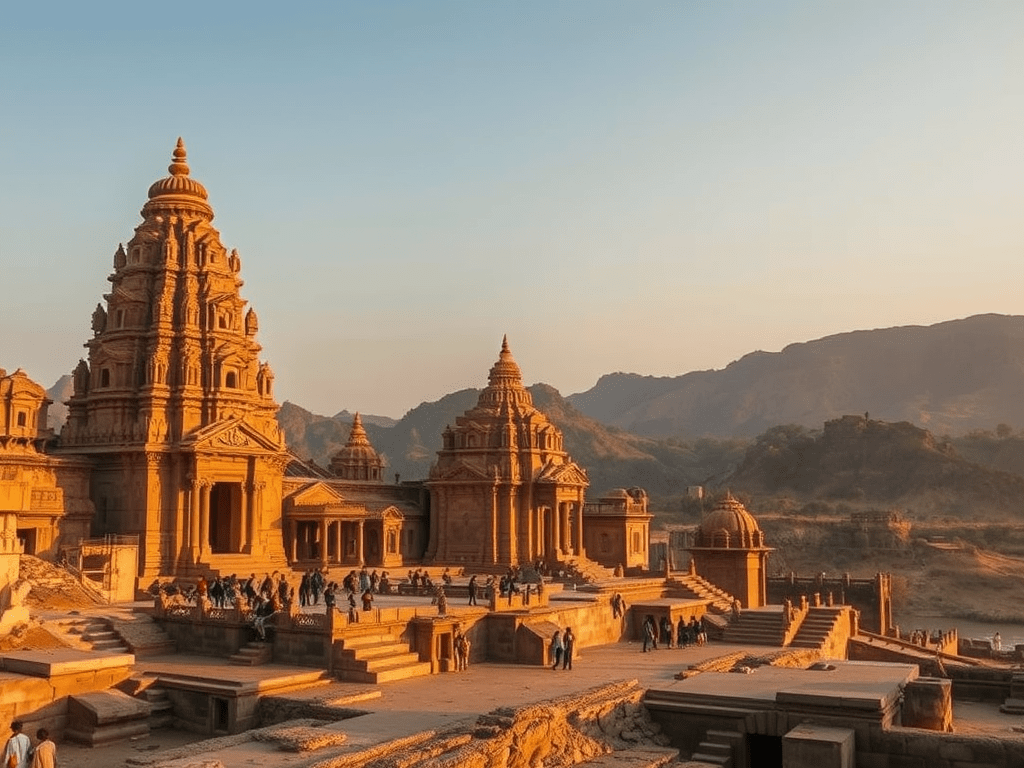
Hampi, located on the banks of the Tungabhadra River in Karnataka, was the capital of the Vijayanagara Empire (1336–1646 CE). Renowned for its strategic location, architectural grandeur, and economic prosperity, it was one of the richest and largest cities of its time, described by foreign travelers like Domingo Paes, Abdur Razzaq, and Nicolo Conti as a marvel of urban planning and cultural vibrancy. Hampi’s ruins, a UNESCO World Heritage Site since 1986, reflect the empire’s Dravidian architecture, Hindu cultural revival, and cosmopolitan trade. For UPSC, Hampi is a key topic in Medieval Indian History (Prelims) and Indian Heritage and Culture (Mains GS Paper I). For BPSC, its cultural significance and trade links with eastern India (e.g., Bengal, Odisha) are relevant, though Bihar’s direct connection is limited.
1. Historical Context
- Foundation:
- Established as the capital by Harihara I and Bukka I in 1336 CE, founders of the Vijayanagara Empire.
- Chosen for its strategic position: Surrounded by Tungabhadra River (north) and granite hills (three sides), providing natural defense.
- Timeline:
- Flourished: 14th–16th centuries CE, peaking under Krishnadevaraya (1509–1529 CE).
- Decline: Sacked after the Battle of Talikota (1565 CE) by Deccan Sultanates (Bijapur, Golconda, Ahmadnagar, Bidar).
- Abandoned: Post-1565, shifted to Penukonda, Chandragiri; Hampi never regained prominence.
- Significance:
- Political: Administrative and military hub of Vijayanagara.
- Economic: Center of Indian Ocean trade (textiles, spices, horses).
- Cultural: Bastion of Hindu revival, Dravidian art, and Bhakti.
- Sources:
- Inscriptions: Hampi temples (e.g., Virupaksha), copper plates.
- Foreign Accounts: Abdur Razzaq (1443 CE), Domingo Paes (1520 CE), Nuniz, Nicolo Conti.
- Literature: Amuktamalyada (Krishnadevaraya), Rayavachakamu.
- Archaeology: Hampi ruins (temples, palaces, markets).
Details to Memorize:
- Founded: 1336 CE, Harihara I, Bukka I.
- Peak: Krishnadevaraya (1509–1529 CE).
- Decline: Talikota (1565 CE).
- Status: UNESCO World Heritage (1986).
- Sources: Paes, Razzaq, Hampi inscriptions.
2. Urban Planning and Layout
- Geography:
- Spread over ~26 sq. km along Tungabhadra River, Bellary district (modern Karnataka).
- Natural fortifications: Granite boulders, river, hills.
- Fertile valley supported agriculture (rice, sugarcane).
- Zones:
- Royal Center: Palaces, administrative buildings, royal temples (e.g., Hazara Rama).
- Sacred Center: Major temples (Virupaksha, Vitthala), religious hub.
- Urban Core: Markets, bazaars, residential areas, waterworks.
- Infrastructure:
- Fortifications: Seven concentric walls, granite and earth, with watchtowers.
- Water Management: Aqueducts, canals, tanks (e.g., Kamalapura tank); Pushkarani (stepped wells) at temples.
- Roads: Wide streets, especially Hampi Bazaar, lined with colonnades.
- Markets: Described by Paes as bustling with trade (gems, textiles, spices).
- Foreign Descriptions:
- Abdur Razzaq (1443 CE): “The city is such that the pupil of the eye has never seen a place like it.”
- Domingo Paes (1520 CE): Compared Hampi’s wealth to Rome, praised its markets and palaces.
- Bihar Connection:
- Hampi’s trade routes via Odisha and Bengal linked to eastern India, indirectly influencing Bihar’s markets (e.g., textiles).
Details to Memorize:
- Location: Tungabhadra, Karnataka.
- Zones: Royal, Sacred, Urban.
- Infrastructure: Forts, aqueducts, Hampi Bazaar.
- Travelers: Razzaq (“eye has never seen”), Paes (Rome comparison).
- Bihar: Bengal-Odisha trade.
3. Architecture and Monuments
- Dravidian Style:
- Features: Tall gopurams (gateway towers), vimanas (sanctum towers), mandapas (pillared halls), intricate carvings.
- Temples as socio-economic hubs: Managed land, festivals, education.
- Key Monuments:
- Virupaksha Temple:
- Dedicated to Shiva (patron deity of Vijayanagara).
- Sangama period, expanded by Krishnadevaraya.
- Features: 50m gopuram, frescoes, Ranga Mandapa (16th century).
- Still active, hosts Mahanavami festival.
- Vitthala Temple:
- Dedicated to Vishnu (Vitthala form).
- Krishnadevaraya’s patronage; iconic stone chariot (Garuda).
- Features: Musical pillars (emit sounds), Kalyana Mandapa.
- Symbol of Vijayanagara’s architectural peak.
- Hazara Rama Temple:
- Royal temple, dedicated to Rama.
- Features: Ramayana reliefs on walls, used by royalty.
- Sangama-Tuluva period.
- Krishnaswamy Temple:
- Built by Krishnadevaraya, dedicated to Krishna.
- Large mandapa, ornate carvings.
- Other Structures:
- Lotus Mahal: Indo-Islamic influence, arched roof, royal women’s quarters.
- Elephant Stables: Domed structure, housed royal elephants.
- Queen’s Bath: Ornate, Indo-Islamic arches, royal bathing area.
- Stepped Tanks: Pushkarani at temples, geometric design.
- Virupaksha Temple:
- Sculpture and Art:
- Carvings: Deities (Vishnu, Shiva), Yalis (mythical beasts), royal figures.
- Monolithic statues: Narasimha (4m, Krishnadevaraya), Ganesha.
- Frescoes: Virupaksha Temple (mythological scenes).
- Influence:
- Built on Chola, Pandya, Hoysala traditions.
- Inspired Nayaka (Madurai, Tanjore) and later Dravidian styles.
- Bihar Connection:
- Hampi’s temple art influenced Odisha’s Gajapati temples, linked to Bihar via Bhakti exchanges (e.g., Chaitanya’s Vaishnavism).
Details to Memorize:
- Style: Dravidian, gopurams, mandapas.
- Temples: Virupaksha (Shiva), Vitthala (Vishnu, stone chariot), Hazara Rama (Ramayana).
- Secular: Lotus Mahal, Elephant Stables, Queen’s Bath.
- Art: Narasimha statue, musical pillars.
- Bihar: Odisha-Bhakti link.
4. Economic and Cultural Significance
- Economy:
- Trade Hub:
- Maritime: Linked to west coast ports (Mangalore, Bhatkal) and east coast (Masulipatnam).
- Exports: Cotton textiles, spices (pepper), gems.
- Imports: Horses (Arabia), firearms (Portuguese), silk (China).
- Described by Paes: Gems sold openly in Hampi Bazaar.
- Markets: Hampi Bazaar (500m long), trade in gold, pearls, cloth.
- Coinage: Gold varaha (pagoda), silver pana, copper kasu; trusted in Indian Ocean trade.
- Agriculture: Tungabhadra valley, irrigation tanks supported rice, sugarcane.
- Guilds: Ayyavole, Manigramam organized merchants.
- Trade Hub:
- Culture:
- Religion: Center of Hindu revival (Vaishnavism, Shaivism).
- Virupaksha as state deity; Tirupati temple patronage.
- Bhakti: Haridasas (Purandaradasa, Kanakadasa) composed keertanas.
- Tolerance: Mosques built for Muslim soldiers (Krishnadevaraya).
- Literature:
- Telugu: Krishnadevaraya’s Amuktamalyada, Allasani Peddana’s Manucharitram.
- Kannada: Kumara Vyasa’s Gadugina Bharata.
- Sanskrit: Sayana’s Vedartha Prakasha.
- Performing Arts:
- Music: Carnatic tradition, Purandaradasa’s compositions.
- Dance: Bharatanatyam in temples, Yakshagana.
- Festivals: Mahanavami (royal procession, per Paes).
- Education: Mathas (Sringeri) and temples taught Vedas, astronomy.
- Religion: Center of Hindu revival (Vaishnavism, Shaivism).
- Society:
- Cosmopolitan: Hosted Arabs, Portuguese, Chinese traders.
- Social hierarchy: Brahmins, nayakas, merchants, artisans.
- Women: Royal women influential; devadasis in temples.
- Bihar Connection:
- Trade with Bengal-Odisha (textiles, spices) linked Hampi to eastern India.
- Bhakti parallels with Bihar’s saints (e.g., Chaitanya’s Vaishnavism in Bengal).
Details to Memorize:
- Economy: Hampi Bazaar, varaha, trade (textiles, horses).
- Religion: Virupaksha, Bhakti (Haridasas).
- Literature: Amuktamalyada, Gadugina Bharata.
- Arts: Carnatic, Bharatanatyam, Mahanavami.
- Bihar: Bengal trade, Bhakti.
5. Decline and Legacy
- Decline:
- Battle of Talikota (1565 CE):
- Vijayanagara (Rama Raya) defeated by Deccan Sultanates.
- Hampi looted, temples desecrated, city abandoned.
- Population fled; empire shifted to Penukonda.
- Post-1565: Aravidu dynasty ruled weakly until 1646 CE.
- Battle of Talikota (1565 CE):
- Legacy:
- Cultural: Preserved Hindu traditions, Dravidian art during Islamic dominance.
- Hampi’s ruins (UNESCO) symbolize Vijayanagara’s grandeur.
- Influenced Nayaka kingdoms (Madurai, Tanjore) and Maratha resistance.
- Architectural: Dravidian style persisted in South Indian temples.
- Economic: Trade networks shaped colonial port cities (e.g., Madras).
- Bihar Connection:
- Hampi’s Bhakti legacy paralleled Bihar’s Vaishnavism (e.g., Chaitanya’s influence).
- Trade routes via Odisha sustained eastern India’s economy, indirectly impacting Bihar.
- Cultural: Preserved Hindu traditions, Dravidian art during Islamic dominance.
- Modern Relevance:
- Hampi as a tourist and archaeological site, studied for urban planning.
- Festivals (e.g., Hampi Utsav) revive cultural traditions.
Details to Memorize:
- Decline: Talikota (1565 CE), Hampi sacked.
- Legacy: UNESCO, Nayakas, Dravidian style.
- Bihar: Bhakti, Odisha trade.
6. Key Memorization Points
- Foundation: 1336 CE, Harihara I, Bukka I, Tungabhadra.
- Peak: Krishnadevaraya (1509–1529 CE).
- Architecture:
- Temples: Virupaksha, Vitthala (stone chariot), Hazara Rama.
- Secular: Lotus Mahal, Elephant Stables.
- Economy: Hampi Bazaar, varaha, trade (Mangalore, textiles).
- Culture: Bhakti (Purandaradasa), Amuktamalyada, Mahanavami.
- Decline: Talikota (1565 CE), abandoned post-1565.
- Bihar: Bengal-Odisha trade, Bhakti parallels.
- Status: UNESCO World Heritage (1986).
7. Practice Questions
- Prelims (MCQ):
- Q: Hampi was the capital of:
A: Vijayanagara Empire. - Q: The Vitthala Temple in Hampi is famous for its:
A: Stone chariot. - Q: Hampi was sacked after the Battle of:
A: Talikota (1565 CE). - Q: The Persian traveler who described Hampi was:
A: Abdur Razzaq.
- Q: Hampi was the capital of:
- Mains:
- Q: Discuss the architectural and cultural significance of Hampi as the capital of the Vijayanagara Empire. (15 marks)
- Q: Evaluate Hampi’s role as an economic and trade hub in medieval India. (10 marks)
- Q: Analyze the cultural exchanges between Hampi and eastern India, including Bihar. (10 marks)
8. Recommended Resources
- NCERT:
- Themes in Indian History-II (12th): Chapter 14.
- Download: ncert.nic.in.
- NIOS:
- Indian Culture and Heritage (Code 223): Medieval India.
- Download: nios.ac.in.
- IGNOU:
- EHI-03: India from 8th to 15th Century.
- Download: egyankosh.ac.in.
- Books:
- A History of South India by K.A. Nilakanta Sastri.
- Hampi: Discover the Splendours of Vijayanagar by George Michell.
- The Vijayanagara Empire by Robert Sewell.
9. Why This Topic Matters
- UPSC: Essential for Prelims (architecture, rulers, trade) and Mains (GS I: culture, urban planning, medieval history).
- BPSC: Relevant for understanding South Indian cultural influence (Bhakti, trade) and links with eastern India.
- Memorization Value: Factual (temples, travelers) and analytical (economy, decline) aspects suit both exams.

Leave a comment