
Overview
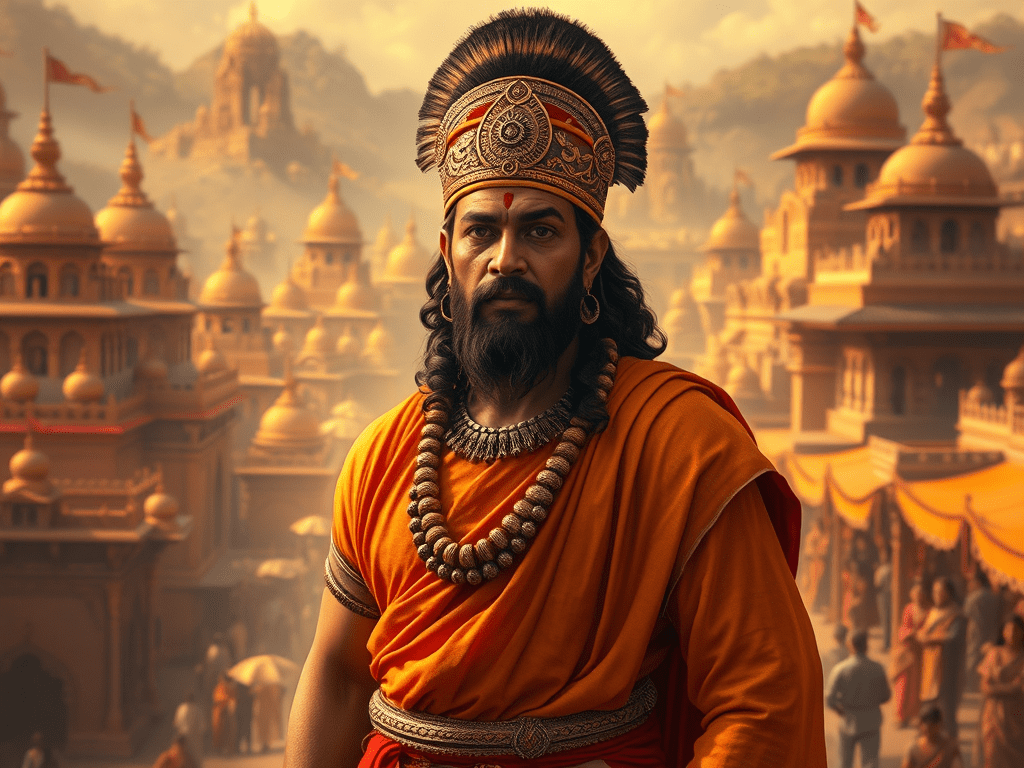
Pushyamitra Shunga (circa 185–149 BCE) was the founder of the Shunga dynasty, which succeeded the Mauryan Empire in northern India. A former Mauryan general, he overthrew the last Mauryan king, Brihadratha, around 185 BCE, establishing a new dynasty centered in Pataliputra (modern Patna, Bihar). His reign marks a significant transition in ancient Indian history, characterized by the revival of Brahmanical traditions, military campaigns, and patronage of art and architecture. For UPSC, Pushyamitra is a key figure in the post-Mauryan period (Ancient Indian History, Prelims, and Mains GS Paper I). For BPSC, his rule in Pataliputra and contributions to Bihar’s historical legacy are crucial.
1. Background and Rise to Power
- Early Life: Pushyamitra Shunga was a Brahmin from the Bhardwaj gotra, possibly of humble origins. He served as a high-ranking general (senapati) under the Mauryan king Brihadratha, the last Mauryan ruler.
- Overthrow of the Mauryas: Around 185 BCE, Pushyamitra assassinated Brihadratha during a military review in Pataliputra, seizing the throne. The coup is described in texts like the Harshacharita by Banabhatta and the Divyavadana (Buddhist text).
- Context: The Mauryan Empire was declining due to weak successors, economic strain from Ashoka’s welfare policies, and external invasions (e.g., Indo-Greeks). Pushyamitra capitalized on this instability to establish the Shunga dynasty.
- Capital: Pataliputra remained the political and administrative center, reinforcing Bihar’s historical significance.
Details to Memorize:
- Dynasty: Shunga (185–73 BCE).
- Role: Mauryan general (senapati), later emperor.
- Coup: ~185 BCE, assassinated Brihadratha in Pataliputra.
- Sources: Harshacharita (Banabhatta), Divyavadana (Buddhist), Puranas (e.g., Vishnu Purana).
- Capital: Pataliputra (Patna, Bihar).
2. Political and Military Achievements
- Consolidation of Power: Pushyamitra unified the core Mauryan territories, including Magadha, Kosala, and Vidisha (modern Madhya Pradesh), though the empire was smaller than the Mauryan peak.
- Military Campaigns:
- Indo-Greek Invasions: Repelled invasions by Indo-Greek kings, notably Demetrius I, who attempted to expand into northern India around 180 BCE. The Yuga Purana describes his defense of the northwest frontiers.
- Vidarbha Campaign: Suppressed a rebellion in Vidarbha (modern Maharashtra), led by a local ruler, possibly a Mauryan loyalist.
- Ashvamedha Yagna: Performed two horse sacrifices (Ashvamedha), as recorded in the Ayodhya inscription and Malavikagnimitra by Kalidasa, signaling his authority and adherence to Vedic traditions.
- Administration: Continued Mauryan administrative structures with modifications:
- Officials: Retained amatyas (ministers) and kumara (provincial governors).
- Revenue: Relied on land taxes (bhaga) and trade revenues from Pataliputra’s strategic location.
- Military: Maintained a strong army to counter external threats and internal rebellions.
Details to Memorize:
- Territories: Magadha, Kosala, Vidisha.
- Enemies: Indo-Greeks (Demetrius I), Vidarbha rebels.
- Rituals: Two Ashvamedha sacrifices.
- Sources: Yuga Purana (Indo-Greek wars), Malavikagnimitra (Kalidasa), Ayodhya inscription.
- Capital: Pataliputra.
3. Religious Policies and Controversies
- Brahmanical Revival: Pushyamitra is associated with the revival of Vedic Brahmanism after the Mauryan emphasis on Buddhism under Ashoka. He patronized Vedic rituals, as evidenced by his Ashvamedha sacrifices.
- Alleged Persecution of Buddhists: Buddhist texts like the Divyavadana and Taranatha’s History of Buddhism claim Pushyamitra persecuted Buddhists, destroying stupas and monasteries and offering rewards for killing Buddhist monks. However, these accounts are debated:
- Archaeological evidence (e.g., Sanchi Stupa inscriptions) shows Shunga patronage of Buddhist sites, suggesting religious tolerance.
- Historians like Romila Thapar argue the persecution narrative may be Buddhist propaganda to counter Brahmanical resurgence.
- Patronage: Supported Brahmanical institutions, priests (Brahmins), and Vedic sacrifices, but also allowed Buddhist and Jain communities to coexist.
- Bihar Connection: Pataliputra hosted both Brahmanical and Buddhist activities, with nearby sites like Bodh Gaya remaining active Buddhist centers.
Details to Memorize:
- Religion: Brahmanism (Vedic rituals, Ashvamedha).
- Buddhist Persecution: Alleged in Divyavadana, Taranatha’s accounts; debated due to Shunga patronage of Sanchi.
- Sites: Pataliputra (Brahmanical and Buddhist hub), Bodh Gaya (Buddhist center).
- Sources: Divyavadana, Taranatha, Sanchi inscriptions.
4. Contributions to Art and Architecture
- Shunga Art: The Shunga period marked the development of early Indian art, blending Mauryan and indigenous styles:
- Stupas: Expanded Buddhist stupas at Sanchi (Madhya Pradesh) and Bharhut (Madhya Pradesh). The Sanchi Stupa’s gateways (toranas), though added later, reflect Shunga-era craftsmanship.
- Sculptures: Narrative reliefs depicting Jataka tales and Buddhist themes, carved in stone at Sanchi, Bharhut, and Amaravati.
- Terracotta Art: Intricate terracotta figurines, especially from Pataliputra, depicting deities, animals, and daily life.
- Architectural Features: Use of stone railings, gateways, and decorative motifs (e.g., lotus, elephants). Shunga art influenced later Gupta and Kushana styles.
- Bihar’s Role: Pataliputra was a center of artistic production, with terracotta artifacts excavated at Kumrahar and Bulandi Bagh.
Details to Memorize:
- Stupas: Sanchi (gateways), Bharhut (railings).
- Art: Narrative reliefs, Jataka tales, terracotta figurines.
- Sites: Pataliputra (Kumrahar, Bulandi Bagh), Sanchi, Bharhut.
- Features: Stone railings, lotus motifs, elephant carvings.
5. Decline and Legacy
- Death and Succession: Pushyamitra ruled until ~149 BCE, succeeded by his son Agnimitra (famous from Kalidasa’s Malavikagnimitra). The Shunga dynasty lasted until ~73 BCE, with later rulers like Vasumitra and Devabhuti.
- Decline: The Shungas faced challenges from:
- Indo-Greek invasions in the northwest.
- Rise of regional powers like the Satavahanas in the Deccan.
- Internal rebellions and weak successors.
- The last Shunga king, Devabhuti, was overthrown by his minister Vasudeva Kanva, founding the Kanva dynasty (~73 BCE).
- Legacy:
- Brahmanical Resurgence: Strengthened Vedic traditions, influencing later Hindu practices.
- Buddhist Patronage: Despite Buddhist texts’ claims, Shunga contributions to Sanchi and Bharhut stupas supported Buddhism’s continuity.
- Artistic Foundation: Shunga art laid the groundwork for Gupta and Kushana art, evident in stupa architecture and terracotta crafts.
- Bihar’s Historical Significance: Pataliputra remained a political and cultural hub, reinforcing Bihar’s role in ancient India (key for BPSC).
- Historiographical Debate: Pushyamitra’s legacy is controversial due to conflicting narratives:
- Buddhist texts portray him as anti-Buddhist.
- Archaeological evidence (Sanchi inscriptions) suggests religious pluralism.
Details to Memorize:
- Death: ~149 BCE.
- Successors: Agnimitra, Vasumitra, Devabhuti (last king, ~73 BCE).
- Decline: Indo-Greeks, Satavahanas, Kanva coup (~73 BCE).
- Legacy: Brahmanical revival, Sanchi/Bharhut patronage, Pataliputra’s prominence.
- Sources: Malavikagnimitra (Kalidasa), Puranas, Sanchi inscriptions.
6. Key Memorization Points
- Chronology:
- Mauryan Coup: ~185 BCE.
- Reign: ~185–149 BCE.
- Shunga Dynasty: 185–73 BCE.
- Political Achievements:
- Capital: Pataliputra.
- Campaigns: Repelled Indo-Greeks (Demetrius I), subdued Vidarbha.
- Rituals: Two Ashvamedha sacrifices (Ayodhya inscription, Malavikagnimitra).
- Religious Policies:
- Patronage: Brahmanism (Vedic rituals), limited Buddhist support (Sanchi, Bharhut).
- Controversy: Alleged persecution (Divyavadana, Taranatha); contradicted by Sanchi inscriptions.
- Art and Architecture:
- Stupas: Sanchi, Bharhut.
- Art: Terracotta figurines, narrative reliefs, Jataka tales.
- Sites: Pataliputra (Kumrahar), Sanchi, Bharhut.
- Bihar Connections:
- Capital: Pataliputra (Patna).
- Sites: Kumrahar, Bulandi Bagh (terracotta finds).
- Significance: Magadha’s continued prominence.
- Sources:
- Texts: Harshacharita (Banabhatta), Divyavadana, Yuga Purana, Malavikagnimitra (Kalidasa), Puranas (Vishnu, Bhavishya).
- Inscriptions: Ayodhya (Ashvamedha), Sanchi (Shunga donations).
- Archaeology: Pataliputra (Kumrahar), Sanchi, Bharhut.
7. Practice Questions for Retention
- Prelims (MCQ):
- Q: Who founded the Shunga dynasty by overthrowing the last Mauryan king?
A: Pushyamitra Shunga. - Q: The Shunga dynasty’s capital was:
A: Pataliputra. - Q: Which text describes Pushyamitra’s Ashvamedha sacrifice?
A: Malavikagnimitra by Kalidasa. - Q: Pushyamitra is said to have repelled invasions by:
A: Indo-Greeks (Demetrius I).
- Q: Who founded the Shunga dynasty by overthrowing the last Mauryan king?
- Mains:
- Q: Discuss Pushyamitra Shunga’s role in the revival of Brahmanical traditions in post-Mauryan India. (15 marks)
- Q: Evaluate the contributions of the Shunga dynasty to Indian art and architecture, with reference to Bihar’s historical legacy. (10 marks, BPSC-focused)
- Q: Analyze the historiographical debates surrounding Pushyamitra’s religious policies toward Buddhism. (15 marks)
8. Recommended Resources
To comply with copyright laws, link to these resources on your website instead of reproducing their content:
- NCERT:
- Themes in Indian History-I (Class 11): Chapter 2, “Kings, Farmers and Towns” (post-Mauryan period).
- Download: ncert.nic.in.
- NIOS:
- Indian Culture and Heritage (Code 223): Covers Shunga art and architecture.
- Download: nios.ac.in.
- IGNOU:
- EHI-02 (India: Earliest Times to 8th Century AD): Post-Mauryan dynasties.
- Download: egyankosh.ac.in.
- Other Books:
- India’s Ancient Past by R.S. Sharma: Shunga dynasty overview.
- Ashoka and the Decline of the Mauryas by Romila Thapar: Discusses Pushyamitra’s coup.
- Early India by Romila Thapar: Contextualizes Shunga period.
- Available on Amazon or libraries.
Note: Include links on your website:
- NCERT: ncert.nic.in.
- NIOS: nios.ac.in.
- IGNOU: egyankosh.ac.in.
9. Why This Topic Matters
- UPSC: Pushyamitra Shunga is a high-yield topic for Prelims (post-Mauryan period, Shunga dynasty) and Mains (GS Paper I: revival of Brahmanism, art, and architecture). His policies are relevant for understanding religious dynamics.
- BPSC: His rule in Pataliputra and contributions to Magadha’s legacy make him essential for Bihar-specific history questions.
- Memorization Value: The factual details (dates, campaigns, art, sources) and analytical aspects (Brahmanical revival, Buddhist controversy) suit both objective and descriptive questions.


Leave a comment