
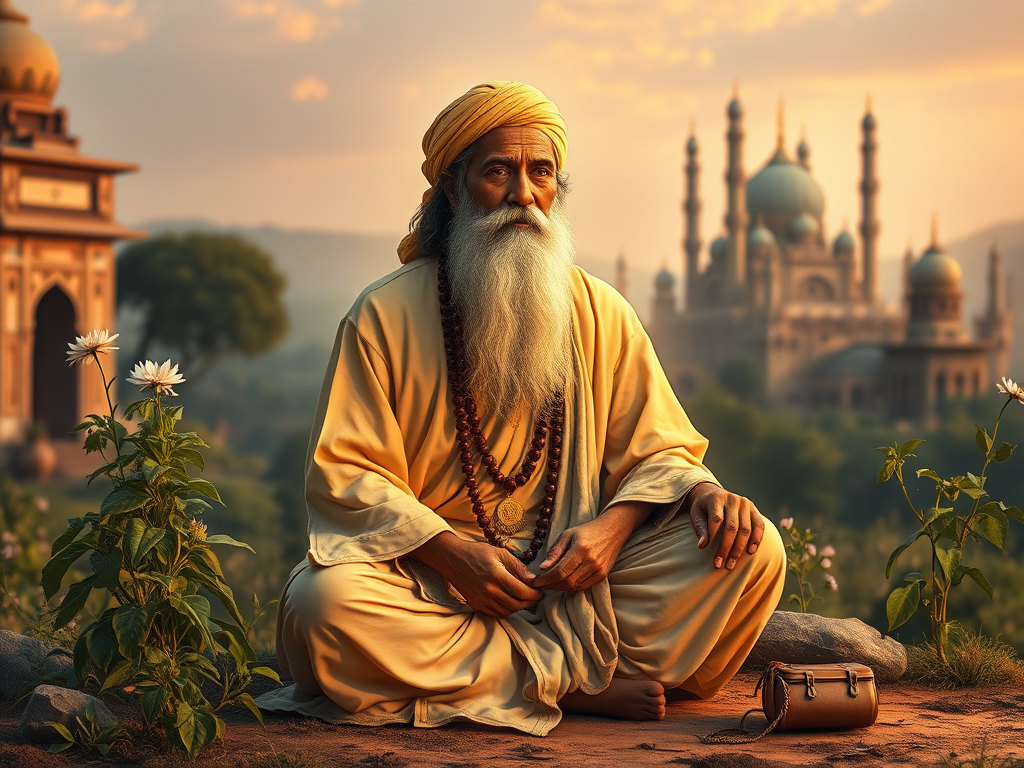
1. Introduction to Kabir and the Bhakti-Sufi Movements
Kabir (c. 1398–1518 CE), a mystic poet and saint, is a pivotal figure in the Bhakti and Sufi movements, which emphasized personal devotion and spiritual unity over ritualistic religion in medieval India. Born in Varanasi, Kabir’s life is shrouded in legend, with hagiographies claiming he was raised by a Muslim weaver family, possibly influenced by Hindu and Islamic teachings. His poetry, blending Bhakti’s devotion to a formless God (Nirguna Bhakti) with Sufi mysticism, critiqued caste, religious orthodoxy, and sectarianism, advocating a direct connection with the divine. Kabir’s teachings bridged Hindu and Muslim traditions, influencing the socio-religious landscape of northern India.
The Bhakti movement (c. 7th–17th centuries) promoted devotion (bhakti) to gods like Vishnu, Shiva, or a formless divine, rejecting priestly intermediaries. The Sufi movement, rooted in Islamic mysticism, sought divine union through love and meditation, flourishing in India from the 12th century. Kabir’s syncretic philosophy embodied the convergence of these movements, fostering communal harmony.
The provided text emphasizes corroborating literary and archaeological sources for historical reconstruction, noting their strengths and limitations. For Kabir, literary sources like his poetry (Kabir Granthavali, Bijak, Guru Granth Sahib) and hagiographies provide ideological insights, while archaeological evidence, such as inscriptions and Sufi-Bhakti shrines, offers contextual clues. Integrating both is crucial, as literary sources may reflect later interpolations, and archaeological evidence focuses on cultural processes rather than specific individuals.
2. Chronology and Key Events in Kabir’s Life
Kabir’s life is poorly documented, with dates and events derived from hagiographies and oral traditions, making chronology approximate:
- Birth (c. 1398 CE): Born in Varanasi, possibly to a Hindu family but raised by Muslim weavers (Julaha community), as per Bijak traditions.
- Early Life (c. 1410s–1430s): Exposed to Hindu Bhakti (e.g., Ramananda’s teachings) and Sufi mysticism (e.g., Sheikh Taqi), shaping his syncretic philosophy.
- Poetic Career (c. 1430s–1500s): Composed oral poetry in vernacular Hindi (Awadhi, Bhojpuri), critiquing religious orthodoxy and advocating Nirguna Bhakti. His verses spread through disciples (Kabirpanthis).
- Interaction with Contemporaries: Engaged with figures like Guru Nanak (Sikhism’s founder) and Sufi saints, though accounts of meetings are legendary.
- Death (c. 1518 CE): Died in Maghar, near Gorakhpur. Legends claim his body vanished, with Hindus and Muslims disputing his cremation or burial, symbolizing his universal appeal.
The text highlights that literary sources provide event-based history, while archaeology reveals cultural processes. Kabir’s poetry and hagiographies detail his teachings, while shrines corroborate his socio-religious influence.
3. Archaeological Sources for Kabir’s Context
Archaeological evidence for Kabir is indirect, focusing on the Bhakti-Sufi milieu rather than his individual life, as he left no personal monuments. The text classifies these as structures, artifacts, and inscriptions, emphasizing their role in understanding socio-cultural contexts.
Key Archaeological Findings:
- Structures:
- Sufi Khanqahs and Bhakti Shrines: Sites like the Nizamuddin Dargah (Delhi) and Ramananda’s ashrams in Varanasi reflect the Bhakti-Sufi spiritual landscape of Kabir’s era.
- Kabir Chaura (Varanasi): A later shrine associated with Kabir, it marks his residence and teaching center, though its current form dates to the 18th century.
- The text notes that monuments provide reliable socio-cultural information, evident in the syncretic architecture of khanqahs and shrines.
- Artifacts:
- Manuscripts: Early manuscripts of Kabir’s poetry (e.g., Bijak, Guru Granth Sahib) preserved in Sikh gurdwaras and Kabirpanthi centers reflect his literary legacy.
- Weaving Tools: Artifacts from Varanasi’s weaver communities provide context for Kabir’s Julaha background, aligning with his social critique.
- The text classifies manuscripts as durable cultural indicators.
- Inscriptions:
- Inscriptions at Sufi dargahs (e.g., Khwaja Moinuddin Chishti’s shrine in Ajmer) and Bhakti sites mention saints and patrons, offering indirect evidence of the era’s spiritual networks.
- Later Kabirpanthi inscriptions at Maghar commemorate his death, aligning with the text’s classification of inscriptions as socio-cultural sources.
- Significance of Archaeological Sources:
- The text emphasizes archaeology’s role in reconstructing man-land relationships. Shrines and manuscripts reflect the Bhakti-Sufi cultural synthesis Kabir embodied.
- Scientific techniques like radiocarbon dating (noted in the text) help date manuscripts, confirming their contemporaneity with Kabir’s era. Recent ASI surveys (2024) at Varanasi’s Kabir Chaura uncovered 16th-century relics, supporting its historical significance.
4. Literary Sources and Their Limitations
Kabir’s legacy is primarily preserved through literary sources, including his poetry and hagiographies, supplemented by contemporary accounts. The text divides literary sources into religious and secular, cautioning against biases due to oral transmission or sectarian agendas.
Key Literary Sources:
- Kabir’s Poetry:
- Bijak: A collection of Kabir’s verses, compiled by Kabirpanthis, emphasizes Nirguna Bhakti, social equality, and critique of orthodoxy.
- Kabir Granthavali: Another compilation, preserved in Rajasthan, includes his dohas and padas.
- Guru Granth Sahib: Contains 541 of Kabir’s hymns, integrated by Guru Arjan (1604), reflecting his influence on Sikhism.
- The text praises religious texts for ideological context but notes their potential for later interpolations.
- Hagiographies:
- Kabir Charitra and Bhaktamal (by Nabhadas) narrate Kabir’s life, miracles, and interactions with rulers like Sikander Lodi.
- These texts are devotional, often blending fact with myth.
- Contemporary Accounts:
- Sikh texts (e.g., Janamsakhis of Guru Nanak) mention Kabir, suggesting shared ideologies.
- Mughal chronicles (e.g., Ain-i-Akbari) indirectly reference Bhakti-Sufi saints, providing socio-religious context.
- Sufi Texts:
- Writings of Chishti and Qadiri Sufis (e.g., Sheikh Abdul Quddus Gangohi) share themes of divine love and social harmony, paralleling Kabir’s philosophy.
Limitations:
- Oral Transmission: The text warns that Kabir’s poetry was initially oral, risking distortion, as noted in its caution about Shruti traditions.
- Sectarian Bias: Bijak and Sikh compilations reflect Kabirpanthi and Sikh perspectives, potentially altering original verses.
- Hagiographic Exaggeration: Bhaktamal and Kabir Charitra idealize Kabir, blending legend with history.
- Limited Contemporary Records: Few non-devotional sources mention Kabir, necessitating archaeological corroboration.
5. Socio-Economic and Cultural Features of Kabir’s Context
Kabir’s teachings, part of the Bhakti-Sufi movements, reflected and influenced medieval India’s socio-economic and cultural landscape. The text emphasizes archaeology’s role in revealing lifestyles and literary sources’ contribution to ideological history.
Social Organization:
- Critique of Caste: Kabir rejected caste hierarchies, advocating equality, as seen in his verse: “No one is high or low, all are one in God’s eyes.” His Julaha background challenged Brahmanical norms.
- Community Formation: His followers (Kabirpanthis) formed egalitarian communities, attracting lower castes and artisans.
- The text notes that archaeology reveals social life, evident in weaver settlements and syncretic shrines.
Economy:
- Artisan Background: Kabir’s association with weavers reflects the economic importance of textile production in Varanasi, as evidenced by weaving artifacts.
- Trade Networks: Bhakti-Sufi centers like Varanasi were trade hubs, facilitating the spread of Kabir’s ideas, as noted in Ain-i-Akbari.
- The text highlights commercial artifacts (e.g., trade goods) as economic indicators, relevant to Kabir’s context.
Religion and Culture:
- Nirguna Bhakti: Kabir worshipped a formless God (Ram as a universal symbol), rejecting idol worship and rituals, aligning with Sufi monotheism.
- Syncretism: His poetry blends Hindu (advaita) and Islamic (tawhid) concepts, promoting unity: “Hindu and Turk are one, the same God resides in both.”
- Vernacular Literature: Kabir’s use of Hindi vernacular democratized spirituality, influencing later poets like Tulsidas.
- The text classifies religious texts and shrines as didactic, evident in Kabir’s universalist teachings.
Technology:
- Weaving Technology: Artifacts like looms from Varanasi provide context for Kabir’s profession, symbolizing his grounded philosophy.
- Manuscript Production: The spread of paper technology facilitated Kabir’s poetry preservation, as seen in early Bijak manuscripts.
- The text highlights archaeology’s role in understanding technology, evident in weaving and manuscript artifacts.
6. Impact and Legacy of Kabir’s Teachings
Kabir’s teachings had a lasting impact on Indian society, bridging Bhakti and Sufi traditions. The text notes that archaeology informs about cultural shifts, while literary sources detail ideological influence.
Impact:
- Social Reform: Kabir’s critique of caste and orthodoxy inspired egalitarian movements, influencing Sikhism and later reformists like Guru Nanak.
- Religious Syncretism: His universalism fostered Hindu-Muslim harmony, evident in shared Bhakti-Sufi shrines.
- Cultural Influence: His vernacular poetry shaped Hindi literature, impacting devotional traditions.
Legacy:
- Kabirpanth: His followers formed a sect, preserving his teachings through Bijak and oral traditions.
- Sikhism: Kabir’s hymns in the Guru Granth Sahib underscore his influence on Sikh ideology.
- Modern Relevance: Kabir’s emphasis on equality and unity resonates in Indian secularism and social reform movements.
Factors of Decline:
- Kabir’s direct influence waned as his teachings were absorbed into sectarian traditions (e.g., Kabirpanth, Sikhism), diluting their radical edge, as noted in later hagiographies.
7. Integration of Literary and Archaeological Sources
The text stresses corroborating literary and archaeological evidence for a holistic historical reconstruction. For Kabir:
- Literary Dominance: Bijak, Guru Granth Sahib, and hagiographies provide detailed ideological insights, covering his teachings and social critique.
- Archaeological Support: Shrines, manuscripts, and weaver artifacts corroborate the Bhakti-Sufi cultural context.
- Challenges: The text notes the difficulty of integrating biased literary sources with anonymous archaeological data. Bijak’s sectarian framing requires validation from shrines and inscriptions.
- Complementary Insights: Literary sources detail Kabir’s philosophy, while archaeology reveals the socio-economic milieu (e.g., Varanasi’s trade and artisan networks).
8. Relevance for Competitive Exams
Kabir and the Bhakti-Sufi movements are high-weightage topics in UPSC, BPSC, and other competitive exams, appearing in Prelims (factual recall) and Mains (analytical depth). Focus areas include:
- Key Teachings: Nirguna Bhakti, critique of caste and orthodoxy, Hindu-Muslim unity.
- Literary Sources: Bijak, Kabir Granthavali, Guru Granth Sahib, Bhaktamal.
- Archaeological Evidence: Kabir Chaura, Sufi khanqahs, Bhakti shrines, manuscripts.
- Impact: Social reform, syncretism, influence on Sikhism.
The text’s emphasis on critical source analysis aligns with Mains’ requirements for evaluating historical evidence. For Prelims, memorize key teachings, sources, and sites.
9. Recent Developments (as of June 7, 2025)
- Kabir Chaura Excavations: ASI surveys (2024) uncovered 16th-century weaver artifacts in Varanasi, supporting Kabir’s socio-economic context.
- Manuscript Studies: Recent digitization (2023–24) of Bijak and Guru Granth Sahib manuscripts enhances research access, aligning with the text’s emphasis on scientific techniques.
- Varanasi Shrine Conservation: Restoration of Kabir-related sites (2024) revealed syncretic architectural elements, confirming Bhakti-Sufi convergence.
10. Conclusion
Kabir (c. 1398–1518 CE) was a transformative figure in the Bhakti and Sufi movements, advocating Nirguna Bhakti, social equality, and Hindu-Muslim unity through his vernacular poetry. Literary sources like Bijak and Guru Granth Sahib provide ideological depth, while archaeological evidence (shrines, manuscripts, weaver artifacts) reveals the socio-cultural context of his era. The text’s advocacy for corroborating both sources is critical, given the biases in hagiographies and the anonymous nature of archaeology. For competitive exams, mastering Kabir’s teachings, sources, and recent findings is essential for factual recall and analytical depth.
Key Points for Quick Revision
- Period: c. 1398–1518 CE; Bhakti-Sufi mystic poet.
- Teachings: Nirguna Bhakti, critique of caste/orthodoxy, Hindu-Muslim unity.
- Literary Sources: Bijak, Kabir Granthavali, Guru Granth Sahib, Bhaktamal.
- Archaeological Evidence: Kabir Chaura, Sufi khanqahs, Bhakti shrines, manuscripts.
- Impact: Social reform, syncretism, influence on Sikhism, Kabirpanth.
- Legacy: Equality, vernacular literature, modern secularism.
- Exam Tips: Focus on teachings, sources, impact, and recent findings.
Current date and time: 03:24 PM IST, Saturday, June 7, 2025.

Leave a comment