
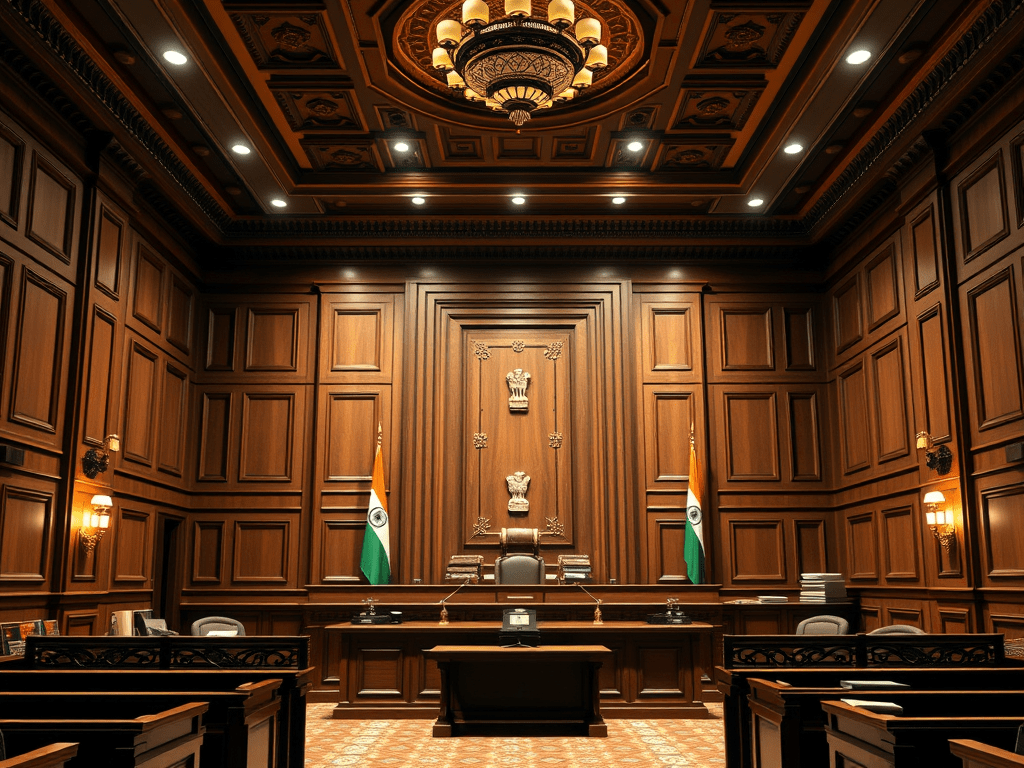
Introduction to the National Company Law Tribunal (NCLT)
Legal Foundation and Evolution
- Establishment: Constituted on June 1, 2016, under Section 408 of the Companies Act, 2013, by the Ministry of Corporate Affairs (MCA).
- Genesis: Recommended by the V. Balakrishna Eradi Committee (2000) to address inefficiencies in insolvency and company winding-up processes under the Companies Act, 1956, and the Sick Industrial Companies (Special Provisions) Act, 1985 (SICA).
- Constitutional Validity:
- Initially proposed under the Companies (Second Amendment) Act, 2002, but faced legal challenges over its constitutional validity, delaying implementation.
- In 2010, the Supreme Court upheld NCLT’s validity in Union of India v. R. Gandhi, subject to modifications ensuring judicial independence and separation of powers.
- Notified under the Companies Act, 2013, aligning with modern corporate governance needs.
- Predecessors Replaced:
- Company Law Board (CLB): Handled company disputes under the Companies Act, 1956.
- Board for Industrial and Financial Reconstruction (BIFR): Dealt with sick industrial companies under SICA.
- Appellate Authority for Industrial and Financial Reconstruction (AAIFR): Heard appeals against BIFR orders.
- Objective: To create a specialized, single-window forum for corporate disputes, insolvency resolution, and restructuring, reducing multiplicity of litigation and enhancing ease of doing business.
Key Insight: The NCLT’s establishment reflects India’s shift toward a unified corporate adjudication system, addressing inefficiencies of fragmented forums under CLB and BIFR.
Structure and Composition
- Benches:
- As of 2025, NCLT operates 16 benches across India:
- Principal Bench: New Delhi (oversees cases of national importance and Union Territory of Delhi).
- Regional Benches: New Delhi (2 additional), Ahmedabad (2), Prayagraj, Bengaluru, Chandigarh, Chennai (2), Cuttack, Guwahati, Hyderabad (3, including Amaravati), Jaipur, Kochi, Kolkata (2), Mumbai (5). Indore
- Each bench typically comprises a division bench (two members), except Amaravati (single-member bench).
- Special benches may be constituted for complex or time-sensitive cases (e.g., high-value insolvency matters).
- As of 2025, NCLT operates 16 benches across India:
- Composition:
- President: Chief Justice (Retd.) Ramalingam Sudhakar (since November 1, 2021).
- Eligibility: A serving or retired High Court judge with at least 5 years of experience.
- Term: 5 years or until age 67, whichever is earlier.
- Members:
- Judicial Members: 16 (retired/serving High Court judges or legal experts with 10+ years of experience).
- Technical Members: 9 (experts from Indian Corporate Law Service (ICLS), finance, accountancy, or company law with 15+ years of experience).
- Total members as of February 2025: 25, with recent appointments to address capacity constraints.
- Term: 5 years or until age 65, renewable for another 5 years; minimum age 50 years.
- Selection: Members appointed by the Central Government based on recommendations from a Selection Committee chaired by the Secretary, MCA.
- President: Chief Justice (Retd.) Ramalingam Sudhakar (since November 1, 2021).
- Operational Framework:
- Benches operate under the NCLT Rules, 2016, ensuring procedural fairness and natural justice.
- Hybrid court systems (video conferencing) implemented in 31 courts (2024), enhancing accessibility.
- E-filing portal (operational since 2016) automates case management; draft cases older than 90 days are deleted to streamline workflows (since February 8, 2024).
Key Insight: The dual composition (judicial and technical members) ensures a balance of legal rigor and industry expertise, critical for complex corporate and insolvency adjudications.
Jurisdiction and Powers
The NCLT’s jurisdiction spans a wide range of corporate and insolvency matters, consolidating powers previously fragmented across civil courts, CLB, BIFR, and regulatory bodies. Key areas include:
- Insolvency and Bankruptcy (IBC, 2016):
- Acts as the Adjudicating Authority for Corporate Insolvency Resolution Process (CIRP) and liquidation of companies and limited liability partnerships (LLPs).
- Admits or rejects insolvency petitions filed by financial creditors, operational creditors, or corporate debtors.
- Appoints Interim Resolution Professionals (IRPs) and oversees Committee of Creditors (CoC) processes.
- Timeline: CIRP must conclude within 180 days (extendable by 90 days); liquidation follows if resolution fails.
- Example: Admitted insolvency against Gensol Engineering (₹510 crore default, 2025) and Raheja Developers (2025).
- Mergers, Amalgamations, and Demergers (Companies Act, 2013):
- Approves schemes under Sections 230–232, ensuring compliance with stakeholder interests and regulatory norms.
- Example: Approved Maruti Suzuki-Suzuki Motor Gujarat amalgamation and HUL’s ice cream business demerger (Kwality Wall’s, 2025).
- Winding-Up and Liquidation:
- Adjudicates voluntary or compulsory winding-up under Chapter XX of the Companies Act, 2013.
- Example: Ordered liquidation of Rhythm House (2020).
- Oppression and Mismanagement:
- Addresses grievances under Sections 241–242, protecting minority shareholders and public interest.
- Example: Tata Sons vs. Cyrus Mistry case (2016–2017), where NCLT upheld Tata Sons’ actions but was partially overturned by NCLAT.
- Class Action Suits:
- Empowers shareholders or depositors to file collective lawsuits under Section 245 for wrongful acts (e.g., mismanagement, fraud).
- Enhances corporate accountability and minority stakeholder rights.
- Regulatory Appeals:
- Hears appeals against orders of the Registrar of Companies (RoC), Securities and Exchange Board of India (SEBI), and Competition Commission of India (CCI).
- Example: Appeals against CCI’s ₹213 crore penalty on Meta (2024).
- Company Registration and Deregistration:
- Can cancel registration under Section 7(7) if obtained fraudulently or dissolve companies under Section 59.
- Example: Dismissed Talwandi Sabo Power Ltd’s demerger scheme (2025).
- Investigation Powers:
- Directs probes into company affairs under Section 210 or in insolvency matters, as upheld by NCLAT (2025).
- Share and Securities Transfer Disputes:
- Resolves rejections of share/securities transfers under Sections 58–59, expanding beyond the CLB’s limited scope (shares/debentures only).
- LLP Disputes:
- Adjudicates matters related to incorporation, functioning, and dissolution of LLPs.
Exclusive Jurisdiction: Civil courts lack jurisdiction over matters assigned to NCLT, ensuring specialized adjudication.
Key Insight: The NCLT’s expansive jurisdiction under the Companies Act, 2013, and IBC, 2016, positions it as a critical arbiter of corporate governance, insolvency, and restructuring, reducing reliance on civil courts.
National Company Law Appellate Tribunal (NCLAT)
- Establishment: Constituted on June 1, 2016, under Section 410 of the Companies Act, 2013.
- Role: Acts as the appellate tribunal for:
- Appeals against NCLT orders under the Companies Act, 2013, and IBC, 2016.
- Orders of the Insolvency and Bankruptcy Board of India (IBBI) under Sections 202 and 211 of IBC.
- Decisions of the Competition Commission of India (CCI) since May 26, 2017 (Finance Act, 2017 amendment).
- Structure:
- Chairperson: Justice Ashok Bhushan (as of 2025).
- Benches: Principal Bench (New Delhi) and Chennai Bench.
- Comprises judicial and technical members, ensuring balanced adjudication.
- Appeal Process:
- Appeals against NCLT orders must be filed within 45 days.
- NCLAT aims to dispose of appeals within 6 months.
- Further appeals lie with the Supreme Court on points of law only.
- Recent Rulings:
- Suspended NCLT’s insolvency order against Reliance Infra (2025).
- Upheld Golden Jubilee Hotels’ sale approval (2025).
- Dismissed Deloitte’s petition on IL&FS Financial Services (2025).
Key Insight: The NCLAT ensures a robust review mechanism, balancing NCLT’s adjudicatory powers while limiting appeals to the Supreme Court to maintain efficiency.
Operational Dynamics and Recent Developments (2024–2025)
- Case Load and Efficiency:
- NCLT handled over 20,000 cases in FY25, with significant progress in insolvency resolution.
- IBC recoveries reached ₹67,000 crore in FY25, a 42% increase from FY24, reflecting improved resolution outcomes.
- Average CIRP resolution time: 677 days (exceeding the 270-day statutory limit for 68% of cases), indicating delays.
- Key Cases (2024–2025):
- Insolvency: Admitted petitions against Gensol Engineering (₹510 crore default), Raheja Developers, and Ansal Properties (2025).
- Mergers/Demergers: Approved Maruti Suzuki-Suzuki Motor Gujarat amalgamation, HUL’s ice cream demerger, and DB Realty’s scheme (2025).
- Dismissals: Rejected Talwandi Sabo Power Ltd’s demerger (2025).
- Byju’s Crisis: Blocked access to $200 million from a rights issue, reflecting investor disputes and financial distress (2024).
- Infrastructure Upgrades:
- Implemented hybrid court systems (video conferencing) across 31 courts (2024).
- E-auctioned obsolete items in Delhi and Chennai to optimize resources (2024).
- Issued tenders for taxi services (Chennai) and manpower contracts (Cuttack) to enhance operations.
- Bench Expansion:
- Added benches in Cuttack, Jaipur, Kochi, Amaravati, and proposed Indore to address regional case loads.
- Increased judicial and technical members to 25 (February 2025).
- Controversies:
- NCLAT ordered an inquiry into a Chennai NCLT bench order (March 2022) for alleged irregularities, raising concerns about judicial integrity.
- Clarified no staff strike occurred in Mumbai over salary issues (January 2025).
Key Insight: While NCLT has enhanced insolvency recoveries and corporate restructuring, delays in CIRP and occasional controversies underscore the need for systemic reforms.
Significance in India’s Economic and Legal Framework
- Insolvency Resolution:
- Strengthens the IBC, 2016, enabling creditors to recover dues and revive or liquidate distressed companies.
- Example: Over 655 default cases resolved by 2018, showcasing early IBC impact.
- Corporate Governance:
- Promotes transparency through class action suits and oppression/mismanagement cases.
- Protects minority shareholders (e.g., Tata-Mistry case).
- Ease of Doing Business:
- Streamlines mergers, acquisitions, and insolvency, reducing litigation in civil courts.
- India’s World Bank Ease of Doing Business ranking improved partly due to IBC and NCLT reforms.
- Economic Recovery:
- Facilitates revival of insolvent firms, preserving jobs and economic value.
- Example: Jet Airways’ insolvency petition paved the way for revival attempts (2019).
- Stakeholder Protection:
- Balances interests of creditors, shareholders, and depositors, fostering trust in corporate systems.
- Digital Transformation:
- E-filing, online case tracking, and hybrid courts enhance accessibility and transparency.
Key Insight: The NCLT’s role in insolvency resolution and corporate governance aligns with India’s economic reforms, but its efficiency is critical to sustaining investor confidence.
Challenges and Critical Analysis
- Case Backlog and Delays:
- Over 20,000 pending cases in FY25, with 68% of CIRPs exceeding the 270-day limit (average 677 days).
- Causes: Limited benches, member shortages, and complex cases (e.g., Byju’s, IL&FS).
- Impact: Delays erode asset value and creditor trust, undermining IBC’s objectives.
- Capacity Constraints:
- Only 25 members against a sanctioned strength of 63, leading to overburdened benches.
- Recent appointments (2024–2025) partially address this, but gaps remain.
- Judicial Integrity Concerns:
- NCLAT’s inquiry into a Chennai bench order (2022) highlighted potential irregularities.
- Allegations of bias or procedural lapses in high-profile cases (e.g., Sahara Hospitality, 2024) erode public trust.
- Regulatory Overlaps:
- Conflicts with SEBI, CCI, or RoC create jurisdictional ambiguities.
- Example: Meta’s appeal against CCI’s penalty (2024) strained NCLT’s appellate role.
- Limited Expertise:
- Some members lack specialized training in modern financial laws or commercial practices, slowing complex case resolutions.
- Recommendation: Appoint younger, commercially-minded professionals with continuous training.
- Promoter Protectionism:
- NCLT rulings sometimes shield promoters’ assets during insolvency, limiting creditor recoveries.
- Example: NCLT ruled creditors cannot liquidate guarantors’ assets during CIRP (2018).
Recommendations for Reform
- Increase Capacity: Appoint additional members to reach sanctioned strength (63) and notify the Indore bench.
- Reduce Delays: Implement stricter timelines for CIRP (e.g., pre-packaged insolvency for MSMEs) and fast-track simple cases.
- Enhance Training: Provide continuous education for members on financial laws, IBC, and commercial practices.
- Strengthen Oversight: Establish an independent oversight body to monitor NCLT proceedings and address irregularities.
- Clarify Jurisdiction: Define clear boundaries with SEBI, CCI, and other regulators to avoid overlaps.
- Promote Digitalization: Expand hybrid courts and e-filing to all benches, ensuring seamless access for stakeholders.
Key Insight: Targeted reforms can position NCLT as a global benchmark for corporate adjudication, aligning with India’s economic aspirations.
Frequently Asked Questions (FAQs) for Exams
- What is the NCLT’s role under the IBC, 2016?
- Acts as the Adjudicating Authority for CIRP and liquidation, ensuring creditor-driven resolution within statutory timelines.
- How does NCLAT differ from NCLT?
- NCLAT is an appellate tribunal reviewing NCLT orders, IBBI decisions, and CCI rulings, with appeals to the Supreme Court on legal points.
- What replaced the Company Law Board?
- NCLT, established under the Companies Act, 2013, consolidating CLB, BIFR, and AAIFR functions.
- How does NCLT enhance ease of doing business?
- Streamlines corporate disputes, insolvency, and mergers, reducing litigation and boosting investor confidence.
- What are the challenges facing NCLT?
- Case backlog, member shortages, delays, and regulatory overlaps hinder efficiency.
For Experts: FAQs test conceptual clarity. Link NCLT’s role to IBC outcomes (₹67,000 crore recovery) and governance (Tata-Mistry case).
Exam-Oriented Tips for UPSC/BPSC Aspirants (Expert Level)
- Key Data to Memorize:
- Establishment: June 1, 2016, under Companies Act, 2013 (Section 408).
- Benches: 16 (Principal: New Delhi; 5 in Mumbai).
- Members: 16 judicial, 9 technical; President: R. Sudhakar.
- IBC Recovery: ₹67,000 crore (FY25).
- CIRP Delay: 677 days average (68% exceed 270 days).
- Answer Structuring:
- Mains: Use headings (Establishment, Structure, Jurisdiction, Significance, Challenges, Reforms).
- Examples: Cite recent cases (Gensol, Maruti Suzuki, Byju’s) and data (₹67,000 crore recovery).
- Diagrams: Illustrate NCLT-NCLAT-Supreme Court appeal chain or CIRP process.
- Critical Analysis: Discuss delays, irregularities, and reform needs for high-scoring answers.
- Map Integration:
- Mark NCLT benches (New Delhi, Mumbai, Chennai, etc.) on India’s map for governance questions.
- Current Affairs Linkage:
- Reference Namami Gange (pollution context from Ganges notes) for environmental governance parallels.
- Discuss Byju’s insolvency or Reliance Infra’s NCLAT relief for economic relevance.
- Link to ease of doing business reforms (IBC, NCLT’s role).
- Interdisciplinary Approach:
- GS Paper II: Governance (NCLT as a quasi-judicial body, judicial independence).
- GS Paper III: Economy (insolvency, corporate restructuring, ease of doing business).
- GS Paper IV: Ethics (corporate governance, minority shareholder rights).
- Revision Strategy:
- Create a flowchart of NCLT’s jurisdiction (insolvency, mergers, oppression).
- Summarize recent cases in a table (company, issue, outcome).
- Revise IBC timeline (180+90 days) and NCLAT’s appellate role.
Quick Revision Table
| Aspect | Details |
|---|---|
| Establishment | June 1, 2016, under Companies Act, 2013 (Section 408); Eradi Committee. |
| Structure | 16 benches (Principal: New Delhi); 16 judicial, 9 technical members. |
| Jurisdiction | Insolvency (IBC), mergers, winding-up, oppression, class action suits. |
| Significance | Economic recovery (₹67,000 crore FY25), governance, ease of doing business. |
| Challenges | Backlog, delays (677 days CIRP), irregularities, regulatory overlaps. |
| NCLAT | Appellate tribunal; reviews NCLT, IBBI, CCI orders; chaired by A. Bhushan. |
CrackTarget Notes provide an in-depth, exam-focused resource for expert-level aspirants, ensuring mastery of the NCLT’s role in India’s corporate and economic landscape. Study critically, score high!
UPSC GS Paper II: Governance; GS Paper III: Economy
The National Company Law Tribunal (NCLT) is a pivotal quasi-judicial institution in India, established to adjudicate corporate disputes, insolvency proceedings, and restructuring matters under the Companies Act, 2013, and the Insolvency and Bankruptcy Code (IBC), 2016. It represents a cornerstone of India’s corporate governance and insolvency framework, consolidating functions previously handled by multiple bodies. These notes provide an in-depth analysis for expert-level readers, tailored for UPSC and BPSC exams (GS Paper II: Governance; GS Paper III: Economy), covering its legal foundation, structure, jurisdiction, operational dynamics, recent developments, and critical challenges.

Leave a comment