
Question No. 23: The process that continually adds new crust is
(A) subduction
(B) earthquake
(C) seafloor spreading
(D) convection Correct
Answer: (C) seafloor spreading
Explanation in Simple Sentences:
- Option (A) – Subduction: Subduction is when one tectonic plate slides under another, recycling crust into the mantle. It destroys crust, not adds it. This is incorrect.
- Option (B) – Earthquake: Earthquakes are sudden movements of tectonic plates causing ground shaking. They don’t create new crust. This is incorrect.
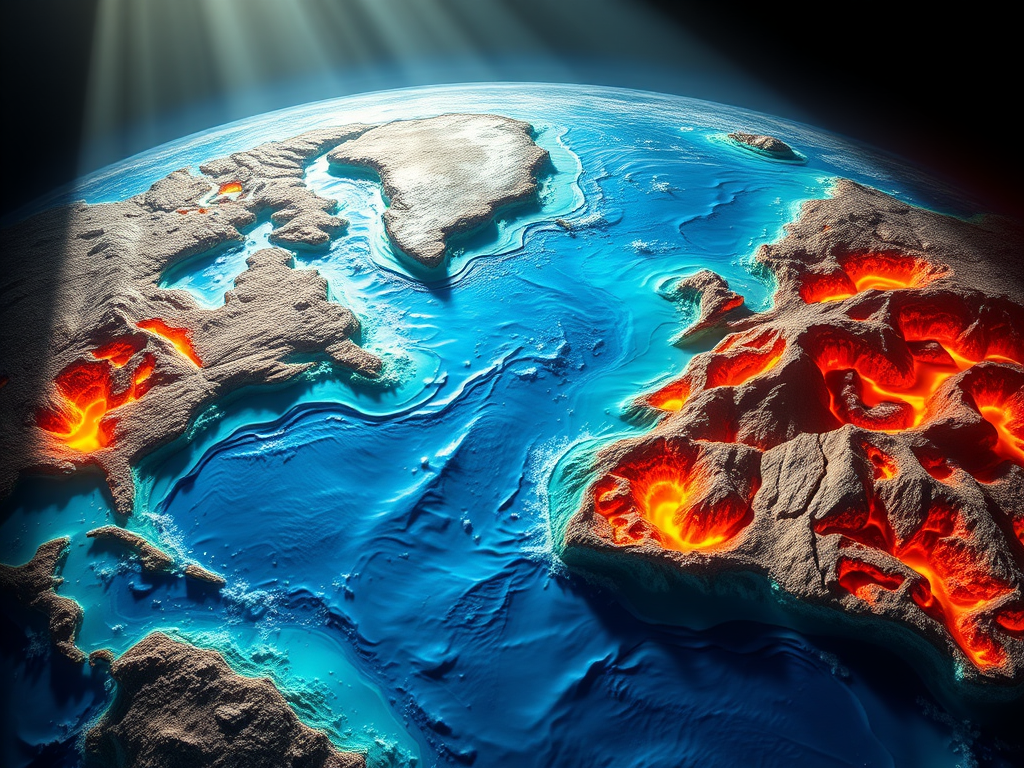
- Option (C) – Seafloor spreading: Seafloor spreading happens at mid-ocean ridges where tectonic plates move apart. Magma rises, cools, and forms new oceanic crust. This is correct.
- Option (D) – Convection: Convection is the movement of molten material in the mantle, driving plate tectonics. It supports seafloor spreading but doesn’t directly add crust. This is incorrect.
Reason: Seafloor spreading creates new oceanic crust as magma rises at mid-ocean ridges, cools, and solidifies, continually adding to the Earth’s crust. Option (C) is the correct answer.
Key Terms Explained:
- Crust: The Earth’s outermost solid layer, made of oceanic (thinner, denser) and continental (thicker, less dense) crust.
- Seafloor Spreading: A process at mid-ocean ridges where tectonic plates diverge, allowing magma to rise and form new oceanic crust.
- Subduction: The process where one tectonic plate is forced under another, sinking into the mantle, recycling crust.
- Earthquake: A sudden release of energy in the Earth’s crust, causing ground shaking, often along plate boundaries.
- Convection: The circular movement of molten rock in the mantle due to heat, driving tectonic plate movement.
- Tectonic Plates: Large, rigid pieces of the Earth’s crust and upper mantle that move and interact, causing geological activity.
- Magma: Molten rock beneath the Earth’s surface that forms new crust when it cools during seafloor spreading.
- Mid-Ocean Ridge: An underwater mountain range where tectonic plates diverge, and new crust forms via seafloor spreading.
Five Probable Questions of Similar Difficulty
- Question: What forms new oceanic crust at mid-ocean ridges?
(A) Subduction
(B) Seafloor spreading
(C) Earthquakes
(D) Volcanic eruptions
Answer: (B) Seafloor spreading
Explanation: Seafloor spreading at mid-ocean ridges allows magma to rise and solidify, forming new oceanic crust. - Question: Which process recycles Earth’s crust back into the mantle?
(A) Seafloor spreading
(B) Convection
(C) Subduction
(D) Faulting
Answer: (C) Subduction
Explanation: Subduction occurs when a tectonic plate sinks under another, melting into the mantle. - Question: What drives the movement of tectonic plates?
(A) Earthquakes
(B) Magma cooling
(C) Convection in the mantle
(D) Crust formation
Answer: (C) Convection in the mantle
Explanation: Convection currents in the mantle move tectonic plates, enabling processes like seafloor spreading. - Question: Where does seafloor spreading primarily occur?
(A) Continental margins
(B) Mid-ocean ridges
(C) Subduction zones
(D) Fault lines
Answer: (B) Mid-ocean ridges
Explanation: Mid-ocean ridges are divergent plate boundaries where new crust forms via seafloor spreading. - Question: What is a result of seafloor spreading?
(A) Destruction of crust
(B) Formation of new crust
(C) Increased earthquakes only
(D) Mantle cooling
Answer: (B) Formation of new crust
Explanation: Seafloor spreading adds new oceanic crust as magma rises and solidifies at mid-ocean ridges.
Preparation Strategies for 71st BPSC Prelims
- Study plate tectonics, focusing on seafloor spreading and subduction.
- Learn key terms like crust, magma, and convection.
- Understand the role of mid-ocean ridges in crust formation.
- Practice questions on geological processes and their outcomes.
- Avoid confusing seafloor spreading (creates crust) with subduction (destroys crust).

Leave a comment