
Month: July 2025
-

Collective Bargaining: Detailed Study Material for UPSC EPFO and UPSC ALC Exams
26,460 views
Introduction to Collective Bargaining Collective bargaining is a cornerstone of employer-employee relations, involving negotiations between employers (or their associations) and employee representatives, typically trade unions, to determine terms of employment such as wages, working hours, conditions, and benefits. It results in a collective agreement that is legally binding for a specified period, promoting industrial harmony…
-

Employer-Employee Relations: Detailed Study Material
26,460 views
For UPSC EPFO and UPSC ALC Exams Employer-employee relations, also known as industrial relations, refer to the dynamic interactions between employers (management), employees (workers), and their representatives (trade unions) in the workplace. This field encompasses the regulation of work conditions, dispute resolution, collective bargaining, and social security measures to ensure harmonious and productive labor environments.…
-
Study Material for Time, Speed, and Distance
26,460 views
For Banks , CAT, RBI, CSAT and Related Exams 1. Introduction to Time, Speed, and Distance TSD explores the interrelationship between three variables: time (how long), speed (how fast), and distance (how far). It’s foundational for problems involving motion, such as trains crossing platforms, boats in streams, or races. In RBI Grade B, questions emphasize…
-
Study Material for Time and Work
26,460 views
For RBI Grade B Exam and Others 1. Introduction to Time and Work Time and Work revolves around the relationship between work rates, time, and efficiency. The core idea is that work completed equals rate multiplied by time. In RBI Grade B, questions test your ability to handle fractions, LCMs, ratios, and variables in scenarios…
-
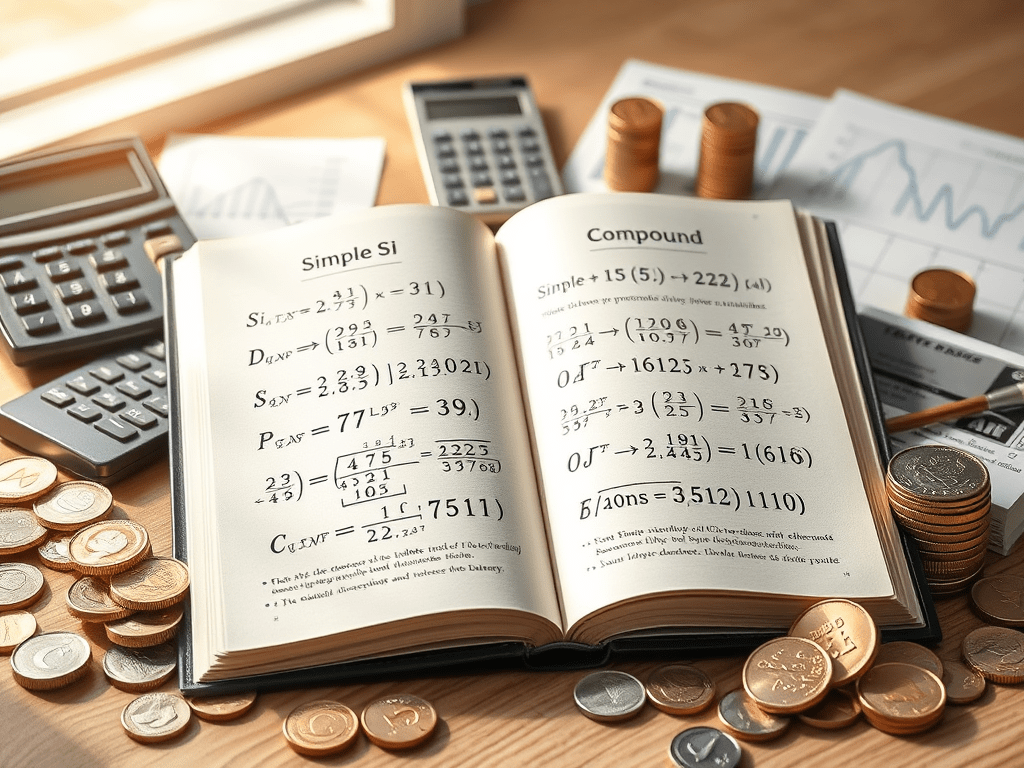
Simple & Compound Interest
26,460 views
Useful for RBI, CSAT, BANKING ETC 📍 Overview 1️⃣ Introduction to SI & CI Concept Description Simple Interest (SI) Interest on principal only. Formula: SI = (P × R × T) / 100 Compound Interest (CI) Interest on principal + past interest. Formula: CI = A – P, where A = P(1 + R/100)^T Key…
-

Ultimate Study Material for Percentages – RBI Grade B Exam
26,460 views
This study material is designed specifically for the Quantitative Aptitude section of the RBI Grade B Phase 1 exam, where percentages often appear in data interpretation, profit/loss, and direct calculation problems. Percentages test your speed and accuracy in conversions, increases/decreases, and comparisons. Drawing from reliable sources and exam patterns up to 2025, this guide covers…
-
RBI Grade B Quantitative Aptitude
26,460 views
The Quantitative Aptitude section is a crucial part of the RBI Grade B Phase 1 exam, carrying 30 marks with 30 questions to be solved in 25 minutes. There is a negative marking of 0.25 marks for each incorrect answer, and candidates must clear both sectional and overall cut-offs to qualify for Phase 2.
-

Test 4: Ancient Bihar for BPSC Examination , Free Test
26,460 views
( 60 days -60 tests) Test No . 4 Test No 4 Question Paper 150 Superbly Selected Question for BPSC Prelims Exam Test No 4 Solution Each question should be explained in simple, easy-to-understand language to help with memorization and quick recall. Ancient Indian History is a favorite topic for BPSC exams, and to thoroughly…
-
Ancient India Test for BPSC Prelims (Full Length)
26,460 views
Test No. 3 of 60 days 60 tests series Test No 3 Question Paper 150 Superbly Selected Question for BPSC Prelims Exam Test No 3 Solution Each question should be explained in simple, easy-to-understand language to help with memorization and quick recall. Ancient Indian History is a favorite topic for BPSC exams, and to thoroughly…
-
Bihar Public Service Commission (BPSC) Combined Competitive Examination (Preliminary)BPSC Prelims Syllabus (Topic-Wise)
26,460 views
All Study Material is updated on cracktarget.com I. General Knowledge & Current Affairs II. History of India & Bihar a) Ancient History b) Medieval History c) Modern Indian History III. Geography of India & Bihar a) Physical Geography b) Economic & Human Geography c) Geography of Bihar IV. Indian Polity & Governance V. Indian Economy…
