
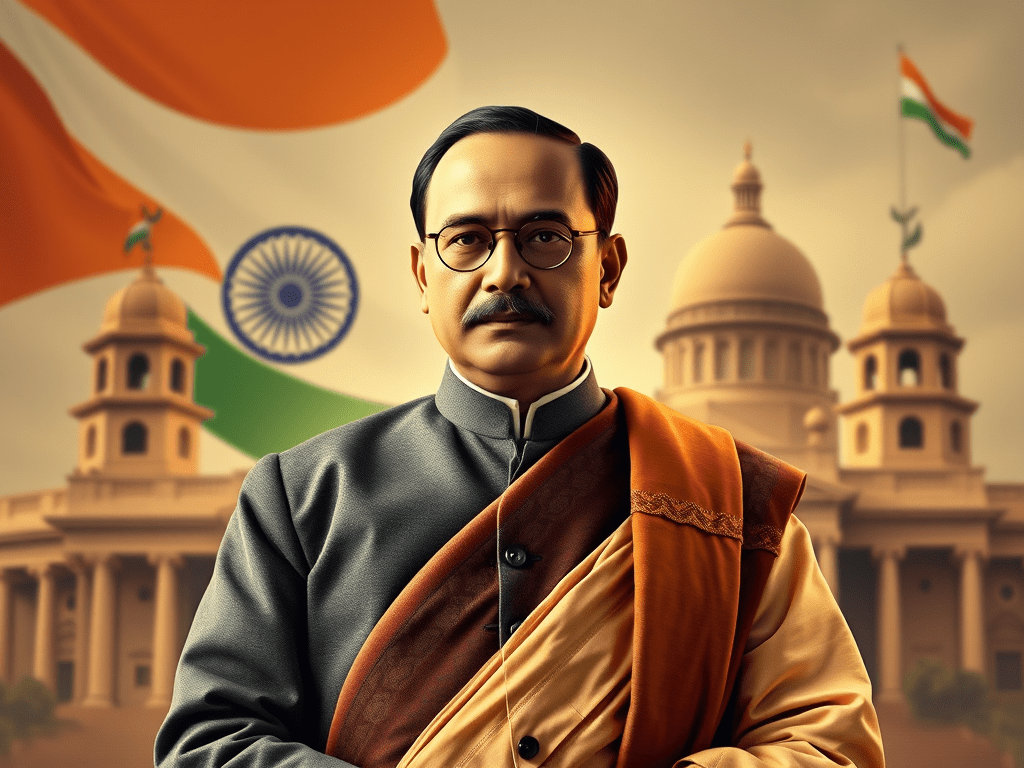
Gopal Krishna Gokhale (1866–1915) was a distinguished Indian political leader, social reformer, and moderate nationalist who played a pivotal role in the early phases of the Indian independence movement. He advocated for constitutional methods and gradual reforms through dialogue with British authorities, emphasizing education, economic justice, and social upliftment as foundations for self-rule. Gokhale served as a mentor to Mahatma Gandhi and influenced key legislative changes, while his moderate approach often contrasted with the more radical elements within the Indian National Congress.
Early Life
Gopal Krishna Gokhale was born on May 9, 1866, in Kotluk village, Guhagar taluka, Ratnagiri district, in the Bombay Presidency (present-day Maharashtra). He belonged to a Chitpavan Brahmin family that faced financial hardships, yet prioritized education as a means to secure opportunities under British colonial rule. His upbringing in a modest environment instilled values of perseverance and intellectual pursuit, shaping his later commitment to social and political reforms.
Education
Gokhale received his early education at Rajaram College in Kolhapur, where he demonstrated academic excellence despite economic constraints. He graduated from Elphinstone College in Bombay in 1884, becoming one of the first generations of Indians to benefit from a university-level English education under the British system. During this period, he was profoundly influenced by social reformer Mahadev Govind Ranade, who served as his mentor, and by Western political philosophers such as John Stuart Mill and Edmund Burke. Gokhale later taught history and political economy at Fergusson College in Pune, further honing his scholarly approach to public issues.
Entry into Politics and Career
Gokhale entered politics in 1889 as a protégé of Ranade, joining the Indian National Congress (INC) and quickly rising as a senior leader. He was elected to the Bombay Legislative Council in 1899 and to the Imperial Legislative Council in 1901 and 1903. In 1905, he presided over the INC session in Banaras, advocating for moderate reforms. Gokhale served on these councils until his death, focusing on legislative advocacy to address colonial policies. His career highlighted a commitment to working within British institutions to push for incremental changes, including decentralization and expanded Indian representation in governance.
Contributions to Indian Independence Movement
Gokhale’s contributions emphasized constitutional agitation and education as tools for achieving self-rule (Swaraj). Key aspects include:
- Legislative Reforms: He played a significant role in the Morley-Minto Reforms of 1909, which expanded legislative councils and introduced separate electorates, marking an early step toward constitutional progress in India.
- Economic Advocacy: At the Welby Commission in 1897, Gokhale critiqued British fiscal policies, highlighting the disproportionate tax burden on Indians and colonial exploitation of resources.
- Opposition to Indentured Labor: He campaigned against the indentured labor system, securing a 1910 resolution to end migration to Natal (South Africa) and proposing a broader ban in 1912, which contributed to its abolition across the British Empire by 1920.
- Educational Initiatives: Gokhale introduced a bill in 1911 for compulsory primary education, funded by the state, to foster an informed citizenry capable of driving political change.
- Journalism and Public Awareness: He founded the English weekly newspaper The Hitavada to disseminate nationalist ideas and promote public discourse.
These efforts underscored his belief in gradual, non-violent progress toward independence.
Social Reforms
As a dedicated social reformer, Gokhale addressed issues of inequality and exploitation:
- He supported the Age of Consent Bill (1891–1892) to raise the marriage age for girls, aiming to curb child marriage despite opposition from conservative factions.
- Through initiatives like mobile libraries, schools, and night classes for factory workers, he promoted education as a means of social upliftment, particularly for marginalized groups including Dalits.
- Gokhale opposed oppressive land revenue policies and advocated for local self-governance through institutions like panchayats, emphasizing decentralization to empower rural communities.
His reforms aligned with liberal principles, seeking an egalitarian society free from caste-based discrimination and colonial injustices.
Key Events and Ideological Conflicts
Several pivotal events defined Gokhale’s career:
- Founding of Servants of India Society (1905): Established in Pune, this organization trained individuals for public service, focusing on education, social justice, and constitutional advocacy. It expanded to branches in other cities and continues operations today.
- Surat Split (1907): Ideological differences with radicals like Bal Gangadhar Tilak led to the division of the INC into moderate and extremist factions. Gokhale favored petitions and negotiations, while Tilak pushed for direct action.
- Welby Commission Testimony (1897): His evidence exposed colonial economic drains, enhancing his reputation as an articulate critic of British policies.
Despite conflicts, Gokhale maintained respectful relations with opponents, as evidenced by his protection of Tilak during the Surat session and Tilak’s later tribute.
Relationships with Other Leaders
Gokhale’s influence extended through mentorship and collaborations:
- Mentorship of Mahatma Gandhi: He guided Gandhi during his early political years, introducing him to Indian issues and encouraging his involvement in the freedom struggle. Gandhi later diverged by adopting mass mobilization and non-cooperation, but acknowledged Gokhale’s profound impact.
- Relations with Bal Gangadhar Tilak: Marked by ideological clashes—Gokhale’s moderation versus Tilak’s extremism—their rivalry culminated in the 1907 split, yet mutual respect persisted, with Tilak mourning Gokhale as “The Diamond of India.”
- Collaborations: He worked with figures like Dadabhai Naoroji, Pherozeshah Mehta, Bipin Chandra Pal, Lala Lajpat Rai, and Annie Besant, seeking advice from Besant on unifying Congress factions.
These relationships highlighted Gokhale’s role as a bridge-builder in the nationalist movement.
Death and Legacy
Gokhale passed away on February 19, 1915, in Pune, expressing a final wish for Congress unity. His legacy endures as a pioneer of liberal nationalism and constitutional reform in India. He is commemorated through the Servants of India Society, his ancestral home in Pune, and a 1966 Indian postage stamp. Gokhale’s emphasis on education, ethical governance, and social equity influenced subsequent leaders and shaped the movement toward an open, democratic society. His descendants continue to preserve his heritage, underscoring his lasting contributions to Indian history.

Leave a comment