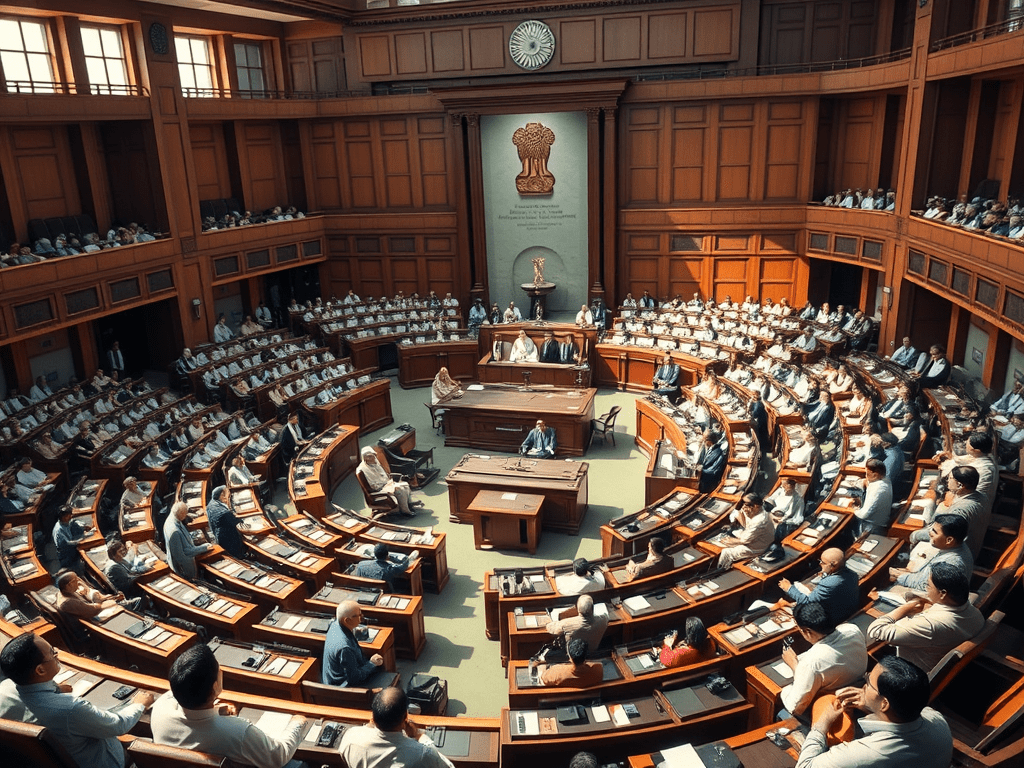
The Indian Parliament
Introduction
The Indian Parliament, comprising the Lok Sabha, Rajya Sabha, and the President of India, conducts its legislative work through sessions. A session is a period during which Parliament meets to carry out its functions, such as passing laws, discussing budgets, and addressing questions from Members of Parliament (MPs). The syllabus for the SSA/UDC exam emphasizes “simple questions relating to sessions of Parliament,” making it essential to understand the types, scheduling, and key processes of these sessions. This note covers the structure, types, and procedures related to parliamentary sessions, ensuring alignment with the exam’s requirements.
Key Aspects of Sessions of Parliament
- Definition of a Session:
- A session is a series of meetings held over several days or weeks, during which Parliament conducts its business, including debates, question hours, and bill discussions.
- Sessions are summoned by the President of India under Article 85 of the Constitution, which mandates that Parliament meets at least twice a year, with no more than a six-month gap between sessions.
- Types of Sessions:
- Budget Session (February–May):
- The longest and most important session, typically held from February to May.
- Focuses on presenting and discussing the Union Budget, which outlines the government’s financial plan for the year.
- Includes the President’s Address at the start of the first session of the year (Article 87), followed by a Motion of Thanks debated in both houses.
- Example: The Union Budget for 2024–25 was presented during the Budget Session in February 2024.
- Monsoon Session (July–August):
- Held during the monsoon season, typically from July to August.
- Focuses on legislative business, such as passing bills and discussing policy issues.
- Example: Bills like the Finance Bill or new laws are often debated during this session.
- Winter Session (November–December):
- Held towards the end of the year, usually from November to December.
- Addresses pending legislative matters, supplementary budgets, or urgent issues.
- Example: The Winter Session often clears backlog bills from earlier sessions.
- Special Sessions:
- Called for specific purposes, such as commemorating events or addressing urgent matters.
- Example: A special session was held in 2023 to mark 75 years of India’s Independence.
- Budget Session (February–May):
- Key Processes in Sessions:
- Summoning: The President summons both houses to meet, based on the advice of the Cabinet (Article 85). The dates are decided by the Cabinet Committee on Parliamentary Affairs.
- Adjournment: A temporary pause in a session’s proceedings, decided by the presiding officer (Speaker for Lok Sabha, Chairman for Rajya Sabha). It can last a few hours or days.
- Example: A session may be adjourned due to disruptions or lack of quorum.
- Prorogation: The formal end of a session by the President. It terminates all pending business except bills, which carry forward to the next session.
- Example: After the Budget Session, the President prorogues Parliament.
- Dissolution: Applies only to the Lok Sabha, ending its five-year term or earlier if called by the President (e.g., for early elections). Rajya Sabha is a permanent body and is not dissolved.
- Quorum: The minimum number of members required for a sitting (1/10th of the total strength of each house, i.e., ~55 for Lok Sabha, ~25 for Rajya Sabha).
- Question Hour: The first hour of each sitting, where MPs ask questions (starred, unstarred, short notice) to ministers.
- Zero Hour: Follows Question Hour, allowing MPs to raise urgent public issues without prior notice.
- Joint Sitting: Called by the President (Article 108) to resolve disagreements between houses on non-Money Bills, presided over by the Lok Sabha Speaker.
- Key Activities During Sessions:
- Legislative Work: Passing bills (Money Bills, Ordinary Bills) through three readings (introduction, discussion, voting).
- Question Hour: MPs ask questions to hold the government accountable. The Department of Personnel and Training (DoPT) may provide inputs for questions related to government employees or policies.
- Motions and Resolutions: Discussing motions (e.g., Motion of Thanks, no-confidence motion) and resolutions on public issues.
- Budget Discussions: Debating the Union Budget, Demand for Grants, and Finance Bill (primarily in Lok Sabha).
- Committee Meetings: Parliamentary committees (e.g., Public Accounts Committee) meet during sessions to review policies and bills.
- Key Terms Related to Sessions:
- List of Business: The daily agenda listing questions, bills, and motions.
- Hansard: The official record of parliamentary debates and proceedings.
- Sine Die Adjournment: Adjournment without a fixed resumption date, often used at the end of a session.
- Motion of Thanks: A motion debated after the President’s Address, expressing gratitude for the speech.
- DoPT’s Role in Sessions:
- The DoPT, as part of the Ministry of Personnel, Public Grievances and Pensions, provides inputs for parliamentary questions related to government recruitment, training, or administrative reforms.
- Example: An MP’s question on UPSC recruitment delays would involve DoPT preparing the ministry’s response.
100 MCQs on Sessions of Parliament
Below are 100 MCQs divided into Easy (20 questions), Moderate (60 questions), and Hard (20 questions) levels, with answers and brief explanations. These are designed to cover the SSA/UDC exam’s focus on simple parliamentary session concepts.
Easy Level MCQs (20 Questions)
- Q: How many main sessions does the Indian Parliament usually have in a year?
- A) One B) Two C) Three D) Four
- A: C) Three
- Explanation: Parliament typically has Budget, Monsoon, and Winter sessions.
- Q: Which session is held from February to May?
- A) Monsoon Session B) Winter Session C) Budget Session D) Special Session
- A: C) Budget Session
- Explanation: The Budget Session occurs in the first half of the year.
- Q: When is the Monsoon Session usually held?
- A) November–December B) July–August C) February–May D) January–March
- A: B) July–August
- Explanation: It aligns with the monsoon season.
- Q: When is the Winter Session typically held?
- A) July–August B) November–December C) February–May D) April–June
- A: B) November–December
- Explanation: The Winter Session occurs towards year-end.
- Q: Who summons Parliament sessions?
- A) Speaker B) President C) Prime Minister D) Vice President
- A: B) President
- Explanation: The President summons sessions under Article 85.
- Q: What is the first hour of a parliamentary sitting called?
- A) Zero Hour B) Question Hour C) Debate Hour D) Motion Hour
- A: B) Question Hour
- Explanation: MPs ask questions to ministers during this hour.
- Q: What follows Question Hour in a parliamentary sitting?
- A) Zero Hour B) Adjournment C) Prorogation D) Budget Discussion
- A: A) Zero Hour
- Explanation: Zero Hour is for raising urgent issues.
- Q: What is the term for temporarily pausing a session?
- A) Prorogation B) Dissolution C) Adjournment D) Suspension
- A: C) Adjournment
- Explanation: Adjournment pauses proceedings temporarily.
- Q: What is the term for formally ending a session?
- A) Adjournment B) Prorogation C) Dissolution D) Closure
- A: B) Prorogation
- Explanation: Prorogation ends a session, ordered by the President.
- Q: Which house is not subject to dissolution?
- A) Lok Sabha B) Rajya Sabha C) Both D) Neither
- A: B) Rajya Sabha
- Explanation: Rajya Sabha is a permanent body.
- Q: Who can dissolve the Lok Sabha?
- A) Speaker B) President C) Prime Minister D) Vice President
- A: B) President
- Explanation: The President dissolves Lok Sabha for elections.
- Q: What is the minimum quorum for a Lok Sabha sitting?
- A) 25 B) 55 C) 100 D) 75
- A: B) 55
- Explanation: 1/10th of 552 ≈ 55 members.
- Q: What is the minimum quorum for a Rajya Sabha sitting?
- A) 25 B) 50 C) 75 D) 100
- A: A) 25
- Explanation: 1/10th of 250 ≈ 25 members.
- Q: Which session discusses the Union Budget?
- A) Monsoon Session B) Winter Session C) Budget Session D) Special Session
- A: C) Budget Session
- Explanation: The Budget is presented in February.
- Q: Who delivers the President’s Address at the start of the Budget Session?
- A) Prime Minister B) President C) Speaker D) Vice President
- A: B) President
- Explanation: Required under Article 87.
- Q: What is debated after the President’s Address?
- A) No-confidence motion B) Motion of Thanks C) Budget motion D) Adjournment motion
- A: B) Motion of Thanks
- Explanation: Both houses debate the Motion of Thanks.
- Q: What is the maximum gap allowed between two Parliament sessions?
- A) 3 months B) 6 months C) 9 months D) 12 months
- A: B) 6 months
- Explanation: Article 85 mandates a maximum six-month gap.
- Q: Who presides over a joint sitting of Parliament?
- A) President B) Speaker C) Vice President D) Prime Minister
- A: B) Speaker
- Explanation: The Lok Sabha Speaker presides (Article 108).
- Q: What is the daily agenda of Parliament called?
- A) Hansard B) List of Business C) Gazette D) Journal
- A: B) List of Business
- Explanation: It lists questions, bills, and motions.
- Q: What is the official record of parliamentary proceedings called?
- A) Gazette B) Hansard C) Bulletin D) Order Paper
- A: B) Hansard
- Explanation: Hansard records debates and proceedings.
Moderate Level MCQs (60 Questions)
- Q: Under which article does the President summon Parliament sessions?
- A) Article 79 B) Article 85 C) Article 108 D) Article 123
- A: B) Article 85
- Explanation: Article 85 governs summoning and prorogation.
- Q: Who advises the President on session dates?
- A) Speaker B) Cabinet Committee on Parliamentary Affairs C) Prime Minister D) Vice President
- A: B) Cabinet Committee on Parliamentary Affairs
- Explanation: The committee recommends session schedules.
- Q: Which session is typically the longest?
- A) Monsoon Session B) Winter Session C) Budget Session D) Special Session
- A: C) Budget Session
- Explanation: It spans February to May, covering the Budget.
- Q: What is the main focus of the Monsoon Session?
- A) Budget discussion B) Legislative business C) President’s Address D) Elections
- A: B) Legislative business
- Explanation: It focuses on bills and policy discussions.
- Q: What is the main purpose of the Winter Session?
- A) Budget presentation B) Clearing pending business C) Elections D) Special resolutions
- A: B) Clearing pending business
- Explanation: It addresses backlog bills and issues.
- Q: What is a special session of Parliament called for?
- A) Routine business B) Specific purposes C) Budget discussion D) Elections
- A: B) Specific purposes
- Explanation: E.g., commemorating events like Independence Day.
- Q: What happens to pending bills during prorogation?
- A) They lapse B) They carry forward C) They are rejected D) They are archived
- A: B) They carry forward
- Explanation: Bills continue to the next session.
- Q: What happens to pending bills during Lok Sabha dissolution?
- A) They carry forward B) They lapse C) They are passed D) They are sent to Rajya Sabha
- A: B) They lapse
- Explanation: Dissolution ends all pending Lok Sabha business.
- Q: Who decides on adjournment during a Lok Sabha sitting?
- A) President B) Speaker C) Prime Minister D) Vice President
- A: B) Speaker
- Explanation: The Speaker adjourns Lok Sabha proceedings.
- Q: Who decides on adjournment during a Rajya Sabha sitting?
- A) Speaker B) Vice President C) Prime Minister D) President
- A: B) Vice President
- Explanation: The Chairman (Vice President) adjourns Rajya Sabha.
- Q: What is adjournment sine die?
- A) Temporary pause B) End without a fixed date C) Permanent closure D) Session start
- A: B) End without a fixed date
- Explanation: Used to close a session without scheduling resumption.
- Q: Which house debates the Motion of Thanks first?
- A) Lok Sabha B) Rajya Sabha C) Both simultaneously D) Joint sitting
- A: C) Both simultaneously
- Explanation: Both houses debate it after the President’s Address.
- Q: What is the purpose of Question Hour?
- A) Passing bills B) Holding government accountable C) Budget discussion D) Elections
- A: B) Holding government accountable
- Explanation: MPs question ministers on policies.
- Q: What is Zero Hour used for?
- A) Budget discussion B) Urgent public issues C) Bill voting D) Elections
- A: B) Urgent public issues
- Explanation: MPs raise matters without prior notice.
- Q: Under which article is a joint sitting called?
- A) Article 79 B) Article 108 C) Article 123 D) Article 356
- A: B) Article 108
- Explanation: For resolving deadlocks on non-Money Bills.
- Q: How many readings does a bill undergo in a session?
- A) Two B) Three C) Four D) Five
- A: B) Three
- Explanation: First, Second, and Third Readings.
- Q: Which session includes the presentation of the Economic Survey?
- A) Monsoon Session B) Winter Session C) Budget Session D) Special Session
- A: C) Budget Session
- Explanation: The Economic Survey precedes the Budget.
- Q: Who prepares the Union Budget discussed in the Budget Session?
- A) Finance Minister B) President C) Speaker D) Prime Minister
- A: A) Finance Minister
- Explanation: Presented by the Finance Minister.
- Q: What is the List of Business in Parliament?
- A) Annual report B) Daily agenda C) Financial statement D) Election schedule
- A: B) Daily agenda
- Explanation: Lists questions, bills, and motions.
- Q: What is the Motion of Thanks related to?
- A) Budget B) President’s Address C) No-confidence motion D) Bills
- A: B) President’s Address
- Explanation: Debated in both houses.
- Q: How long does the Budget Session typically last?
- A) 1 month B) 2–3 months C) 4–5 months D) 6 months
- A: C) 4–5 months
- Explanation: Spans February to May.
- Q: How long does the Monsoon Session typically last?
- A) 1–2 months B) 3–4 months C) 5–6 months D) 1 month
- A: A) 1–2 months
- Explanation: Usually July to August.
- Q: How long does the Winter Session typically last?
- A) 1–2 months B) 3–4 months C) 5–6 months D) 1 month
- A: A) 1–2 months
- Explanation: Usually November to December.
- Q: What is the role of DoPT during Question Hour?
- A) Passes bills B) Provides answers C) Conducts elections D) Prepares Budget
- A: B) Provides answers
- Explanation: DoPT inputs answers for personnel-related questions.
- Q: Which house discusses the Union Budget first?
- A) Rajya Sabha B) Lok Sabha C) Both simultaneously D) Joint sitting
- A: B) Lok Sabha
- Explanation: Lok Sabha has exclusive power over Money Bills.
- Q: What happens if the quorum is not met during a sitting?
- A) Session continues B) Sitting is adjourned C) Bill is passed D) Session ends
- A: B) Sitting is adjourned
- Explanation: Lack of quorum halts proceedings.
- Q: Who can call a special session of Parliament?
- A) Speaker B) President C) Prime Minister D) Vice President
- A: B) President
- Explanation: Special sessions are summoned by the President.
- Q: What is the purpose of a joint sitting?
- A) Budget approval B) Resolve bill deadlocks C) Elect President D) Discuss motions
- A: B) Resolve bill deadlocks
- Explanation: For non-Money Bills under Article 108.
- Q: Which bills do not lapse after prorogation?
- A) Money Bills B) Pending bills C) Rejected bills D) All bills
- A: B) Pending bills
- Explanation: Pending bills carry forward to the next session.
- Q: What is the minimum notice period for a starred question in a session?
- A) 7 days B) 10 days C) 15 days D) 20 days
- A: C) 15 days
- Explanation: Starred questions require 15 days’ notice.
- Q: What type of question is answered orally during Question Hour?
- A) Unstarred B) Starred C) Short notice D) Private member
- A: B) Starred
- Explanation: Starred questions get oral replies.
- Q: What type of question is answered in writing?
- A) Starred B) Unstarred C) Short notice D) All of these
- A: B) Unstarred
- Explanation: Unstarred questions get written replies.
- Q: What is a short notice question?
- A) Routine question B) Urgent question C) Written question D) Budget question
- A: B) Urgent question
- Explanation: For matters requiring less than 15 days’ notice.
- Q: Who prepares the List of Business for a session?
- A) Speaker B) Lok Sabha Secretariat C) President D) Prime Minister
- A: B) Lok Sabha Secretariat
- Explanation: The Secretariat prepares the agenda.
- Q: What is the Finance Bill discussed during the Budget Session?
- A) Tax proposals B) Election funding C) State budget D) Committee report
- A: A) Tax proposals
- Explanation: It implements Budget tax measures.
- Q: How many sittings does a session typically have?
- A) 1–2 B) 10–30 C) 50–60 D) 100
- A: B) 10–30
- Explanation: Varies by session length (e.g., 20–30 for Budget Session).
- Q: What is the role of the Speaker during a session?
- A) Answers questions B) Conducts proceedings C) Prepares Budget D) Summons session
- A: B) Conducts proceedings
- Explanation: The Speaker manages Lok Sabha sittings.
- Q: What is the role of the Vice President during a session?
- A) Conducts Lok Sabha B) Chairs Rajya Sabha C) Passes bills D) Summons session
- A: B) Chairs Rajya Sabha
- Explanation: As Chairman, the Vice President manages Rajya Sabha.
- Q: Which motion can interrupt normal session proceedings?
- A) Motion of Thanks B) Adjournment Motion C) Budget Motion D) Election Motion
- A: B) Adjournment Motion
- Explanation: For urgent public matters.
- Q: What is a Calling Attention Motion during a session?
- A) Budget discussion B) Highlight urgent issues C) Bill voting D) Election
- A: B) Highlight urgent issues
- Explanation: MPs draw attention to public matters.
- Q: Which house can initiate a no-confidence motion during a session?
- A) Rajya Sabha B) Lok Sabha C) Both D) Neither
- A: B) Lok Sabha
- Explanation: Only Lok Sabha can move it.
- Q: How many MPs are needed to move a no-confidence motion?
- A) 25 B) 50 C) 75 D) 100
- A: B) 50
- Explanation: At least 50 MPs must support it.
- Q: What is the purpose of the Demand for Grants in the Budget Session?
- A) Elect MPs B) Approve ministry budgets C) Pass bills D) Discuss elections
- A: B) Approve ministry budgets
- Explanation: Part of Budget discussions.
- Q: Who can vote in a joint sitting?
- A) Lok Sabha only B) Rajya Sabha only C) Both houses D) President
- A: C) Both houses
- Explanation: Members of both houses vote (Article 108).
- Q: What is the minimum notice for an adjournment motion?
- A) 1 day B) 2 days C) No notice D) 7 days
- A: C) No notice
- Explanation: It can be moved for urgent issues without notice.
- Q: Which committee meets during sessions to review bills?
- A) Public Accounts Committee B) Standing Committee C) Estimates Committee D) All of these
- A: B) Standing Committee
- Explanation: Standing Committees scrutinize bills.
- Q: What is the role of the Lok Sabha Secretariat during sessions?
- A) Passes bills B) Prepares agenda C) Conducts elections D) Prepares Budget
- A: B) Prepares agenda
- Explanation: It compiles the List of Business.
- Q: What happens if a session is adjourned sine die?
- A) Resumes next day B) Ends without fixed date C) Continues D) Bill lapses
- A: B) Ends without fixed date
- Explanation: No resumption date is set.
- Q: Which session may include supplementary budget discussions?
- A) Budget Session B) Monsoon Session C) Winter Session D) All of these
- A: C) Winter Session
- Explanation: Supplementary demands are often discussed here.
- Q: Who can extend a session beyond its scheduled end?
- A) Speaker B) President C) Prime Minister D) Vice President
- A: B) President
- Explanation: The President can extend sessions.
- Q: What is the purpose of the President’s Address?
- A) Announce elections B) Outline government agenda C) Pass bills D) Conduct Question Hour
- A: B) Outline government agenda
- Explanation: It sets the session’s priorities.
- Q: Which house can reject amendments to the Motion of Thanks?
- A) Lok Sabha B) Rajya Sabha C) Both D) Neither
- A: C) Both
- Explanation: Each house votes on the Motion of Thanks.
- Q: What is the minimum notice for a Calling Attention Motion?
- A) 1 day B) 2 days C) No notice D) 7 days
- A: C) No notice
- Explanation: It can be raised without prior notice.
- Q: Which session is least likely to discuss new bills?
- A) Budget Session B) Monsoon Session C) Winter Session D) Special Session
- A: D) Special Session
- Explanation: Special sessions focus on specific issues.
- Q: What is the role of ministers during Question Hour?
- A) Pass bills B) Answer MPs’ questions C) Conduct elections D) Prepare Budget
- A: B) Answer MPs’ questions
- Explanation: Ministers respond to starred/unstarred questions.
- Q: Which house has exclusive power over the Finance Bill?
- A) Rajya Sabha B) Lok Sabha C) Both D) Neither
- A: B) Lok Sabha
- Explanation: Lok Sabha controls Money Bills.
- Q: How long can Rajya Sabha delay a Money Bill?
- A) 7 days B) 14 days C) 30 days D) 60 days
- A: B) 14 days
- Explanation: Rajya Sabha must return it within 14 days.
- Q: What is the term for a session’s financial proposals?
- A) Demand for Grants B) Motion of Thanks C) Adjournment Motion D) Resolution
- A: A) Demand for Grants
- Explanation: Part of Budget discussions.
- Q: Who chairs the Cabinet Committee on Parliamentary Affairs?
- A) Prime Minister B) Home Minister C) Speaker D) President
- A: B) Home Minister
- Explanation: Typically chaired by the Home Minister.
- Q: What is the purpose of a special session in 2023?
- A) Budget discussion B) Independence Day celebration C) Elections D) Bill voting
- A: B) Independence Day celebration
- Explanation: A special session marked 75 years of Independence.
Hard Level MCQs (20 Questions)
- Q: Under which article is the President’s Address mandated?
- A) Article 85 B) Article 87 C) Article 108 D) Article 123
- A: B) Article 87
- Explanation: Article 87 requires the address at the year’s first session.
- Q: What majority is needed to pass the Motion of Thanks?
- A) Simple majority B) Two-thirds majority C) Absolute majority D) Special majority
- A: A) Simple majority
- Explanation: A simple majority of members present and voting.
- Q: Which committee recommends session dates to the President?
- A) Public Accounts Committee B) Cabinet Committee on Parliamentary Affairs C) Estimates Committee D) Standing Committee
- A: B) Cabinet Committee on Parliamentary Affairs
- Explanation: It advises on parliamentary schedules.
- Q: What happens if a Money Bill is not returned by Rajya Sabha in 14 days?
- A) It lapses B) It is deemed passed C) It goes to joint sitting D) President decides
- A: B) It is deemed passed
- Explanation: Lok Sabha’s version prevails after 14 days.
- Q: Which session saw the passage of the Women’s Reservation Bill in 2023?
- A) Budget Session B) Monsoon Session C) Special Session D) Winter Session
- A: C) Special Session
- Explanation: Passed during a special session in September 2023.
- Q: How many sittings did the Budget Session of 2024 have?
- A) 10–15 B) 20–30 C) 40–50 D) 5–10
- A: B) 20–30
- Explanation: Typical for the Budget Session’s duration.
- Q: What is the role of the Business Advisory Committee during sessions?
- A) Prepares Budget B) Allocates time for business C) Answers questions D) Conducts elections
- A: B) Allocates time for business
- Explanation: It schedules debates and discussions.
- Q: Which motion requires a two-thirds majority in a session?
- A) Motion of Thanks B) No-confidence motion C) Impeachment motion D) Adjournment motion
- A: C) Impeachment motion
- Explanation: For removing judges or the President.
- Q: What is the minimum notice for a short notice question?
- A) 1 day B) 3 days C) Less than 15 days D) No notice
- A: C) Less than 15 days
- Explanation: For urgent matters, less notice is allowed.
- Q: Which session typically includes the Railway Budget discussion?
- A) Budget Session B) Monsoon Session C) Winter Session D) Special Session
- A: A) Budget Session
- Explanation: Merged with the Union Budget since 2017.
- Q: What is the role of the Lok Sabha Speaker during Question Hour?
- A) Answers questions B) Moderates proceedings C) Prepares answers D) Votes
- A: B) Moderates proceedings
- Explanation: The Speaker ensures orderly conduct.
- Q: What is the term for a session’s financial oversight committee?
- A) Public Accounts Committee B) Standing Committee C) Estimates Committee D) All of these
- A: D) All of these
- Explanation: These committees review financial matters.
- Q: Which article allows the President to prorogue Parliament?
- A) Article 85 B) Article 108 C) Article 123 D) Article 356
- A: A) Article 85
- Explanation: Article 85 covers prorogation.
- Q: What happens to a no-confidence motion if it fails?
- A) Government falls B) Session ends C) Government continues D) Joint sitting
- A: C) Government continues
- Explanation: The government remains in power.
- Q: How many days’ notice is required for a no-confidence motion?
- A) 7 days B) 10 days C) 14 days D) No notice
- A: D) No notice
- Explanation: It can be moved with sufficient MP support.
- Q: Which session is most likely to address supplementary demands?
- A) Budget Session B) Monsoon Session C) Winter Session D) Special Session
- A: C) Winter Session
- Explanation: Supplementary budgets are often discussed here.
- Q: What is the role of the Rajya Sabha during the Budget Session?
- A) Passes Budget B) Suggests amendments C) Rejects Budget D) Conducts elections
- A: B) Suggests amendments
- Explanation: Rajya Sabha can suggest but not enforce changes.
- Q: Which session saw the introduction of GST bills in 2017?
- A) Budget Session B) Monsoon Session C) Winter Session D) Special Session
- A: A) Budget Session
- Explanation: GST bills were discussed in 2017’s Budget Session.
- Q: What is the term for a session’s temporary suspension due to disruptions?
- A) Prorogation B) Adjournment C) Dissolution D) Closure
- A: B) Adjournment
- Explanation: Used for disruptions or lack of quorum.
- Q: Which ministry coordinates answers for personnel-related questions? – A) Finance Ministry B) DoPT C) Home Ministry D) External Affairs – A: B) DoPT – Explanation: DoPT handles questions on government employees.
Preparation Tips for MCQs
- Use Cracktarget: Practice these MCQs on Cracktarget’s MCQ section (cracktarget.com → SSC SSA/UDC → Parliamentary Procedure). Create a quiz with these questions for timed practice.
- Focus Areas: Memorize session types (Budget, Monsoon, Winter), key terms (adjournment, prorogation, quorum), and Question Hour processes.
- Negative Marking: Attempt only confident answers to avoid the 0.25-mark penalty.
- Revision: Use flashcards for terms like Motion of Thanks, sine die, and List of Business.
| Syllabus | Study Material Link |
| Structure of the Indian Parliament | Click Here |
| Sessions of Parliament | Click Here |
| Key Parliamentary Terms | Click Here |
| Guidelines on Noting | Click Here |
| Communication, Forms, Channels, and Procedure | Click here |
| Main Page for SSC Departmental Exam | Click Here |





Leave a reply to Detailed Study Note: Chapter 7 – Guidelines on Noting – Crack Target Cancel reply