
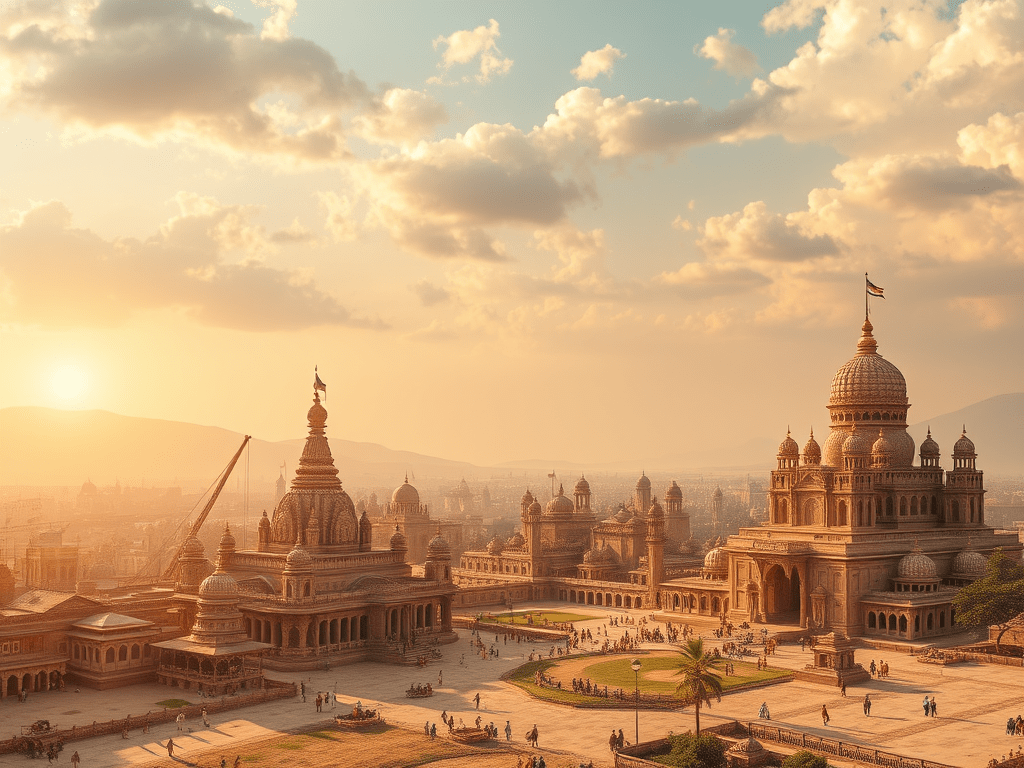
The period of the Mahajanapadas (c. 600–321 BCE) marks a significant phase in ancient Indian history, characterized by the emergence of large territorial states and early republics. This era, following the Later Vedic period, saw urbanization, economic growth, and political consolidation in the Indian subcontinent, particularly in the Gangetic plains. The Mahajanapadas and republics laid the groundwork for the rise of empires like the Mauryas and influenced the socio-political and cultural landscape of ancient India. Below is a detailed exploration of the Mahajanapadas and republics, their features, significance, and context.
1. Historical Context
The Mahajanapadas (literally “great realms” or “great territories”) emerged as the Indo-Aryans transitioned from semi-nomadic tribes to settled agrarian societies. This period, roughly from the 6th to 4th centuries BCE, coincided with the Second Urbanization in India, marked by the growth of cities, trade, and iron technology. The term janapada (from the Vedic period) evolved from meaning “tribal territory” to large, defined states.
The Buddhist and Jain texts (e.g., Anguttara Nikaya, Mahavastu), alongside later Vedic texts and Puranas, provide details about this period. The rise of heterodox religions like Buddhism and Jainism, which challenged Vedic ritualism, also shaped the socio-political environment.
Key Developments:
- Geographical Shift: Focus moved to the fertile Gangetic plains, particularly Magadha, Kosala, and Vatsa.
- Iron Technology: Enhanced agriculture and warfare, supporting larger populations and armies.
- Urbanization: Cities like Rajagriha, Varanasi, and Sravasti became political and commercial hubs.
2. The Sixteen Mahajanapadas
Buddhist texts, particularly the Anguttara Nikaya, list sixteen Mahajanapadas that were prominent around the 6th century BCE. These states varied in size, power, and governance, with some being monarchies and others republics. Below is a concise overview of the Mahajanapadas, their capitals, and key features:
| Mahajanapada | Capital | Region (Modern Equivalent) | Key Features |
|---|---|---|---|
| Magadha | Rajagriha (later Pataliputra) | South Bihar | Most powerful; rose under kings like Bimbisara and Ajatashatru; fertile land and trade routes. |
| Kosala | Sravasti | Eastern Uttar Pradesh | Home of Lord Rama in tradition; annexed by Magadha later. |
| Vatsa | Kaushambi | Allahabad, Uttar Pradesh | Flourished under King Udayana; key trade center. |
| Avanti | Ujjaini, Mahishmati | Madhya Pradesh | Divided into northern and southern parts; later absorbed by Magadha. |
| Anga | Champa | Bhagalpur, Bihar | Early maritime trade hub; annexed by Magadha under Bimbisara. |
| Kashi | Varanasi | Uttar Pradesh | Sacred city; eventually absorbed by Kosala and Magadha. |
| Kuru | Indraprastha (near Delhi) | Haryana, Delhi | Associated with the Mahabharata; declined in influence. |
| Panchala | Ahichhatra, Kampilya | Western Uttar Pradesh | Known for intellectual centers; later merged with Magadha. |
| Matsya | Viratanagara | Rajasthan | Smaller state; allied with neighbors. |
| Surasena | Mathura | Western Uttar Pradesh | Linked to Krishna worship; later under Magadha’s influence. |
| Chedi | Shuktimati | Bundelkhand, Madhya Pradesh | Minor state; mentioned in the Mahabharata. |
| Gandhara | Taxila | Northwest Pakistan | Major center of learning and trade; later under Persian influence. |
| Kamboja | Rajapura | Jammu-Kashmir, Afghanistan | Known for horses and warriors; culturally distinct. |
| Assaka (Asmaka) | Potana/Paithan | Telangana, Maharashtra | Southernmost Mahajanapada; limited political influence. |
| Vajji (Vrijji) | Vaishali | North Bihar | A confederacy of republics (e.g., Licchavis); democratic governance. |
| Malla | Kushinara, Pava | Eastern Uttar Pradesh | Republic; associated with Buddha’s death; later absorbed by Magadha. |
Notable Trends:
- Magadha’s Dominance: Magadha emerged as the most powerful due to its strategic location, fertile lands, and ambitious rulers like Bimbisara, Ajatashatru, and Mahapadma Nanda.
- Consolidation: Smaller Mahajanapadas (e.g., Anga, Kashi) were annexed by stronger states like Magadha and Kosala.
- Cultural Diversity: Western Mahajanapadas (Gandhara, Kamboja) had Persian and Central Asian influences, while eastern ones were more Indic.
3. Republics (Gana-Sanghas)
Alongside monarchies, the Mahajanapadas included several republics or gana-sanghas (tribal oligarchies), which were distinct for their democratic or oligarchic governance. These republics were primarily located in the foothills of the Himalayas and northern Bihar.
a) Key Republics
- Vajji Confederacy:
- A confederation of eight clans, including the Licchavis (based in Vaishali), Videhas, and Jnatrikas.
- Known for its democratic system, with decisions made by a council (sangha) of clan leaders.
- Vaishali was a prosperous trade hub and a center for Buddhism and Jainism (birthplace of Mahavira).
- Resisted Magadha’s expansion until Ajatashatru’s conquest.
- Malla:
- Located in Kushinara and Pava, associated with Buddha’s death (Mahaparinirvana).
- Governed by an assembly of clan chiefs, with less centralized authority.
- Eventually absorbed by Magadha.
- Other Republics:
- Smaller gana-sanghas included the Shakyas (Kapilavastu, Buddha’s clan), Kollayas, and Moriyas (linked to the Mauryas).
b) Features of Republics
- Governance: Power rested with a council of clan leaders or elders, not a single monarch. Decisions were made collectively, often through debate and consensus.
- Social Structure: More egalitarian than monarchies, with less rigid varna hierarchies, though Kshatriya clans dominated leadership.
- Economy: Relied on agriculture, trade, and pastoralism, with Vaishali being a key commercial center.
- Military: Maintained militias rather than standing armies, making them vulnerable to monarchies like Magadha.
- Cultural Significance: Republics fostered intellectual freedom, supporting heterodox movements like Buddhism and Jainism.
c) Decline of Republics
- Republics were gradually absorbed by expanding monarchies, particularly Magadha, due to:
- Internal factionalism and lack of centralized authority.
- Military superiority of monarchies with professional armies and resources.
- Economic pressures from growing trade and urbanization, favoring larger states.
4. Social and Economic Context
a) Social Structure
- Varna System: The fourfold varna system (Brahmins, Kshatriyas, Vaishyas, Shudras) was entrenched, with Brahmins and Kshatriyas dominating religious and political spheres.
- Jati (Caste): Occupational groups solidified into jatis, with artisans, traders, and laborers forming distinct endogamous units.
- Urban Elites: New classes, such as wealthy merchants (shreshthins) and landowners, emerged due to economic growth.
- Women’s Status: Continued to decline, with limited roles in public life, though elite women occasionally influenced politics (e.g., courtesans like Amrapali in Vaishali).
b) Economy
- Agriculture: Intensive farming in the Gangetic plains, supported by iron tools and irrigation, produced surplus crops like rice, barley, and wheat.
- Trade: Long-distance trade flourished, with routes connecting India to Persia, Central Asia, and Southeast Asia. Goods included textiles, spices, and metals.
- Urbanization: Cities like Rajagriha, Varanasi, and Taxila were centers of commerce, administration, and learning.
- Currency: Barter persisted, but early punch-marked coins (silver and copper) appeared, facilitating trade.
- Guilds: Artisans and merchants organized into shrenis (guilds), regulating production and trade.
5. Political and Military Dynamics
a) Monarchical Governance
- Monarchies were hereditary, with kings (raja) wielding supreme authority, supported by a council of ministers.
- Elaborate rituals (e.g., Ashvamedha) legitimized royal power.
- Kings maintained standing armies, equipped with chariots, cavalry, and infantry, often using iron weapons.
b) Conflicts and Alliances
- Mahajanapadas engaged in frequent wars for territorial expansion, resources, and trade routes.
- Magadha’s rise involved annexing Anga, Kashi, and Vajji, often through diplomacy (e.g., Bimbisara’s marriage alliances) or conquest (e.g., Ajatashatru’s wars).
- Alliances, such as between Kosala and Kashi, were common but often temporary.
c) External Influences
- Gandhara and Kamboja faced Persian invasions (Achaemenid Empire, c. 6th century BCE), integrating them into global trade networks.
- Greek accounts (e.g., Herodotus) mention Indian states, reflecting their international significance.
6. Cultural and Religious Developments
- Heterodox Religions:
- Buddhism (founded by Gautama Buddha) and Jainism (led by Mahavira) challenged Vedic ritualism, emphasizing ethics and liberation.
- Republics like Vajji and Malla were early strongholds of these faiths.
- Vedic Traditions:
- Brahmins continued to dominate rituals, but Upanishadic philosophy gained traction, exploring concepts like Brahman and Atman.
- Education:
- Taxila emerged as a renowned center of learning, attracting students from across Asia.
- Oral traditions persisted, with Buddhist and Jain texts complementing Vedic literature.
7. Significance and Legacy
- Political Evolution: The Mahajanapadas paved the way for centralized empires, notably the Mauryan Empire under Chandragupta Maurya (c. 321 BCE).
- Urbanization: The Second Urbanization laid the foundation for India’s economic and cultural prosperity.
- Democratic Ideas: Republics like Vajji offered early models of participatory governance, influencing later political thought.
- Cultural Synthesis: The period saw a blend of Vedic, heterodox, and regional traditions, shaping Indian civilization.
8. Challenges in Studying Mahajanapadas and Republics
- Textual Sources: Buddhist and Jain texts provide valuable but biased accounts, often glorifying their patrons.
- Archaeological Gaps: Sites like Rajagriha and Vaishali yield evidence (e.g., Northern Black Polished Ware), but data is incomplete.
- Chronological Debates: Exact timelines and interactions between Mahajanapadas are uncertain.
9. Suggested Further Reading
- Primary Sources:
- Anguttara Nikaya, Mahavastu (Buddhist texts).
- Jain Kalpasutra for Mahavira’s era.
- Arthashastra (later, but relevant for statecraft).
- Secondary Sources:
- A History of Ancient and Early Medieval India by Upinder Singh.
- The Oxford History of India by Vincent A. Smith.
- Asoka and the Decline of the Mauryas by Romila Thapar.
- Online Resources:
- Ancient India section on JSTOR.
- Archaeological Survey of India reports.
10. Conclusion
The Mahajanapadas and republics represent a transformative era in ancient India, marked by the rise of powerful states, early democratic experiments, and vibrant urban culture. While monarchies like Magadha set the stage for imperial unification, republics like Vajji showcased alternative governance models. The period’s economic, political, and cultural developments laid the foundation for India’s classical age, leaving a lasting legacy in its social and intellectual traditions.

Leave a comment