
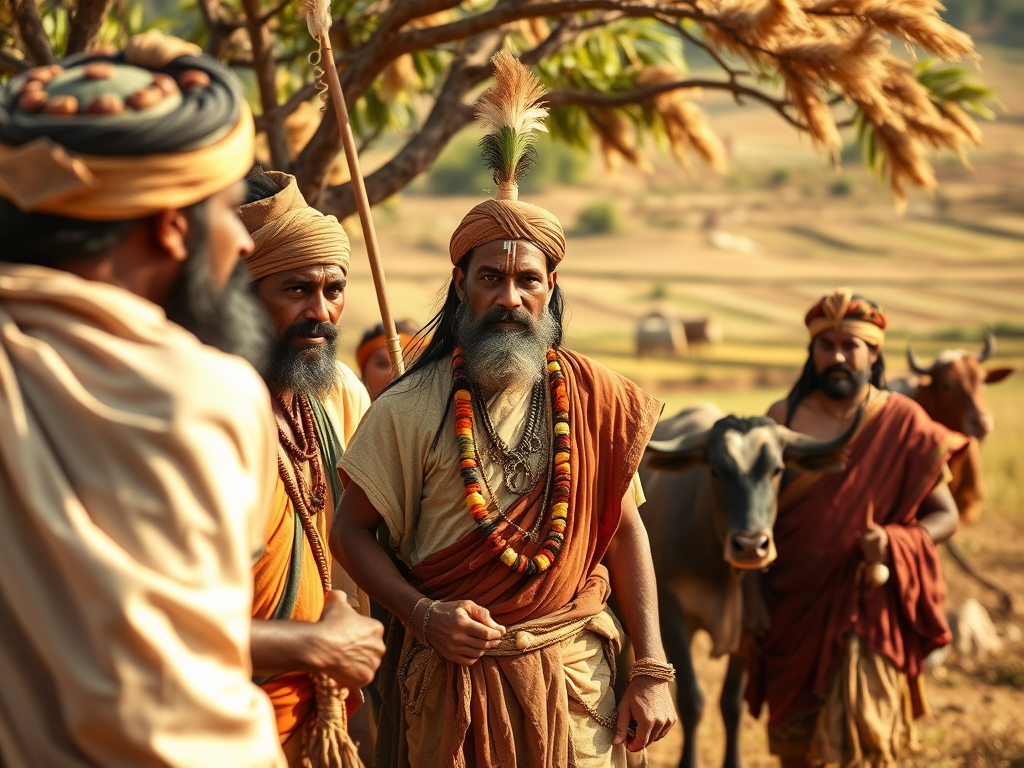
The Vedic period, spanning approximately from 1500 to 500 BCE, encompasses the Early Vedic period (c. 1500–1000 BCE, reflected in the Rigveda) and the Later Vedic period (c. 1000–500 BCE, seen in the Yajurveda, Samaveda, Atharvaveda, Brahmanas, Aranyakas, and early Upanishads). The social structure of this period evolved significantly, transitioning from a relatively flexible, tribal organization to a more stratified, hierarchical system. Below is a detailed exploration of the social structure during the Vedic period, highlighting its key features, changes over time, and broader context.
1. Overview of Vedic Society
Vedic society was rooted in the Indo-Aryan communities that settled in the northwestern and later eastern regions of the Indian subcontinent. The social organization was shaped by economic activities (pastoralism in the Early Vedic period, agriculture in the Later Vedic period), religious practices (centered on Vedic rituals), and cultural values (emphasizing family, community, and cosmic order). The social structure was dynamic, with increasing complexity over time due to territorial expansion, economic diversification, and philosophical developments.
2. Social Structure in the Early Vedic Period (c. 1500–1000 BCE)
The Early Vedic society, as depicted in the Rigveda, was primarily tribal, semi-nomadic, and pastoral, with a relatively egalitarian structure compared to later periods.
a) Tribal Organization
- Society was organized into janas (tribes), each comprising several clans or extended families.
- The vis (clan or community) and kula (family) were the basic social units, fostering collective identity and cooperation.
- Tribes were led by a rajan (chieftain), whose authority was limited by tribal councils like the sabha (elite assembly) and samiti (popular assembly).
b) Varna System (Early Form)
- The concept of varna (social class) existed but was fluid and not rigidly hierarchical.
- The Purusha Sukta (Rigveda, Mandala 10, Hymn 90) mentions four varnas—Brahmins (priests), Kshatriyas (warriors), Vaishyas (commoners, including herders and farmers), and Shudras (servants)—but this was likely a later interpolation or symbolic rather than a strict social reality.
- Roles were based on occupation and aptitude, with some mobility between groups.
- Brahmins performed rituals and composed hymns, Kshatriyas protected the tribe, and Vaishyas engaged in economic activities. Shudras were marginal, possibly including defeated non-Aryan groups.
c) Family and Kinship
- The kula (family) was patriarchal, with the grihapati (householder) as the head, responsible for economic and ritual duties.
- Joint families were common, ensuring collective labor and resource sharing.
- Gotra (exogamous clans) regulated marriage, preventing unions within the same lineage to maintain social alliances.
d) Status of Women
- Women enjoyed relatively high status compared to the Later Vedic period.
- They participated in religious rituals, composed hymns (e.g., Lopamudra, Apala), and attended assemblies like the sabha.
- Marriage was generally monogamous, with women having some choice in partners. Practices like sati or rigid dowry systems were absent.
- Education for women, particularly in elite families, included learning Vedic chants and rituals.
e) Labor and Slavery
- The term dasa or dasi referred to enemies or captives, often non-Aryans, who were enslaved or integrated into the tribe as laborers.
- Slavery was limited, and dasas could sometimes gain freedom or social acceptance.
- Most labor was performed by the vis (community), with cattle herding and rudimentary agriculture as primary activities.
3. Social Structure in the Later Vedic Period (c. 1000–500 BCE)
The Later Vedic period, marked by eastward expansion into the Gangetic plains and a shift to an agrarian economy, saw significant changes in social organization. The society became more settled, hierarchical, and stratified, as reflected in texts like the Yajurveda, Atharvaveda, and Brahmanas.
a) Crystallization of the Varna System
- The varna system became more rigid, with clear distinctions in status and roles:
- Brahmins: Gained supremacy as ritual specialists, interpreting complex sacrifices (e.g., Rajasuya, Ashvamedha) and composing texts. Their role as educators and advisors to kings elevated their status.
- Kshatriyas: Held political and military power as kings and warriors, controlling emerging janapadas (territorial states).
- Vaishyas: Engaged in agriculture, trade, and craftsmanship, forming the economic backbone. Their status declined relative to Brahmins and Kshatriyas.
- Shudras: Were marginalized, performing manual labor and serving the upper varnas. They had limited access to rituals or education.
- The Purusha Sukta was widely invoked to legitimize this hierarchy, portraying varnas as divinely ordained.
- Social mobility further decreased, with birth-based roles becoming more entrenched.
b) Emergence of Jati (Caste)
- While varna was a broad framework, occupational groups began forming jatis (sub-castes), which were endogamous and hereditary.
- Artisans (e.g., carpenters, blacksmiths) and other specialized groups emerged due to economic diversification, laying the foundation for the caste system.
c) Family and Gender Roles
- The patriarchal joint family remained central, with the grihapati now often a prosperous landowner overseeing agricultural production.
- Gotra rules became stricter, regulating marriage alliances to strengthen social and political ties.
- Women’s status declined significantly:
- Their participation in rituals and public life diminished, with Brahmins dominating religious roles.
- Practices like child marriage, dowry, and restrictions on widow remarriage began to appear, though not universally.
- Women were increasingly confined to domestic roles, with texts emphasizing their subordination to male relatives.
- Exceptions existed, such as philosophical figures like Gargi and Maitreyi in the Upanishads, but these were rare.
d) Slavery and Labor
- The number of dasas and dasis increased, including prisoners of war, debtors, and marginalized groups.
- Shudras and dasas performed agricultural labor, domestic work, and other menial tasks, supporting the growing economy.
- The term dasa now clearly denoted servitude, reflecting greater social stratification.
e) Social Mobility and Inequality
- The gap between the upper varnas (Brahmins, Kshatriyas) and lower groups (Vaishyas, Shudras) widened.
- Wealth from agriculture and trade concentrated among elites, with the grihapati and ruling classes amassing resources.
- The sabha and samiti became exclusive, dominated by Brahmins and Kshatriyas, reducing the influence of commoners.
4. Key Features of Vedic Social Structure
a) Role of Religion
- The Vedic religion, centered on rituals and sacrifices, reinforced the social hierarchy.
- Brahmins derived authority from their monopoly over rituals, while Kshatriyas gained legitimacy through sacrifices like the Ashvamedha.
- The concept of Rta (cosmic order) and later Dharma emphasized social duties aligned with varna roles.
b) Economic Basis
- In the Early Vedic period, cattle wealth defined status, with raids and gifts (e.g., dana) reinforcing social bonds.
- In the Later Vedic period, land ownership and agricultural surplus became key, elevating the grihapati and creating disparities.
c) Education and Knowledge
- Education was primarily for Brahmins and elite Kshatriyas, focusing on Vedic texts, rituals, and philosophy.
- Gurukuls (teacher-led schools) emerged in the Later Vedic period, with students memorizing texts orally.
- Women’s access to education declined, though some elite women studied in the Early Vedic period.
d) Social Norms and Values
- Hospitality, truthfulness, and loyalty to the tribe were valued in the Early Vedic period.
- In the Later Vedic period, adherence to varna duties, ritual purity, and family honor gained prominence.
5. Comparison: Early vs. Later Vedic Social Structure
| Aspect | Early Vedic Society | Later Vedic Society |
|---|---|---|
| Social Organization | Tribal, semi-egalitarian | Hierarchical, stratified |
| Varna System | Fluid, occupation-based | Rigid, birth-based |
| Women’s Status | Relatively high, ritual participation | Declined, domestic confinement |
| Family | Patriarchal, flexible marriage norms | Strict patriarchal, gotra-based alliances |
| Labor/Slavery | Limited dasas, community labor | Increased dasas, Shudra labor |
| Assemblies | Inclusive sabha/samiti | Elite-dominated sabha, samiti diminished |
6. Significance and Legacy
- Foundation of Indian Society: The Vedic social structure, particularly the varna system, influenced the caste system that dominated later Indian history.
- Cultural Continuity: Patriarchal families, gotra rules, and ritual-based hierarchies remain evident in modern Indian traditions.
- Philosophical Impact: The Later Vedic period’s Upanishadic ideas challenged rigid hierarchies, promoting spiritual equality and influencing Jainism and Buddhism.
- Economic Roots: The shift to agriculture and occupational specialization shaped India’s economic framework.
7. Challenges in Studying Vedic Social Structure
- Textual Bias: Vedic texts, authored by Brahmins, emphasize elite perspectives, often ignoring Shudras, women, or non-Aryans.
- Lack of Material Evidence: Archaeological data (e.g., Ochre Coloured Pottery, Painted Grey Ware) is limited, making it hard to verify textual claims.
- Interpretive Debates: Scholars disagree on the extent of varna rigidity, women’s roles, and the integration of non-Aryans.
8. Suggested Further Reading
- Primary Texts:
- Rigveda (trans. Ralph T.H. Griffith or Wendy Doniger).
- Yajurveda, Atharvaveda, Shatapatha Brahmana, Brihadaranyaka Upanishad.
- Secondary Sources:
- The Vedic People by Rajesh Kochhar.
- Ancient Indian Social History by Romila Thapar.
- A History of Ancient and Early Medieval India by Upinder Singh.
- Online Resources:
- Sacred-texts.com for Vedic translations.
- Vedic Heritage Portal (IGNCA) for scholarly insights.
9. Conclusion
The social structure of the Vedic period evolved from a tribal, pastoral society with flexible roles to a settled, agrarian society with a rigid hierarchy. The Early Vedic period’s relative egalitarianism gave way to the Later Vedic period’s formalized varna system, patriarchal norms, and stratified labor divisions. Despite these changes, the emphasis on family, ritual, and cosmic order remained constant, shaping the foundations of Indian civilization. Understanding Vedic social structure offers valuable insights into the historical roots of India’s cultural and social fabric.

Leave a comment