
Overview
The Chola Empire (circa 9th–13th century CE), a prominent South Indian dynasty, is renowned for its efficient administration, maritime prowess, and monumental contributions to art and architecture, particularly Dravidian temple architecture. Centered in the Kaveri delta (modern Tamil Nadu), with key capitals at Thanjavur and Gangaikonda Cholapuram, the Cholas reached their zenith under rulers like Rajaraja I and Rajendra I. Their naval expeditions, trade networks, and cultural patronage left a lasting impact on South India and Southeast Asia. For UPSC, the Cholas are a key topic in Medieval Indian History (Prelims) and Indian Heritage and Culture (Mains GS Paper I). For BPSC, their trade links with eastern India (e.g., Bengal) and influence on temple art are relevant, though less directly tied to Bihar than dynasties like the Guptas.
1. Historical Context and Political Significance
- Timeline: ~9th–13th century CE, with peak during 985–1070 CE (Rajaraja I to Kulothunga I).
- Origins: The Cholas trace their lineage to the Early Cholas (3rd century BCE–2nd century CE), mentioned in Ashokan edicts and Sangam literature. The Medieval Cholas rose under Vijayalaya (~850 CE), who captured Thanjavur from the Pallavas.
- Key Rulers:
- Vijayalaya (~850–871 CE): Founded the Medieval Chola dynasty, established Thanjavur as capital.
- Aditya I (~871–907 CE): Defeated Pallavas and Pandyas, expanded Chola influence.
- Parantaka I (~907–955 CE): Consolidated Kaveri delta, built temples, but lost to Rashtrakutas.
- Rajaraja I (~985–1014 CE): Greatest Chola ruler.
- Conquered northern Sri Lanka, parts of Maldives, and southern India (Pandyas, Cheras).
- Built Brihadeeswarar Temple (Thanjavur, 1010 CE), a UNESCO World Heritage Site.
- Strengthened navy, initiated maritime trade with Southeast Asia.
- Rajendra I (~1014–1044 CE): Expanded empire to its zenith.
- Conquered entire Sri Lanka, eastern India (up to Ganges, defeated Pala ruler Mahipala).
- Naval expeditions to Southeast Asia (Srivijaya, Kadaram, 1025 CE).
- Built Gangaikonda Cholapuram as new capital and temple.
- Kulothunga I (~1070–1122 CE): Consolidated empire, maintained trade with China (Song dynasty).
- Geographical Extent: Tamil Nadu, Karnataka, Andhra Pradesh, Sri Lanka, Maldives, and influence in Southeast Asia (Srivijaya, Malay Peninsula).
- Capitals:
- Thanjavur (early period, Vijayalaya to Rajaraja I).
- Gangaikonda Cholapuram (Rajendra I onward).
- Decline: By 13th century CE, weakened by Pandya rebellions, Hoysala invasions, and internal strife. Ended with Rajendra III (1279 CE).
- Sources:
- Inscriptions: Thanjavur (Brihadeeswarar), Uttaramerur (local governance), Tiruvalangadu copper plates.
- Literature: Kalingattuparani (Kulothunga I’s campaigns), Tamil Sangam texts (Pattinappalai).
- Foreign Accounts: Chinese (Song dynasty), Arab traveler Al-Biruni.
- Archaeological Sites: Thanjavur, Gangaikonda Cholapuram, Darasuram.
Details to Memorize:
- Timeline: ~9th–13th century CE, peak 985–1014 CE (Rajaraja I).
- Rulers: Vijayalaya (850 CE), Aditya I, Parantaka I, Rajaraja I (985–1014 CE), Rajendra I (1014–1044 CE), Kulothunga I (1070–1122 CE).
- Capitals: Thanjavur, Gangaikonda Cholapuram.
- Extent: South India, Sri Lanka, Maldives, Southeast Asia.
- Decline: ~1279 CE, Pandyas, Hoysalas.
- Sources: Thanjavur inscriptions, Uttaramerur, Kalingattuparani.
2. Administration
The Chola administration was highly organized, with a blend of centralized control and local autonomy, setting a model for South Indian governance.
- Monarchy:
- King as supreme authority, titled Chakravartin (universal ruler) or Ko-Raja-Kesari/Ko-Parakesari.
- Advised by a council of ministers (perundanam for senior officials, sirudanam for juniors).
- Royal women (e.g., Kundavai, Rajaraja I’s sister) held administrative roles.
- Provincial Administration:
- Empire divided into mandalams (provinces), governed by viceroys (often royal kin).
- Mandalams subdivided into valanadus (districts), nadus (sub-districts), and urs (villages).
- Governors (nadu-vagai) oversaw revenue and justice.
- Local Governance:
- Village Autonomy: Villages (urs) managed by elected assemblies (sabhas for Brahmin villages, urs for non-Brahmin).
- Uttaramerur Inscription: Details democratic village governance:
- Sabhas elected via kudavolai (lottery system).
- Committees (variyams) for irrigation, temples, and justice.
- Eligibility: Property ownership, age 35–70, knowledge of Vedic texts.
- Guilds (nagara): Managed trade and urban affairs.
- Revenue System:
- Taxes: Land tax (kadamai, 1/3rd–1/6th of produce), trade duties, professional taxes.
- Revenue officials: kanakkars (accountants), puravuvari (land surveyors).
- Land grants (brahmadeya to Brahmins, devadana to temples) supported religious institutions.
- Military:
- Strong army with infantry, cavalry, elephants, and archers.
- Powerful navy: Enabled conquests of Sri Lanka, Maldives, and Srivijaya (1025 CE).
- Divisions: Kaikkolars (elite troops), senaithalaivar (commanders).
- Judicial System:
- King as highest judge, advised by dharmasana (judicial council).
- Village sabhas resolved local disputes; temples acted as courts.
- Punishments based on Dharmashastras and local customs.
Details to Memorize:
- Monarchy: Chakravartin, perundanam, sirudanam.
- Provinces: Mandalams, valanadus, nadus, urs.
- Local: Sabhas, urs, kudavolai (Uttaramerur), variyams.
- Revenue: Kadamai, brahmadeya, devadana.
- Military: Navy, Kaikkolars, Srivijaya campaign (1025 CE).
- Judiciary: Dharmasana, sabhas.
3. Art and Architecture
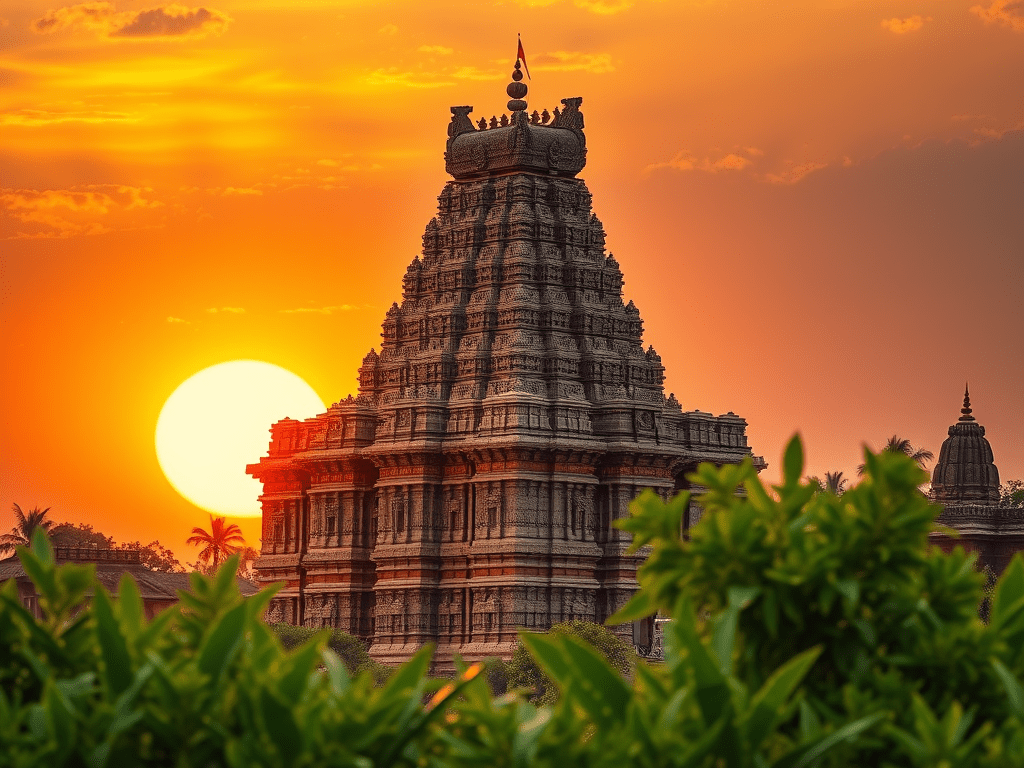
Chola art and architecture, particularly Dravidian temple architecture, represent a high point in South Indian cultural expression, characterized by grandeur and intricate detail.
- Temple Architecture:
- Dravidian Style:
- Features: Tiered pyramid (vimana), gopuram (tower gateways), mandapas (pillared halls), and garbhagriha (sanctum).
- Materials: Granite, with detailed carvings of deities, dancers, and myths.
- Key Temples:
- Brihadeeswarar Temple (Thanjavur, 1010 CE, Rajaraja I):
- UNESCO World Heritage Site, also called Rajarajeswaram.
- Features: 216-foot vimana (tallest in South India), 80-ton monolithic capstone, nandi statue (16 feet).
- Frescoes: Shiva’s cosmic dance, royal processions.
- Inscriptions: Record donations, administration, and temple maintenance.
- Gangaikonda Cholapuram Temple (1025 CE, Rajendra I):
- Built to commemorate Rajendra’s northern campaigns.
- Features: 182-foot vimana, intricate carvings, bronze sculptures.
- Airavateswara Temple (Darasuram, 12th century CE, Rajaraja II):
- UNESCO World Heritage Site, known for miniature carvings.
- Features: Chariot-shaped mandapa, musical steps, and sculptures.
- Brihadeeswarar Temple (Thanjavur, 1010 CE, Rajaraja I):
- Other Temples: Koranganatha (Srinivasanallur), Nageswaraswamy (Kumbakonam).
- Dravidian Style:
- Sculpture:
- Stone carvings: Shiva as Nataraja, Ardhanarishvara, and Gajalakshmi.
- Reliefs: Mythological scenes, dancers, and musicians on temple walls.
- Bronze Sculptures:
- Chola bronzes, cast via cire perdue (lost-wax technique), are iconic.
- Examples: Nataraja (Shiva dancing in cosmic circle), Parvati, and Vishnu.
- Features: Fluid forms, expressive poses, intricate jewelry.
- Painting:
- Frescoes in Brihadeeswarar Temple depict Shiva’s myths, royal courts, and dancers.
- Style: Vibrant colors, narrative panels, similar to Ajanta but distinctively Dravidian.
- Cultural Significance:
- Temples as socio-economic centers: Managed land, employed artisans, and hosted festivals.
- Chola art influenced Southeast Asian temples (e.g., Angkor Wat, Cambodia).
Details to Memorize:
- Dravidian Style: Vimana, gopuram, mandapa, granite.
- Temples: Brihadeeswarar (Thanjavur, 1010 CE), Gangaikonda Cholapuram (1025 CE), Airavateswara (Darasuram).
- Sculptures: Stone (Nataraja), bronze (cire perdue).
- Paintings: Brihadeeswarar frescoes.
- Influence: Southeast Asia (Angkor Wat).
4. Economy and Trade
The Chola economy thrived on agriculture, trade, and maritime activities, supported by a robust administrative system.
- Agriculture:
- Kaveri delta’s fertility supported rice, sugarcane, and cotton.
- Irrigation: Anicuts (dams) like Kallanai (built by Karikala, Early Chola) and tanks.
- Trade:
- Maritime Trade:
- Controlled ports: Nagapattinam, Kaveripattinam, Puhar.
- Traded with China (Song dynasty), Southeast Asia (Srivijaya, Khmer), Arabia, and East Africa.
- Exports: Spices, textiles, pearls, ivory.
- Imports: Silk, horses, camphor.
- Overland Trade: Linked South India with Bengal (Palas) and Gujarat.
- Guilds (manigramam, ainurruvar): Organized merchants, managed trade routes.
- Maritime Trade:
- Coinage:
- Gold (kasu), silver, and copper coins with tiger emblem (Chola insignia).
- Standardized weights for trade.
- Bihar Connection:
- Rajendra I’s campaign to Ganges (1019 CE) established trade links with Palas in Bengal/Bihar.
- Chola art influenced eastern Indian temple styles (e.g., Odishan architecture).
Details to Memorize:
- Agriculture: Kaveri delta, Kallanai anicut.
- Ports: Nagapattinam, Kaveripattinam, Puhar.
- Trade: China, Srivijaya, Arabia; manigramam guilds.
- Coins: Gold kasu, tiger emblem.
- Bihar: Ganges campaign (1019 CE), Pala trade.
5. Society and Culture
- Social Structure:
- Varna system: Brahmins (priests, scholars), Kshatriyas (warriors, rulers), Vaishyas (merchants), Shudras (artisans, farmers).
- Velalars: Dominant land-owning caste in Tamil society.
- Women: Elite women (e.g., Kundavai) held influence; temple dancers (devadasis) were prominent.
- Religion:
- Hinduism: Dominant, with Shaivism (Shiva worship) and Vaishnavism (Vishnu) flourishing.
- Bhakti movement: Tamil saints (Nayanars for Shaivism, Alvars for Vaishnavism) composed devotional hymns (Tevaram, Nalayira Divya Prabandham).
- Buddhism/Jainism: Declined but tolerated; Chidambaram had Buddhist monasteries.
- Hinduism: Dominant, with Shaivism (Shiva worship) and Vaishnavism (Vishnu) flourishing.
- Literature:
- Tamil: Kalingattuparani (epic poem), Periya Puranam (Nayanar lives).
- Sanskrit: Royal inscriptions, temple records.
- Commentaries: Ramanuja’s Vishishtadvaita philosophy emerged in Chola territory.
- Education:
- Temple schools (mathas) taught Vedas, Tamil, and arts.
- Ghatikas: Centers for higher learning (Kumbakonam).
Details to Memorize:
- Society: Velalars, devadasis, Varna.
- Religion: Shaivism (Nayanars), Vaishnavism (Alvars), Bhakti.
- Literature: Kalingattuparani, Periya Puranam, Ramanuja.
- Education: Mathas, ghatikas.
6. Maritime and Naval Achievements
- Navy:
- Chola navy was the strongest in medieval India, enabling overseas conquests.
- Campaigns:
- Sri Lanka (993 CE, Rajaraja I; 1017 CE, Rajendra I).
- Maldives (11th century CE).
- Srivijaya (1025 CE, Rajendra I), securing trade routes.
- Ships: Dhonis (warships), kappals (merchant vessels).
- Trade Networks:
- Controlled Malacca Straits, ensuring dominance in Indian Ocean trade.
- Diplomatic missions to China (1015, 1033 CE) strengthened ties.
- Cultural Impact:
- Spread Tamil culture, art, and architecture to Southeast Asia (e.g., Hindu temples in Cambodia, Indonesia).
Details to Memorize:
- Navy: Sri Lanka (993, 1017 CE), Srivijaya (1025 CE).
- Ships: Dhonis, kappals.
- Trade: Malacca Straits, China missions (1015, 1033 CE).
- Cultural Spread: Southeast Asia.
7. Legacy and Significance
- Administration:
- Chola village autonomy (sabhas, kudavolai) influenced later South Indian governance.
- Efficient revenue and irrigation systems set benchmarks.
- Art and Architecture:
- Dravidian temples (Thanjavur, Darasuram) remain architectural marvels.
- Chola bronzes and frescoes inspired medieval and modern Indian art.
- Maritime Legacy:
- Established India as a maritime power, influencing Southeast Asian culture.
- Trade networks laid foundations for later European trade routes.
- Cultural Impact:
- Bhakti movement shaped Tamil religious identity.
- Tamil literature and inscriptions enriched South Indian heritage.
- Bihar Connection:
- Rajendra I’s Ganges campaign (1019 CE) linked Cholas with eastern India.
- Trade with Palas influenced cultural exchanges (e.g., temple art).
Details to Memorize:
- Legacy: Sabhas, Dravidian temples, Chola bronzes.
- Maritime: Indian Ocean dominance, Southeast Asia.
- Cultural: Bhakti, Tamil literature.
- Bihar: Ganges campaign, Pala trade.
8. Key Memorization Points
- Timeline: ~9th–13th century CE, peak 985–1014 CE (Rajaraja I).
- Rulers:
- Vijayalaya (850 CE), Rajaraja I (985–1014 CE, Brihadeeswarar).
- Rajendra I (~1014–1044 CE, Gangaikonda Cholapuram, Srivijaya).
- Kulothunga I (~1070–1122 CE, China trade).
- Administration:
- Mandalams, valanadus, nadus, urs.
- Sabhas, kudavolai (Uttaramerur).
- Revenue: Kadamai, brahmadeya.
- Art/Architecture:
- Temples: Brihadeeswarar (Thanjavur), Gangaikonda Cholapuram, Airavateswara.
- Bronzes: Nataraja, cire perdue.
- Frescoes: Thanjavur.
- Economy:
- Agriculture: Kaveri, Kallanai.
- Trade: Nagapattinam, Srivijaya, China.
- Coins: Kasu, tiger emblem.
- Maritime:
- Navy: Sri Lanka, Srivijaya (1025 CE).
- Trade: Malacca Straits, China (1015, 1033 CE).
- Culture:
- Religion: Shaivism (Nayanars), Vaishnavism (Alvars).
- Literature: Kalingattuparani, Periya Puranam.
- Bihar Link: Ganges campaign (1019 CE), Pala trade.
9. Practice Questions for Retention
- Prelims (MCQ):
- Q: The Brihadeeswarar Temple was built by:
A: Rajaraja I. - Q: The Uttaramerur inscription describes:
A: Village governance. - Q: Rajendra I’s naval campaign targeted:
A: Srivijaya. - Q: The Chola capital was:
A: Thanjavur/Gangaikonda Cholapuram.
- Q: The Brihadeeswarar Temple was built by:
- Mains:
- Q: Discuss the administrative system of the Chola Empire and its significance. (15 marks)
- Q: Evaluate the contributions of the Cholas to Dravidian art and architecture. (10 marks)
- Q: Analyze the Chola Empire’s maritime achievements and their impact on Southeast Asia. (15 marks)
- Q: Assess the Chola’s cultural and economic links with eastern India, including Bihar. (10 marks)
10. Recommended Resources
- NCERT:
- Themes in Indian History-I (Class 11): Chapter 2, South Indian kingdoms.
- Download: ncert.nic.in.
- NIOS:
- Indian Culture and Heritage (Code 223): Chola art and administration.
- Download: nios.ac.in.
- IGNOU:
- EHI-03: Medieval India, Chola Empire.
- Download: egyankosh.ac.in.
- Books:
- A History of South India by K.A. Nilakanta Sastri.
- The Cholas by K.S. Ramachandran.
- The Art and Architecture of the Indian Subcontinent by J.C. Harle.
11. Why This Topic Matters
- UPSC: Essential for Prelims (rulers, temples, navy) and Mains (GS I: art, culture, administration).
- BPSC: Relevant for Chola-Pala trade links and influence on eastern Indian art.
- Memorization Value: Factual (rulers, temples, inscriptions) and analytical (administration, maritime legacy) aspects suit both exams.

Leave a comment