
Overview
The Pandya dynasty, one of the three ancient Tamil kingdoms (alongside Cholas and Cheras), ruled primarily over southern Tamil Nadu, with their capital at Madurai and later Tenkaasi. Spanning from the Sangam period (3rd century BCE–3rd century CE) to the early modern era (16th century CE), the Pandyas were renowned for their maritime trade, patronage of Tamil literature, and contributions to Dravidian architecture. They reached their zenith during the Medieval Pandya period (13th–14th centuries CE) under rulers like Jatavarman Sundara Pandya. Their rivalry with Cholas, maritime trade with Southeast Asia, and cultural legacy in Tamil literature (Tirukkural, Sangam texts) are significant.
For UPSC, the Pandyas are a key topic in Ancient and Medieval Indian History (Prelims) and Indian Heritage and Culture (Mains GS Paper I).
For BPSC, their trade links with eastern India (e.g., Bengal) and influence on South Indian culture are relevant, though less directly tied to Bihar compared to dynasties like the Guptas or Palas.
1. Historical Context and Political Significance
- Timeline:
- Early Pandyas (Sangam Period): ~3rd century BCE–3rd century CE.
- First Pandya Empire: ~6th–10th century CE.
- Medieval Pandyas: ~13th–14th century CE (peak under Jatavarman Sundara Pandya).
- Later Pandyas: ~14th–16th century CE (decline under Vijayanagara and Nayaks).
- Origins: One of the mudi-vendar (crowned kings) of the Sangam period, mentioned in Ashokan edicts (Rock Edict II), Sangam literature (Purananuru), and Megasthenes’ Indica. Known for pearl fisheries and Madurai’s cultural prominence.
- Key Rulers:
- Early Pandyas (Sangam Period):
- Nedunjeliyan I (~2nd century BCE): Hero of Maduraikkanji, defeated Cholas and Cheras at Talaiyalanganam.
- Nedunjeliyan II (~2nd century CE): Patron of Sangam poets, associated with Silappadikaram.
- First Pandya Empire:
- Kadungon (~6th century CE): Revived Pandya power after Kalabhra interregnum.
- Maravarman Avanisulamani (~7th century CE): Expanded territory, patronized Saivism.
- Medieval Pandyas:
- Jatavarman Sundara Pandya (~1251–1268 CE): Greatest Pandya ruler.
- Defeated Cholas (ended Chola dominance), Hoysalas, and Sri Lanka (Jaffna).
- Built temples, enriched Madurai’s Meenakshi Temple.
- Title: Emmandalamum Kondar (Conqueror of All Lands).
- Maravarman Kulasekhara (~1268–1310 CE): Expanded trade, but empire weakened due to succession disputes.
- Jatavarman Sundara Pandya (~1251–1268 CE): Greatest Pandya ruler.
- Later Pandyas:
- Ruled as vassals under Vijayanagara; declined by ~16th century CE with Nayak rule in Madurai.
- Early Pandyas (Sangam Period):
- Geographical Extent:
- Core: Madurai, Tirunelveli, Ramanathapuram (Tamil Nadu).
- Influence: Kerala, Sri Lanka, and Southeast Asia (trade networks).
- Capitals:
- Madurai (primary, cultural hub).
- Tenkaasi (later period, 14th century CE).
- Korkai (early port city).
- Decline:
- Early Pandyas: Eclipsed by Kalabhras (~3rd century CE).
- Medieval Pandyas: Weakened by internal strife, Malik Kafur’s invasion (1311 CE), and Chola resurgence.
- Later Pandyas: Subsumed by Vijayanagara and Madurai Nayaks (~16th century CE).
- Sources:
- Sangam Literature: Purananuru, Akananuru, Maduraikkanji, Silappadikaram.
- Inscriptions: Velvikudi, Sinnamanur copper plates, Meenakshi Temple inscriptions.
- Foreign Accounts: Periplus of the Erythraean Sea, Ptolemy, Marco Polo (13th century CE).
- Archaeological Sites: Madurai, Korkai, Alagankulam, Keezhadi.
Details to Memorize:
- Timeline: ~3rd century BCE–3rd century CE (Early); ~6th–10th century CE (First Empire); ~13th–14th century CE (Medieval).
- Rulers: Nedunjeliyan I/II (Sangam), Kadungon, Jatavarman Sundara Pandya (1251–1268 CE), Maravarman Kulasekhara (1268–1310 CE).
- Capitals: Madurai, Tenkaasi, Korkai.
- Extent: Southern Tamil Nadu, Kerala, Sri Lanka.
- Sources: Purananuru, Velvikudi plates, Periplus, Keezhadi.
2. Administration
The Pandya administration was characterized by a strong monarchy with local autonomy, evolving from Sangam tribal governance to a structured feudal system in the Medieval period.
- Monarchy:
- King as supreme ruler, titled Maran or Minavan (fish emblem, symbolizing pearl fisheries).
- Advised by a council of ministers (ainperumkuzhu) and poets (Sangam period).
- Royal women held influence (e.g., temple donations in inscriptions).
- Provincial Administration:
- Divided into mandalams (provinces), valanadus (districts), and nadus (village clusters).
- Governed by arasus (local chiefs) or kilars (Sangam period), later by feudal lords (samantas).
- Local Governance:
- Sangam Period: Village assemblies (manrams) managed irrigation, temples, and disputes.
- Medieval Period: Sabhas (Brahmin councils) and urs (non-Brahmin assemblies) oversaw local affairs.
- Velvikudi inscription: Details land grants and village administration.
- Revenue System:
- Taxes: Land tax (karam), trade duties (sungam), and pearl fishery revenue.
- Land grants: Brahmadeya (to Brahmins), devadana (to temples).
- Officials: Kanakkars (accountants), adhikaris (revenue collectors).
- Military:
- Army: Infantry, cavalry, elephants, and archers (Purananuru describes Nedunjeliyan’s forces).
- Navy: Controlled ports (Korkai, Alagankulam), engaged in Sri Lankan campaigns (Jatavarman Sundara Pandya).
- Judicial System:
- Based on Dharmashastras and Tamil customs (marumakkathayam in some regions).
- Kings and sabhas adjudicated; temples served as courts.
Details to Memorize:
- Monarchy: Maran, fish emblem, ainperumkuzhu.
- Provinces: Mandalams, valanadus, nadus.
- Local: Manrams (Sangam), sabhas (Medieval), Velvikudi.
- Revenue: Karam, brahmadeya, devadana.
- Military: Navy, Sri Lanka campaigns.
- Judiciary: Dharmashastras, sabhas.
3. Economy and Trade
The Pandya economy thrived on agriculture, pearl fisheries, and maritime trade, leveraging their coastal location.
- Agriculture:
- Fertile Vaigai and Tamraparni river basins supported rice, millets, and sugarcane.
- Irrigation: Tanks (eris), canals, and wells managed by manrams or sabhas.
- Trade:
- Maritime Trade (Sangam Period):
- Key ports: Korkai, Alagankulam, Kayal.
- Traded with Rome, Greece, Arabia (Periplus, 1st century CE), and Southeast Asia.
- Exports: Pearls, pepper, cotton textiles, precious stones.
- Imports: Gold, silver, wine, glassware (Roman coins at Alagankulam).
- Medieval Pandyas:
- Ports: Kayal, Tuticorin, expanded trade with China (Song/Yuan dynasties) and Persia.
- Marco Polo (1292 CE): Describes Pandya wealth from pearl trade.
- Guilds (nagara, manigramam): Organized merchants, managed trade routes.
- Overland Trade: Linked Madurai with Kerala (Cheras), Tamil Nadu (Cholas), and eastern India (Palas, Bengal).
- Maritime Trade (Sangam Period):
- Pearl Fisheries:
- Gulf of Mannar (Pandya coast) was a global hub for pearls, mentioned by Ptolemy and Pliny.
- Revenue from fisheries supported royal treasury.
- Coinage:
- Early Pandyas: Punch-marked coins, Roman gold (aurei).
- Medieval Pandyas: Gold (kasu), silver, and copper coins with fish emblem.
Details to Memorize:
- Agriculture: Vaigai, Tamraparni, eris.
- Ports: Korkai, Alagankulam, Kayal.
- Trade: Rome (Periplus), China, Persia; pearls, pepper.
- Guilds: Nagara, manigramam.
- Pearls: Gulf of Mannar.
- Coins: Kasu, fish emblem.
- Bihar Link: Trade with Palas (Bengal).
4. Art and Architecture
Pandya art and architecture, while less grandiose than Chola temples, significantly contributed to Dravidian and South Indian cultural heritage.
- Early Pandyas (Sangam Period):
- Architecture:
- Limited surviving structures; used perishable materials (wood, brick).
- Megalithic monuments: Urn burials, dolmens, and menhirs in Tirunelveli.
- Port facilities: Warehouses and docks at Korkai (Pattinappalai).
- Art:
- Terracotta figurines and pottery with Tamil-Brahmi inscriptions (Keezhadi, Alagankulam).
- Ornaments: Pearls, gold, and coral jewelry (Akananuru).
- Architecture:
- Medieval Pandyas:
- Architecture:
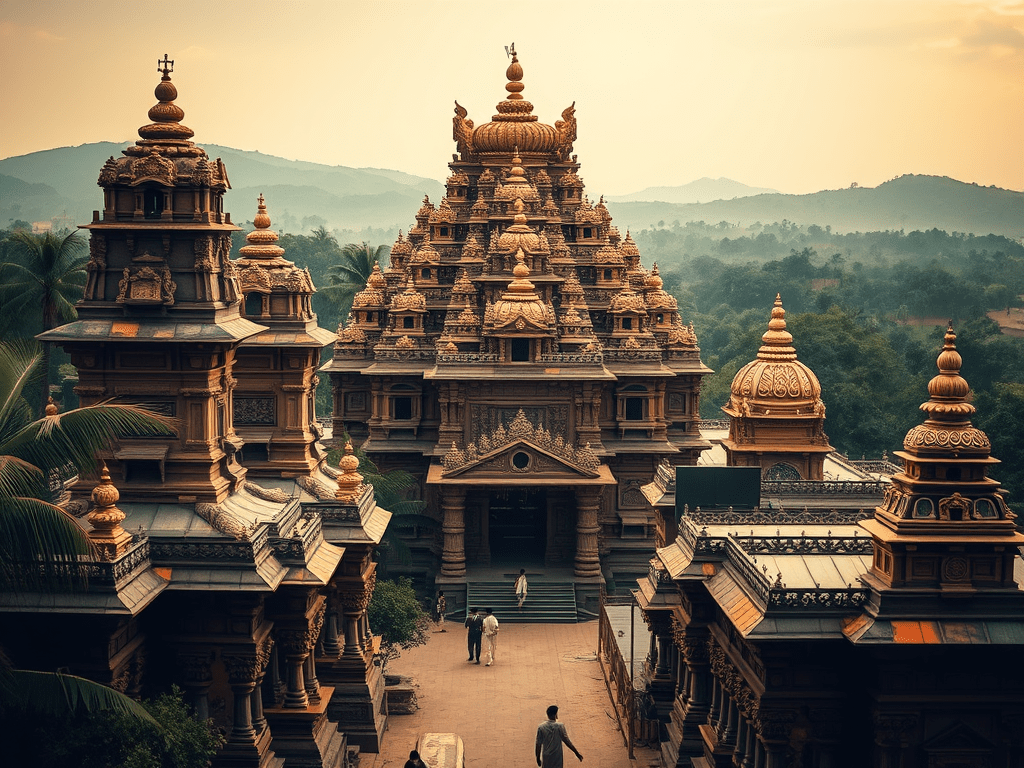
- Dravidian-style temples with gopurams (tower gateways), vimanas (towered sanctums), and mandapas (pillared halls).
- Meenakshi Temple (Madurai, expanded 13th century CE):
- Dedicated to Meenakshi (Parvati) and Sundareswarar (Shiva).
- Features: Ornate gopurams, Thousand Pillar Hall, temple tank.
- Jatavarman Sundara Pandya enriched its endowments.
- Srivilliputhur Andal Temple (Virudhunagar, 13th century CE):
- Dedicated to Vishnu and Andal (Alvar saint).
- Features: 192-foot gopuram, tallest in Tamil Nadu.
- Tenkaasi Kasi Viswanathar Temple (14th century CE): Built by Later Pandyas, with intricate carvings.
- Sculpture:
- Stone carvings: Shiva, Vishnu, Meenakshi, and Ganesha in temple gopurams.
- Bronze sculptures: Smaller scale than Cholas, with figures of Nataraja and Vishnu.
- Painting:
- Frescoes in Meenakshi Temple depicting myths and royal patrons.
- Style: Narrative panels, vibrant colors, similar to Chola frescoes.
- Architecture:
- Cultural Significance:
- Temples as socio-economic hubs: Managed land, festivals, and education.
- Pandya art influenced Vijayanagara and Nayak architecture.
Details to Memorize:
- Early: Megaliths, terracotta, Korkai docks.
- Medieval: Meenakshi Temple (Madurai), Srivilliputhur, Tenkaasi.
- Dravidian: Gopurams, vimanas, mandapas.
- Art: Stone/bronze sculptures, Meenakshi frescoes.
- Influence: Vijayanagara, Nayaks.
5. Society and Culture
- Social Structure:
- Sangam Period: Tribal society with velalars (landowners), artisans, and fishermen.
- Medieval Period: Varna system; Brahmins and velalars dominant, with marumakkathayam (matrilineal) practices in some regions.
- Women: High status in Sangam period (poetesses in Purananuru); temple dancers (devadasis) in Medieval period.
- Religion:
- Sangam Period:
- Worshipped Kottavai (war goddess), Murugan, and Tirumal (Vishnu).
- Patronized Jainism (monasteries in Madurai) and Buddhism.
- Medieval Pandyas:
- Hinduism dominant: Shaivism (Meenakshi Temple) and Vaishnavism (Srivilliputhur).
- Bhakti movement: Nayanars (Shaiva saints) and Alvars (Vaishnava saints) active; Andal’s hymns influential.
- Religious tolerance: Jain and Buddhist communities persisted.
- Sangam Period:
- Literature:
- Sangam Literature:
- Purananuru, Akananuru: Describe Pandya society, wars, and trade.
- Maduraikkanji: Praises Nedunjeliyan I and Madurai’s prosperity.
- Tirukkural (Thiruvalluvar, possibly Pandya period): Ethical treatise on virtue, wealth, and love.
- Medieval Period:
- Tamil: Bhakti hymns by Nayanars (Tevaram) and Alvars (Nalayira Divya Prabandham).
- Sanskrit: Temple inscriptions and royal chronicles.
- Sangam Literature:
- Education:
- Sangam Period: Academies (sangams) in Madurai patronized poets.
- Medieval Period: Temple schools (mathas) taught Vedas, Tamil, and philosophy.
- Performing Arts:
- Music and dance festivals in Madurai (Purananuru).
- Bharatanatyam precursors in temple rituals (devadasis).
Details to Memorize:
- Society: Velalars, matriliny, devadasis.
- Religion: Kottavai, Shaivism, Vaishnavism, Bhakti (Nayanars, Alvars).
- Literature: Purananuru, Maduraikkanji, Tirukkural.
- Education: Madurai sangams, mathas.
- Arts: Bharatanatyam, temple music.
6. Maritime and Trade Achievements
- Maritime Trade:
- Sangam Period: Korkai as a major port, linked to Roman trade (Periplus, Ptolemy).
- Medieval Pandyas: Kayal and Tuticorin dominated Indian Ocean trade with China, Persia, and Arabia.
- Jatavarman Sundara Pandya’s conquest of Sri Lanka (1258 CE) secured trade routes.
- Cultural Exchange:
- Roman traders introduced glassware and coins (Alagankulam finds).
- Chinese ceramics and Persian goods found in Pandya ports.
- Pandya influence in Southeast Asia (pearl trade, cultural links with Srivijaya).
- Impact:
- Pandya ports enriched Tamil Nadu’s economy, rivaling Chola maritime power.
- Cultural exchanges shaped South Indian cosmopolitanism.
Details to Memorize:
- Ports: Korkai, Kayal, Tuticorin.
- Trade: Rome, China, Persia; pearls, textiles.
- Navy: Sri Lanka campaign (1258 CE).
- Exchange: Roman coins, Chinese ceramics.
7. Legacy and Significance
- Administration:
- Pandya village governance (manrams, sabhas) influenced South Indian systems.
- Revenue and irrigation models adopted by Vijayanagara and Nayaks.
- Economy:
- Pearl fisheries and maritime trade established Tamil Nadu as a global trade hub.
- Guilds (manigramam) set precedents for merchant organizations.
- Culture:
- Sangam literature (Tirukkural, Purananuru) remains a cornerstone of Tamil heritage.
- Bhakti movement shaped South Indian religious identity.
- Art and Architecture:
- Meenakshi Temple and Srivilliputhur gopuram inspired Dravidian architecture.
- Pandya sculptures and frescoes influenced Nayak and Vijayanagara art.
- Bihar Connection:
- Trade with Palas (Bengal) via Chola intermediaries (Rajendra I’s Ganges campaign, 1019 CE).
- Shared Bhakti influences with eastern India (e.g., Alvars and Pala Buddhist art).
Details to Memorize:
- Legacy: Manrams, Tirukkural, Bhakti, Meenakshi Temple.
- Economy: Pearls, maritime trade, manigramam.
- Culture: Sangam, Dravidian architecture.
- Bihar: Pala trade, Bhakti links.
8. Key Memorization Points
- Timeline: ~3rd century BCE–3rd century CE (Early); ~6th–10th century CE (First); ~13th–14th century CE (Medieval).
- Rulers:
- Early: Nedunjeliyan I/II (Sangam).
- First: Kadungon, Maravarman Avanisulamani.
- Medieval: Jatavarman Sundara Pandya (~1251–1268 CE), Maravarman Kulasekhara.
- Administration:
- Mandalams, nadus, manrams (Sangam), sabhas (Medieval).
- Revenue: Karam, brahmadeya.
- Navy: Korkai, Sri Lanka (1258 CE).
- Economy:
- Ports: Korkai, Kayal, Tuticorin.
- Trade: Rome, China, pearls.
- Coins: Kasu, fish emblem.
- Art/Architecture:
- Early: Megaliths, terracotta.
- Medieval: Meenakshi Temple, Srivilliputhur, Tenkaasi; gopurams.
- Art: Sculptures, frescoes, bronzes.
- Culture:
- Religion: Shaivism, Vaishnavism, Bhakti (Nayanars, Alvars).
- Literature: Purananuru, Tirukkural, Maduraikkanji.
- Arts: Bharatanatyam, sangams.
- Maritime:
- Trade: Indian Ocean, Sri Lanka.
- Exchange: Roman coins, Persian goods.
- Bihar Link: Pala trade, Bhakti influences.
6. Practice Questions for Retention
- Prelims (MCQ):
- Q: The Pandya capital famous for its temple is:
A: Madurai. - Q: Which Sangam text is associated with Nedunjeliyan?
A: Maduraikkanji. - Q: Jatavarman Sundara Pandya is known for conquering:
A: Cholas. - Q: The Velvikudi inscription describes:
A: Pandya administration.
- Q: The Pandya capital famous for its temple is:
- Mains:
- Q: Discuss the economic and cultural contributions of the Pandya dynasty. (15 marks)
- Q: Evaluate the role of the Pandyas in South India’s maritime trade. (10 marks)
- Q: Analyze the significance of Sangam literature in understanding Pandya society. (10 marks)
- Q: Assess the Pandya’s cultural links with eastern India, including Bihar. (10 marks)
7. Recommended Resources
- NCERT:
- Themes in Indian History-I (Class 11): Chapter 2, South Indian kingdoms.
- Download: ncert.nic.in.
- NIOS:
- Indian Culture and Heritage (Code 223): Sangam period, Pandya dynasty.
- Download: *nios.ac.in.
- IGNOU:
- EHI-03: Medieval India, South Indian states.
- Download: egyankosh.ac.in.
- EHI-03: Medieval India, South Indian states.
- Books:
- A History of South India by K.A. Nilakanta Sastri.
- The Pandyan Kingdom by K.A. Nilakanta Sastri.
- South Indian History and Culture by Noboru Karashima.
8. Why This Topic Matters
- UPSC: Essential for Prelims (rulers, trade, literature) and Mains (GS I: culture, maritime history).
- BPSC: Relevant for trade with eastern India and South Indian cultural context.
- Memorization Value: Factual (rulers, ports, temples) and analytical (trade, Bhakti culture) aspects suit both exams.

Leave a comment