
Overview
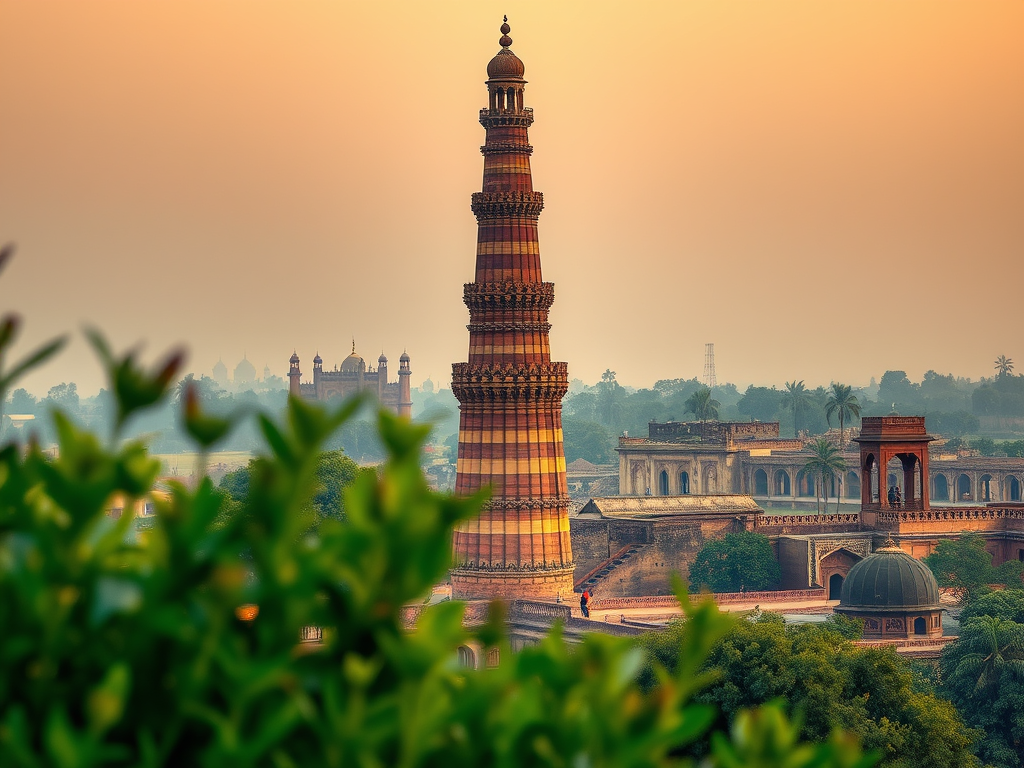
The Delhi Sultanate (1206–1526 CE) was a series of Muslim dynasties that ruled northern India, marking the beginning of sustained Islamic rule in the subcontinent. Established after the Second Battle of Tarain (1192 CE), it centralized power in Delhi and introduced Persianate administrative, cultural, and military systems. The Slave Dynasty (1206–1290 CE), also known as the Mamluk Dynasty, was its first ruling dynasty, founded by Qutb-ud-din Aibak, a former slave of Muhammad Ghori. Known for its military consolidation and architectural achievements (e.g., Qutb Minar), the Slave Dynasty laid the foundation for subsequent Sultanate dynasties (Khalji, Tughlaq, Sayyid, Lodi).
For UPSC, this is a core topic in Medieval Indian History (Prelims) and Indian Heritage and Culture (Mains GS Paper I).
For BPSC, its relevance lies in the Sultanate’s impact on Bihar, a key administrative and cultural hub (e.g., Qutb-ud-din Aibak’s campaigns, Sufi influence).
1. Starting of the Delhi Sultanate
- Background:
- Ghaznavid and Ghurid Invasions: The Delhi Sultanate emerged from the conquests of the Ghurids, a Persian-Turkic dynasty from Afghanistan. Mahmud of Ghazni (997–1030 CE) raided northern India (e.g., Somnath, 1025 CE), weakening Rajput kingdoms but not establishing rule.
- Muhammad Ghori (1173–1206 CE): Unlike Ghazni, Ghori aimed for territorial control.
- First Battle of Tarain (1191 CE): Ghori defeated by Prithviraj Chauhan (Rajput ruler), but Ghori escaped.
- Second Battle of Tarain (1192 CE): Ghori defeated Prithviraj, killed him, and captured Delhi and Ajmer. This battle marked the beginning of Muslim dominance in northern India.
- Battle of Chandawar (1194 CE): Ghori defeated Jaichand (Gahadavala ruler), capturing Kannauj and Varanasi.
- Establishment: After Ghori’s death (1206 CE), his general Qutb-ud-din Aibak, a Turkish slave (Mamluk), declared himself ruler of Delhi, founding the Slave Dynasty and the Delhi Sultanate.
- Significance:
- Centralized Islamic rule in India, replacing Rajput feudalism in the north.
- Introduced Persianate administration, coinage, and military systems (e.g., cavalry, iqta system).
- Facilitated cultural synthesis (Indo-Islamic architecture, Sufism).
- Geographical Extent (1206 CE): Initially covered Delhi, Punjab, parts of Uttar Pradesh, and Rajasthan; expanded later under subsequent rulers.
- Sources:
- Chronicles: Tabaqat-i-Nasiri (Minhaj-i-Siraj), Tarikh-i-Firoz Shahi (Ziauddin Barani).
- Inscriptions: Qutb Minar, Quwwat-ul-Islam Mosque.
- Archaeological Sites: Qutb Complex (Delhi), Ajmer’s Adhai Din Ka Jhopra.
- Foreign Accounts: Ibn Battuta (later Sultanate), Chinese travelers.
Details to Memorize:
- Timeline: 1206–1526 CE (Sultanate); 1206–1290 CE (Slave Dynasty).
- Battles: Tarain II (1192 CE), Chandawar (1194 CE).
- Founder: Qutb-ud-din Aibak (1206 CE).
- Sources: Tabaqat-i-Nasiri, Qutb Minar inscriptions.
2. Slave Dynasty (1206–1290 CE)
- Origins:
- Also called Mamluk Dynasty, as rulers were former slaves (Turkish origin) trained as soldiers/administrators.
- Mamluk system: Slaves (ghulams) rose to high ranks due to loyalty and merit, common in Islamic polities.
- Key Rulers:
- Qutb-ud-din Aibak (1206–1210 CE):
- Former slave of Muhammad Ghori, titled Lakh Baksh (Giver of Lakhs) for generosity.
- Consolidated Ghurid conquests in Delhi, Lahore, and Uttar Pradesh.
- Campaigns: Captured Meerut, Aligarh; suppressed Rajput revolts.
- Architectural Contributions:
- Initiated Qutb Minar (Delhi, completed by Iltutmish).
- Built Quwwat-ul-Islam Mosque (Delhi, using materials from 27 Jain/Hindu temples).
- Constructed Adhai Din Ka Jhopra (Ajmer).
- Died in 1210 CE (polo accident in Lahore).
- Iltutmish (1211–1236 CE):
- Greatest Slave Dynasty ruler, Aibak’s son-in-law, stabilized Sultanate.
- Challenges:
- Defeated rival Mamluks (e.g., Yildiz, Qabacha).
- Repelled Mongol invasions (1221 CE, Genghis Khan’s threat).
- Suppressed Rajput rebellions (Ranthambore, Gwalior).
- Achievements:
- Organized administration: Introduced iqta system (land grants to nobles for military service).
- Issued silver tanka and copper jital coins, standardizing currency.
- Formed Chahalgani (group of 40 loyal Turkish nobles) for governance.
- Received caliphal investiture (1231 CE) from Abbasid Caliph, legitimizing rule.
- Architectural Contributions:
- Completed Qutb Minar (~72.5 meters, tallest brick minaret).
- Built Hauz-i-Shamsi (water tank, Delhi), Sultan Ghari (first Islamic mausoleum in India).
- Nominated daughter Raziya as successor, bypassing sons.
- Raziya Sultan (1236–1240 CE):
- First and only female ruler of Delhi Sultanate.
- Achievements:
- Efficient administrator, led armies, dressed as a male ruler.
- Suppressed rebellions in Punjab and Bengal.
- Challenges:
- Faced opposition from Chahalgani nobles due to gender and favoritism (e.g., appointing Jamal-ud-din Yaqut, an Abyssinian, as amir-i-akhur).
- Deposed and killed (1240 CE) after a rebellion by nobles and marriage to Altunia (Bhatinda governor).
- Ghiyas-ud-din Balban (1266–1287 CE):
- Last significant Slave Dynasty ruler, restored stability after weak rulers (e.g., Nasiruddin Mahmud).
- Achievements:
- Strengthened monarchy, curbed Chahalgani power through sijda (prostration) and paibos (kissing feet) protocols.
- Organized army, created diwan-i-arz (military department).
- Repelled Mongol invasions (1270s CE), fortified northwest frontier.
- Suppressed rebellions (Bengal, Doab).
- Policies:
- Blood and Iron Policy: Ruthless suppression of dissent (e.g., executed rebels, cleared forests in Doab).
- Persian court culture: Emphasized divine kingship (Zill-i-Ilahi, Shadow of God).
- Architectural Contributions: Built Balban’s Tomb (Delhi, early rubble masonry).
- Died in 1287 CE; succeeded by weak grandson, Muiz-ud-din Qaiqabad.
- Qutb-ud-din Aibak (1206–1210 CE):
- Decline:
- After Balban, internal rivalries and weak successors (e.g., Qaiqabad, 1287–1290 CE) led to collapse.
- Jalal-ud-din Khalji overthrew Qaiqabad (1290 CE), founding Khalji Dynasty.
- Bihar Connection:
- Qutb-ud-din Aibak’s campaigns reached Bihar, capturing Nalanda and Vikramshila (1200–1205 CE), ending Buddhist monastic universities.
- Iltutmish appointed governors in Bihar (e.g., Lakhnauti, Bengal-Bihar region).
- Balban suppressed Bengal rebellions, impacting Bihar’s administration.
Details to Memorize:
- Rulers: Qutb-ud-din Aibak (1206–1210 CE), Iltutmish (1211–1236 CE), Raziya (1236–1240 CE), Balban (1266–1287 CE).
- Achievements: Iqta system, silver tanka, Qutb Minar, Chahalgani.
- Bihar: Nalanda/Vikramshila destruction, Bengal-Bihar governance.
3. Administration of the Slave Dynasty
- Central Administration:
- King as supreme authority, blending Turkish, Persian, and Islamic traditions.
- Key Departments:
- Diwan-i-wizarat: Finance, headed by wazir.
- Diwan-i-arz: Military, introduced by Balban.
- Diwan-i-insha: Correspondence, royal orders.
- Diwan-i-risalat: Religious affairs, foreign relations.
- Chahalgani (Iltutmish): 40 loyal Turkish nobles, later a source of instability.
- Provincial Administration:
- Iqta System (Iltutmish): Land grants (iqtas) to nobles (iqtadars) for military service and revenue collection.
- Large iqtas: Governors (muqtis) managed provinces (e.g., Bihar, Bengal).
- Small iqtas: Supported soldiers.
- Revenue remitted to Delhi, monitored by diwan-i-wizarat.
- Provinces (wilayats): Governed by wali or muqti, responsible for law and order.
- Iqta System (Iltutmish): Land grants (iqtas) to nobles (iqtadars) for military service and revenue collection.
- Revenue System:
- Taxes: Kharaj (land tax, ~1/5th–1/3rd), ushr (tithe on Muslims), jizya (poll tax on non-Muslims, introduced later).
- Revenue collected by iqtadars, village headmen (muqaddams), and accountants (patwaris).
- Military:
- Centralized army: Cavalry (Turkish horse archers), infantry, elephants.
- Maintained by iqtadars and royal treasury.
- Fortifications: Strengthened Delhi, Lahore, and northwest frontier (Balban).
- Judicial System:
- Based on Sharia (Islamic law) for Muslims; customary law for Hindus.
- Qazi-ul-quzat (chief judge) and muftis administered justice.
- King as highest appellate authority; local disputes handled by iqtadars or village panchayats.
- Bihar Connection:
- Bihar integrated into iqta system (e.g., Lakhnauti governor).
- Destruction of Nalanda/Vikramshila disrupted Buddhist learning, shifting Bihar’s cultural landscape.
Details to Memorize:
- Administration: Iqta system, Chahalgani, diwan-i-arz.
- Revenue: Kharaj, jizya.
- Judiciary: Sharia, qazi-ul-quzat.
- Bihar: Iqta governance, Nalanda destruction.
4. Socio-Cultural Impact
- Cultural Synthesis:
- Persianate culture introduced: Court language (Persian), etiquette (sijda, paibos), and literature (Tabaqat-i-Nasiri).
- Indo-Islamic architecture: Qutb Minar, Quwwat-ul-Islam Mosque blended Islamic arches (e.g., mihrab) with Indian motifs (e.g., lotus).
- Religion:
- Islam spread among urban elites; Hinduism dominant in rural areas.
- Sufism: Chisti order (e.g., Moinuddin Chishti in Ajmer) promoted syncretism, influencing Bihar’s later Sufi centers (e.g., Maner Sharif).
- Religious tolerance: Hindus retained local governance (panchayats), paid jizya (later formalized).
- Society:
- Turkish Mamluks formed ruling elite; Rajputs and Hindus retained local influence.
- Urbanization: Delhi as political-cultural hub; markets (bazaars) flourished.
- Bihar Connection:
- Sufi influence began in Bihar, laying groundwork for later saints (e.g., Sharafuddin Maneri).
- Disruption of Buddhist institutions shifted Bihar toward Hindu-Islamic cultural synthesis.
Details to Memorize:
- Culture: Persianate, Indo-Islamic architecture, Sufism (Chisti).
- Society: Turkish elite, Hindu panchayats.
- Bihar: Sufi beginnings, Buddhist decline.
5. Significance and Legacy
- Political:
- Established centralized Islamic rule, replacing Rajput feudalism.
- Iqta system and Chahalgani shaped Sultanate governance, influencing Khaljis and Tughlaqs.
- Cultural:
- Indo-Islamic architecture (Qutb Minar) set standards for later monuments (e.g., Alai Darwaza).
- Sufism fostered Hindu-Muslim syncretism, impacting Bhakti movements.
- Economic:
- Standardized coinage (tanka, jital) boosted trade.
- Delhi’s strategic position linked India to Central Asia (Silk Road).
- Bihar’s Role:
- Integrated into Sultanate as an iqta, later a key province (e.g., Jaunpur under Tughlaqs).
- Cultural shift from Buddhist to Islamic-Hindu traditions began.
- Legacy:
- Slave Dynasty’s administrative and military systems persisted until Mughal era.
- Delhi as India’s political center, a tradition continued by Mughals and British.
Details to Memorize:
- Significance: Centralized rule, Indo-Islamic culture, iqta system.
- Bihar: Iqta, Sufi influence, Buddhist decline.
- Legacy: Delhi’s centrality, Mughal continuity.
6. Key Memorization Points
- Delhi Sultanate:
- Timeline: 1206–1526 CE.
- Started: Second Battle of Tarain (1192 CE), Qutb-ud-din Aibak (1206 CE).
- Sources: Tabaqat-i-Nasiri, Qutb Minar.
- Slave Dynasty:
- Timeline: 1206–1290 CE.
- Rulers: Qutb-ud-din Aibak (1206–1210 CE, Qutb Minar), Iltutmish (1211–1236 CE, iqta, tanka), Raziya (1236–1240 CE, female ruler), Balban (1266–1287 CE, Blood and Iron).
- Achievements: Iqta system, Chahalgani, Qutb Minar, Quwwat-ul-Islam Mosque.
- Decline: 1290 CE, Khalji coup.
- Administration:
- Iqta, diwan-i-arz, Chahalgani, kharaj, Sharia.
- Bihar:
- Nalanda/Vikramshila destruction (1200–1205 CE).
- Iqta governance, early Sufi influence.
7. Practice Questions for Retention
- Prelims (MCQ):
- Q: The Delhi Sultanate was founded by:
A: Qutb-ud-din Aibak. - Q: The Qutb Minar was initiated by:
A: Qutb-ud-din Aibak. - Q: Who introduced the iqta system in India?
A: Iltutmish. - Q: The first female ruler of Delhi Sultanate was:
A: Raziya Sultan.
- Q: The Delhi Sultanate was founded by:
- Mains:
- Q: Discuss the establishment of the Delhi Sultanate and the role of the Slave Dynasty. (15 marks)
- Q: Evaluate the administrative contributions of the Slave Dynasty. (10 marks)
- Q: Analyze the socio-cultural impact of the Slave Dynasty, with reference to Bihar. (10 marks)
8. Recommended Resources
- NCERT:
- Themes in Indian History-II (Class 12): Chapter 5, Delhi Sultanate.
- Download: ncert.nic.in.
- NIOS:
- Indian Culture and Heritage (Code 223): Medieval India.
- Download: nios.ac.in.
- IGNOU:
- EHI-03: India from 8th to 15th Century.
- Download: egyankosh.ac.in.
- Books:
- A History of Medieval India by Satish Chandra.
- The Delhi Sultanate by Peter Jackson.
- Advanced Study in the History of Medieval India by J.L. Mehta.
9. Why This Topic Matters
- UPSC: Essential for Prelims (rulers, battles, architecture) and Mains (GS I: governance, culture, Indo-Islamic synthesis).
- BPSC: Critical for understanding Bihar’s transition from Buddhist to Islamic-Hindu cultural landscape.
- Memorization Value: Factual (rulers, battles) and analytical (administration, cultural impact) aspects suit both exams.


Leave a comment