
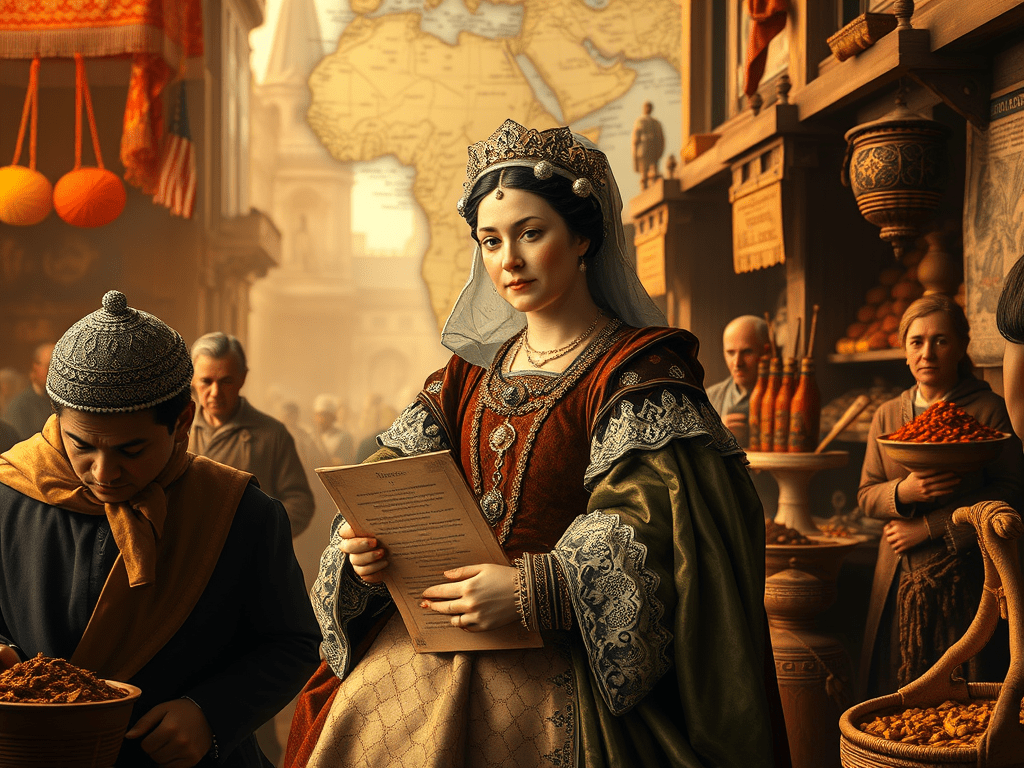
British East India Company: Establishment (UPSC/BPSC Prelims & Mains)
Overview
The British East India Company (EIC), founded in 1600 CE, was a joint-stock company established to pursue trade with the East Indies but became a major colonial power in India. Its establishment marked the beginning of British commercial and political dominance, shaping India’s modern history through trade, conquest, and administration. The EIC’s rise transformed India’s economy, society, and politics, culminating in direct British Crown rule after 1858. For UPSC, the EIC’s establishment is a key topic in Modern Indian History (Prelims) and Colonial Impact (Mains GS Paper I). For BPSC, its early activities in Bihar, particularly in Patna and the Battle of Buxar (1764), are significant due to Bihar’s strategic role in early British expansion.
1. Historical Context
Global Context:
- Period: Late 16th–early 17th century, during the Age of Exploration.
- European Rivalry: Portugal, Spain, Netherlands, and England competed for control over Asian trade routes (spices, textiles, silk).
- Mercantilism: European powers sought wealth through trade monopolies and colonies.
- Decline of Portuguese: By the late 16th century, Portuguese dominance in the Indian Ocean weakened, creating opportunities for Dutch and English traders.
- Mughal India: Under Akbar and Jahangir (1556–1627 CE), India was a prosperous empire with a thriving textile and spice trade, attracting European merchants.
Indian Context:
- Political: Mughal Empire at its peak, with regional powers like Gujarat and Bengal controlling trade.
- Economic: India was a global trade hub, exporting cotton, silk, spices, and indigo via ports like Surat, Calicut, and Masulipatnam.
- Bihar’s Role: Patna was a key trade center for textiles, saltpeter (used in gunpowder), and opium, attracting European merchants.
Need for the EIC:
- Trade Competition: The English sought to challenge Dutch (Dutch East India Company, VOC, 1602) and Portuguese monopolies in Asia.
- Profit Motive: Spices (pepper, cloves) and Indian textiles promised high profits in European markets.
- Royal Support: English merchants needed state backing to compete with rival powers.
Sources:
- Primary: EIC charters, letters of Queen Elizabeth I, Jahangir’s farmans, and travel accounts (e.g., Thomas Roe).
- Secondary: Company records, Mughal chronicles (Tuzuk-i-Jahangiri).
- Archaeology: Early EIC factories (e.g., Surat, Madras).
Details to Memorize:
- Founded: 1600 CE, London.
- Charter: Queen Elizabeth I, December 31, 1600.
- Mughal Context: Akbar (1556–1605), Jahangir (1605–1627).
- Bihar: Patna as trade hub.
2. Establishment of the British East India Company
Formation:
- Date: December 31, 1600 CE.
- Royal Charter: Granted by Queen Elizabeth I, giving the EIC a monopoly on English trade with the “East Indies” (India, Southeast Asia).
- Name: Initially called “The Governor and Company of Merchants of London Trading into the East Indies.”
- Structure: Joint-stock company, funded by English merchants and investors (e.g., Thomas Smythe, first governor).
- Objective: Trade in spices, textiles, and other commodities; establish trading posts (factories) in Asia.
- Capital: Initial subscription of £68,373 from 218 shareholders.
Early Challenges:
- Dutch Rivalry: The Dutch VOC, better funded and militarized, dominated the spice trade in Indonesia.
- Portuguese Resistance: Controlled key ports like Goa and Malabar, limiting English access.
- Mughal Authority: European traders needed permissions (farmans) from Mughal emperors or local governors to trade.
- Piracy: English ships faced threats from pirates and rival European navies.
Key Milestones:
- First Voyage (1601–1603):
- Led by Captain James Lancaster aboard the Red Dragon.
- Traded in Aceh (Sumatra) and Bantam (Java); brought back pepper.
- Established a temporary trading post in Bantam.
- Early Contact with India (1608):
- Captain William Hawkins arrived at Surat (Gujarat), seeking trade permissions from Emperor Jahangir.
- Faced opposition from Portuguese and Mughal officials but laid groundwork for future negotiations.
- Thomas Roe’s Embassy (1615–1619):
- Sir Thomas Roe, sent by King James I, met Jahangir at Ajmer.
- Secured a farman (1616) allowing the EIC to establish a factory at Surat.
- Significance: Marked formal Mughal recognition of English trade rights.
- First Factory in India (1612):
- Established at Surat after the English defeated the Portuguese in the Battle of Swally (1612), impressing Mughal authorities.
- Surat became the EIC’s primary trading hub in India.
Early Trade:
- Commodities: Exported Indian textiles (cotton, calico), indigo, saltpeter, and spices to Europe; imported silver, woolens, and metals.
- Ports: Focused on Surat (Gujarat), Masulipatnam (Coromandel Coast), and later Madras (1639).
- Bihar Connection: By the 1630s, the EIC traded in Patna for saltpeter and textiles, leveraging Bihar’s strategic location.
Governance:
- Court of Directors: Managed operations from London.
- Factories: Trading posts led by a “President” or “Factor” (e.g., Surat factory).
- Naval Power: EIC ships were armed to protect trade routes, giving it a military edge.
Bihar Connection:
- Patna Factory (1632): The EIC established a trading post in Patna to procure saltpeter (essential for gunpowder) and textiles.
- Trade Significance: Bihar’s opium and indigo later became major EIC exports.
- Political Impact: Patna’s strategic location laid the groundwork for the EIC’s expansion after the Battle of Buxar (1764).
Details to Memorize:
- Charter: 1600 CE, Elizabeth I.
- First Voyage: 1601, James Lancaster, Bantam.
- India Contact: Hawkins (1608), Roe (1615–1619).
- First Factory: Surat, 1612.
- Bihar: Patna factory, 1632.
3. Factors Leading to Establishment
Economic Factors:
- Profit Potential: Indian textiles and spices fetched high prices in Europe (e.g., pepper yielded 200–300% profit).
- Joint-Stock Model: Allowed pooling of capital, reducing individual risk for merchants.
- Global Demand: Growing European markets for luxury goods (silk, cotton, indigo).
Political Factors:
- Royal Support: Elizabeth I’s charter provided legitimacy and monopoly rights.
- Weakening Rivals: Portuguese decline and Dutch focus on Indonesia created space for the EIC.
- Mughal Stability: Strong Mughal administration ensured safe trade environments.
Technological Factors:
- Navigation: Advances in shipbuilding (e.g., galleons) and navigation (astrolabe, compass) enabled long voyages.
- Armed Ships: EIC vessels were equipped with cannons, ensuring protection against pirates and rivals.
Social Factors:
- Merchant Class: Rising English merchant class sought new investment opportunities.
- Religious Motive: Though secondary, some saw trade as a way to spread Christianity.
Bihar Connection:
- Economic Pull: Bihar’s saltpeter and textile production attracted the EIC to Patna.
- Trade Routes: Patna’s position on the Ganges facilitated trade with Bengal and northern India.
Details to Memorize:
- Factors: Profit, joint-stock, navigation, Mughal stability.
- Bihar: Saltpeter, textiles, Ganges trade.
4. Early Impact and Expansion
Economic Impact:
- Trade Growth: By 1620, the EIC exported large quantities of Indian textiles, outpacing Portuguese trade.
- Revenue: Profits from Surat and Masulipatnam funded further voyages and factories.
- Bihar: Patna’s saltpeter trade supported EIC’s military supplies in Europe.
Political Impact:
- Mughal Relations: Roe’s diplomacy ensured peaceful trade under Jahangir’s farmans.
- Rivalry: EIC’s victory at Swally (1612) weakened Portuguese influence in India.
- Local Alliances: EIC negotiated with Mughal governors (e.g., Surat’s nawab) for trade privileges.
Social Impact:
- Cultural Exchange: English traders adopted Indian customs (e.g., dress, language) to integrate with local society.
- Intermarriage: Early EIC officials married Indian women, fostering ties with local communities.
- Bihar: EIC’s presence in Patna introduced European trade practices, influencing local merchants.
Expansion (1612–1650):
- Factories: Established in Madras (Fort St. George, 1639), Bombay (1668, acquired via dowry), and Bengal (Job Charnock, 1690).
- Fortifications: Built fortified factories to protect against Dutch and Portuguese threats.
- Bihar: Patna factory expanded to handle opium and indigo by the late 17th century.
Details to Memorize:
- Impact: Trade growth, Mughal diplomacy, cultural exchange.
- Expansion: Madras (1639), Bombay (1668), Bengal (1690).
- Bihar: Patna’s opium, indigo trade.
5. Decline and Legacy
Decline:
- Not Immediate: The EIC’s establishment phase was successful; decline began in the 19th century.
- Challenges: Dutch competition, Mughal skepticism, and internal corruption posed early hurdles.
- Later Decline: Post-1857, the EIC’s mismanagement led to the Government of India Act 1858, transferring control to the British Crown.
Legacy:
- Colonial Foundation: The EIC’s trade posts evolved into British India’s administrative centers (e.g., Madras, Bombay, Calcutta).
- Economic Transformation: Shifted India from a manufacturing hub to a raw material supplier (e.g., Bihar’s indigo, opium).
- Political Impact: Paved the way for British conquest after Plassey (1757) and Buxar (1764).
- Cultural Impact: Introduced English language, legal systems, and Christian missions.
- Bihar Connection:
- Patna’s early trade role made it a focal point for EIC’s eastern expansion.
- Battle of Buxar (1764) established EIC’s control over Bihar, Bengal, and Odisha.
- Modern Relevance:
- EIC’s archives inform studies of colonial history.
- Debates on colonial exploitation (e.g., drain of wealth) remain relevant.
Details to Memorize:
- Legacy: Colonial rule, economic shift, Buxar (1764).
- Bihar: Patna’s role, colonial control post-Buxar.
6. Key Memorization Points
- Founded: 1600 CE, Queen Elizabeth I’s charter.
- Objective: Trade in spices, textiles; monopoly in East Indies.
- Key Figures: James Lancaster (1601), William Hawkins (1608), Thomas Roe (1615–1619).
- First Factory: Surat, 1612 (post-Swally).
- Bihar Connection: Patna factory (1632), saltpeter, textiles.
- Milestones: Roe’s farman (1616), Madras (1639).
- Legacy: British colonialism, Buxar (1764), economic drain.
7. Practice Questions
Prelims (MCQs):
- Q: The British East India Company was established in:
- A: 1600 CE.
- Q: The first EIC factory in India was set up at:
- A: Surat.
- Q: Who secured a Mughal farman for the EIC in 1616?
- A: Thomas Roe.
- Q: The EIC established a trading post in Bihar at:
- A: Patna (1632).
Mains:
- Q: Discuss the factors leading to the establishment of the British East India Company and its early impact on India. (15 marks)
- Q: Evaluate the role of Thomas Roe’s diplomacy in securing trade privileges for the EIC in Mughal India. (10 marks)
- Q: Analyze the significance of Bihar in the early trade activities of the British East India Company. (10 marks)
8. Recommended Resources
NCERT:
- Themes in Indian History-III (12th): Chapter 10 (Colonialism and Indian Economy).
- Download: ncert.nic.in.
NIOS:
- Indian History (Code 315): Modern India, Colonialism.
- Download: nios.ac.in.
IGNOU:
- EHI-04: India from 16th to Mid-18th Century: European Companies.
- Download: egyankosh.ac.in.
Books:
- The East India Company: The World’s Most Powerful Corporation by Tirthankar Roy.
- The Anarchy: The Relentless Rise of the East India Company by William Dalrymple.
- A New History of India by Stanley Wolpert.
Online Resources:
- British Library: EIC archives, bl.uk.
- National Archives of India: abhyas.nic.in.
9. Why This Topic Matters
UPSC:
- Prelims: Key dates, figures, and events related to EIC’s establishment and early trade.
- Mains: GS Paper I (Modern History): Colonial economic policies, Mughal-European interactions; relevant for essays on colonialism’s impact.
- Analytical Value: EIC’s rise illustrates mercantilism, diplomacy, and early globalization.
BPSC:
- Relevance: Bihar’s role in EIC’s trade (Patna factory) and political control (post-Buxar) is critical for state history.
- Bihar’s Context: Highlights Bihar’s economic significance and colonial exploitation (e.g., opium, indigo).
- Memorization: Factual (dates, factories) and analytical (Bihar’s role, colonial impact) aspects suit both Prelims and Mains.

Leave a comment