
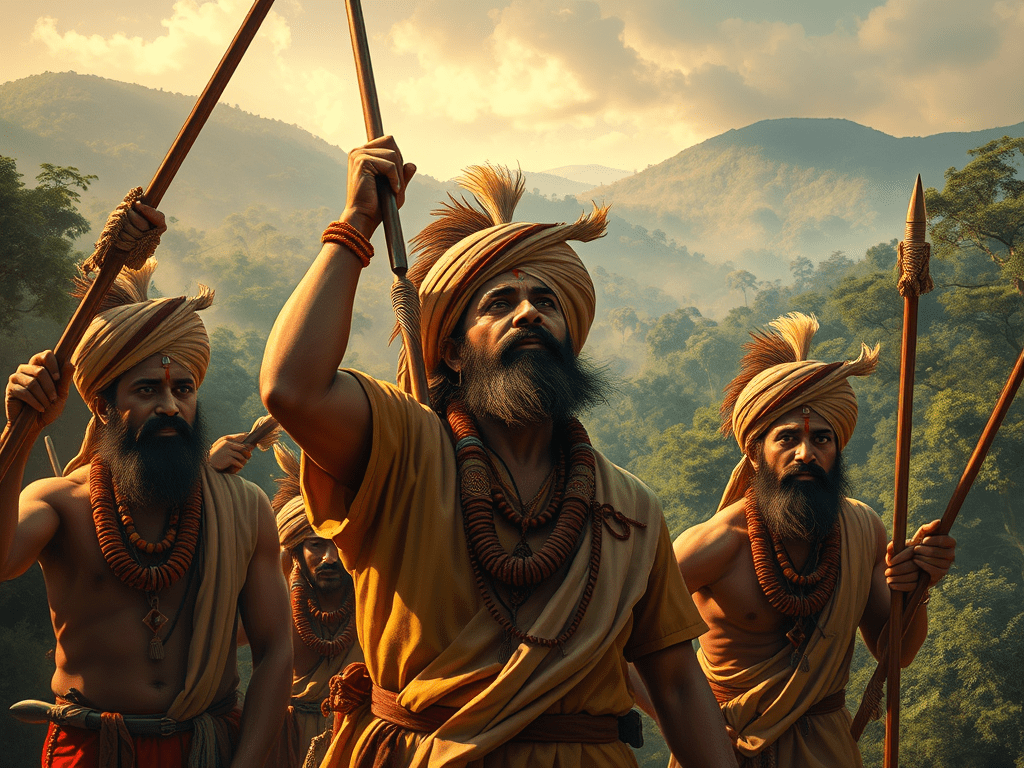
Introduction to Tribal Movements in India
Tribal movements in India during the British colonial period were significant expressions of resistance against exploitation, land alienation, and cultural disruption.
These movements were primarily driven by economic grievances, social oppression, and the erosion of traditional tribal systems due to British policies like the Permanent Settlement (1793) and the Zamindari system.
In Bihar and its surrounding areas, tribal communities such as the Santhals, Mundas, and Hos played a pivotal role in these uprisings.
The Santhal Rebellion (1855–56), also known as the Santhal Hul, stands out as a landmark event due to its scale, organization, and impact on colonial policies.
Tribal Movements in Bihar and Surrounding AreasTribal movements in Bihar and surrounding regions were primarily agrarian and forest-based revolts, triggered by the loss of land, exploitation by moneylenders and zamindars, and British revenue policies. Below is a tabular overview of key tribal movements in Bihar and surrounding areas:
| Movement | Year | Region | Leaders | Causes | Outcome |
|---|---|---|---|---|---|
| Santhal Rebellion | 1855–56 | Rajmahal Hills, Santhal Pargana (Bihar, Jharkhand, West Bengal) | Sidhu, Kanhu, Chand, Bhairav Murmu, Phulo, Jhano | Land alienation, high taxes, exploitation by moneylenders and zamindars, cultural disruption | Suppressed by British; Santhal Parganas created, Santhal Parganas Tenancy Act (1876) passed |
| Kol Rebellion | 1831–32 | Chotanagpur (Jharkhand, Bihar) | Buddho Bhagat | Loss of land to outsiders, high taxes, bonded labor | Brutally suppressed by British troops from Calcutta and Benares |
| Bhumij Revolt | 1832–33 | Manbhum, Barabhum (Jharkhand, Bihar) | Ganga Narain | Land dispossession, British revenue policies | Suppressed after Ganga Narain’s death, limited impact |
| Ho and Munda Uprising | 1827, 1831 | Chotanagpur, Singhbhum (Jharkhand, Bihar) | Raja Parahat, later Birsa Munda | Land revenue policies, outsider interference | Suppressed in early phases; Birsa Munda’s Ulgulan (1899–1900) led to Tenancy Act (1903) |
| Tana Bhagat Movement | 1914–19 | Chotanagpur (Bihar, Jharkhand) | Jatra Oraon | Religious reform, opposition to zamindars and British, non-violent | Suppressed but influenced Gandhian movements |
| Chuar Rebellion | 1798–99 | Bankura, Midnapore (West Bengal, near Bihar) | Local Chuar leaders | Exploitative land revenue policies, loss of autonomy | Suppressed, led to British police restructuring in the region |
Detailed Notes on the Santhal Rebellion (1855–56):
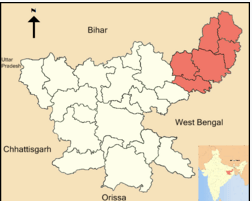
The Santhal Rebellion, also known as the Santhal Hul (Hul meaning revolution), was a significant tribal uprising against British colonial rule and the Zamindari system in the Bengal Presidency, covering present-day Jharkhand, Bihar, and West Bengal. It is celebrated annually on June 30 as Hul Diwas in Jharkhand.Background
- Santhal Community: The Santhals are one of the largest tribal groups in India, primarily residing in Jharkhand, Bihar, West Bengal, and Odisha. They were traditionally agriculturalists and hunters, practicing shifting agriculture until the British encouraged settled agriculture.
- British Policies: In 1832, the British demarcated the Damin-i-Koh region in the Rajmahal Hills for Santhal settlement, promising non-interference. However, the Permanent Settlement Act of 1793 institutionalized land rights for zamindars, leading to land alienation, high taxes, and exploitation by moneylenders (referred to as dikus or outsiders by the Santhals).
- Economic Exploitation: Moneylenders charged exorbitant interest rates (up to 500%), trapping Santhals in debt and leading to land confiscation. The Santhals also faced forced labor (begari) and cultural alienation due to British interference in their animistic practices.
Causes of the Santhal Rebellion
- Economic Exploitation:
- The Permanent Settlement Act (1793) auctioned Santhal lands to zamindars if peasants couldn’t pay rent, disrupting traditional joint ownership.
- Moneylenders and traders (dikus) exploited the Santhals through usury, leading to widespread indebtedness and landlessness.
- High land taxes and forced labor further impoverished the community.
- Land Alienation:
- The Santhals lost control over their ancestral lands to zamindars and outsiders, undermining their traditional agrarian lifestyle.
- The Santhals lost control over their ancestral lands to zamindars and outsiders, undermining their traditional agrarian lifestyle.
- Social Oppression:
- The Santhals faced discrimination and mistreatment by colonial officials, police, and zamindars.
- A notable incident involved the arrest of Santhals by a moneylender-backed police inspector, escalating tensions.
- Cultural Disruption:
- British policies disrupted the Santhal social structure (parhas) and animistic beliefs, alienating the community from their cultural roots.
- British policies disrupted the Santhal social structure (parhas) and animistic beliefs, alienating the community from their cultural roots.
- Political Marginalization:
- The Santhals were excluded from administrative processes, and their grievances were ignored, leading to a sense of injustice.
Course of the Rebellion
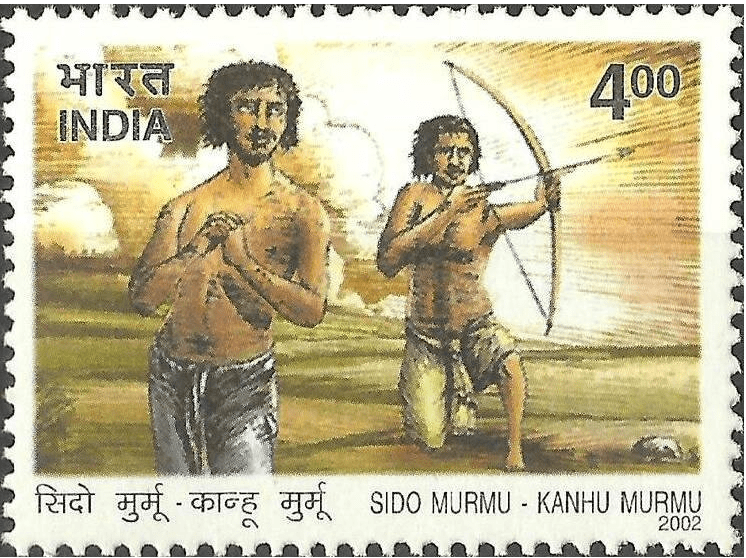
- Leadership: The rebellion was led by four Murmu brothers—Sidhu, Kanhu, Chand, and Bhairav—along with their sisters Phulo and Jhano.
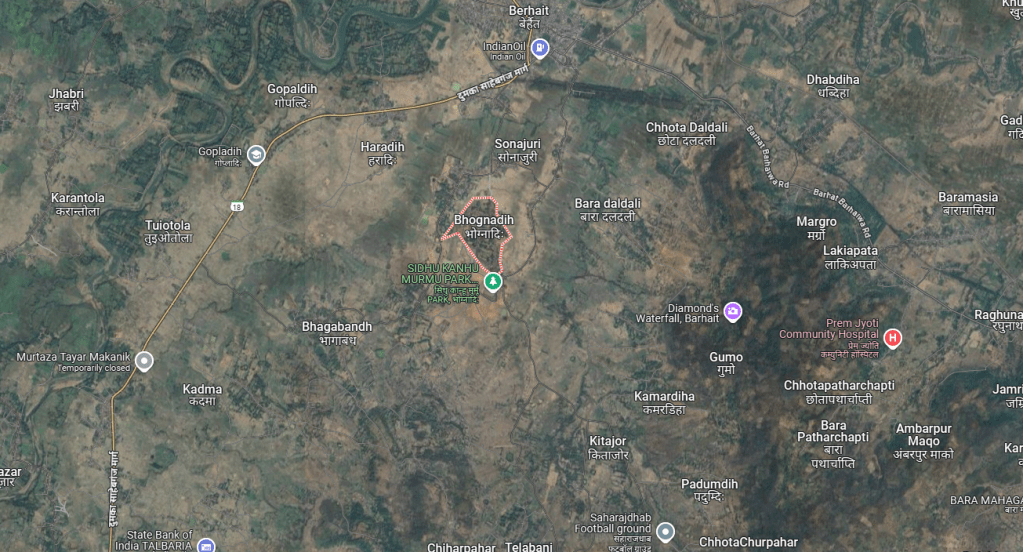
- Trigger: On June 30, 1855, Sidhu and Kanhu Murmu, claiming divine inspiration, mobilized 10,000 Santhals at
Bhognadih (Sahebganj district) and declared the end of British rule and the establishment of a Santhal regime. - Actions:
- The Santhals employed guerrilla warfare tactics, leveraging their knowledge of the terrain for surprise attacks on British officials, police stations, zamindars, and moneylenders.
- They disrupted postal and railway communications between Bhagalpur and Rajmahal, targeting symbols of colonial authority like court records and warehouses.
- The rebellion spread across the Rajmahal Hills, Bhagalpur, Birbhum, Bankura, and parts of present-day Jharkhand.
- Scale: Over 10,000 Santhals, including men, women, and children, participated, showcasing remarkable unity and organization for a tribal movement.
Suppression
- The British were initially taken by surprise but responded with overwhelming force, deploying modern firearms and war elephants against the Santhals’ traditional weapons (bows, arrows, and spears).
- Martial law was imposed from November 10, 1855, to January 3, 1856.
- Leaders Sidhu and Kanhu were captured and executed (Sidhu was hanged at Panchkathia), and approximately 15,000–20,000 Santhals were killed, with villages destroyed.
- The rebellion was suppressed by early 1856, but it left a lasting impact.
Outcomes and Significance
- Administrative Reforms:
- The British created the Santhal Parganas in 1856, carving out 5,500 square miles from Bhagalpur and Birbhum districts to address Santhal grievances.
- The Santhal Parganas Tenancy Act (1876) was enacted to protect Santhal land rights, prohibiting land transfers to non-Santhals and recognizing traditional governance structures.
- A new police system was introduced to reduce intermediaries and encourage tribal cooperation.
A new police system was introduced to reduce intermediaries and encourage tribal cooperation.
- The British created the Santhal Parganas in 1856, carving out 5,500 square miles from Bhagalpur and Birbhum districts to address Santhal grievances.
- Cultural Impact:
- The rebellion fostered a sense of Santhal identity and unity, inspiring future tribal movements.
- It highlighted the need to preserve tribal culture and traditions from external interference.
- Nationalist Sentiment:
- The Santhal Rebellion, occurring two years before the Revolt of 1857, is considered a precursor to India’s broader independence movement.
- It inspired other tribal and peasant uprisings and contributed to the growth of nationalist feelings.
- Legacy:
- The rebellion is celebrated as Hul Diwas on June 30 in Jharkhand, commemorating the Santhals’ resistance.
- It remains a symbol of tribal resilience and resistance against colonial oppression.
Unique Features of the Santhal Rebellion
- Grassroots Leadership: Unlike other uprisings led by elites or princes, the Santhal Rebellion was led by tribal leaders from within the community.
- Mass Mobilization: The involvement of men, women, and children made it a rare example of unified resistance.
- Guerrilla Tactics: The Santhals’ use of guerrilla warfare was a novel strategy in Bihar, challenging British forces.
- Cultural Dimension: The rebellion was not only economic and political but also a defense of Santhal culture and religion, with spiritual leaders invoking divine support.
Other Notable Tribal Movements in Bihar and Surrounding Areas
- Kol Rebellion (1831–32):
- Region: Chotanagpur (Jharkhand, Bihar).
- Leader: Buddho Bhagat.
- Causes: Loss of land to outsiders, high taxes, bonded labor due to British judicial and revenue policies.
- Outcome: Suppressed by British troops, but it highlighted the plight of the Kol tribe.
- Bhumij Revolt (1832–33):
- Region: Manbhum, Barabhum (near Bihar).
- Leader: Ganga Narain.
- Causes: Land dispossession and British revenue policies.
- Outcome: Suppressed after Ganga Narain’s death, with limited long-term impact.
- Ho and Munda Uprising:
- Early Phase (1827, 1831): Led by Raja Parahat in Singhbhum and Chotanagpur against land revenue policies and outsider interference.
- Later Phase (1899–1900): Known as Ulgulan (Great Tumult), led by Birsa Munda in Chotanagpur. It aimed to establish a Munda state and reject colonial laws and taxes. Suppressed after Birsa’s arrest and death in 1900, but led to the Tenancy Act (1903) recognizing the khuntkhatti system.
- Tana Bhagat Movement (1914–19):
- Region: Chotanagpur (Bihar, Jharkhand).
- Leader: Jatra Oraon.
- Causes: Religious reform (Kurukh Dharam), opposition to zamindars and British, inspired by Gandhian non-violence.
- Outcome: Suppressed but influenced later non-violent movements in the region.
- Chuar Rebellion (1798–99):
- Region: Bankura, Midnapore (near Bihar).
- Causes: Exploitative land revenue policies and loss of autonomy.
- Outcome: Suppressed, leading to British police restructuring in the region.
Probable Questions for UPSC and BPSCBelow is a list of probable questions for both UPSC Prelims and BPSC Prelims/Mains, focusing on the Santhal Rebellion and tribal movements in Bihar:UPSC Prelims Questions
- Which of the following was a major cause of the Santhal Rebellion (1855–56)?
- a) Introduction of a new system of land revenue and taxation
- b) Influence of foreign religious missionaries
- c) Rise of tribal elites in colonial administration
- d) Complete abolition of the Zamindari system
Answer: a) Introduction of a new system of land revenue and taxation
- After the Santhal Uprising subsided, what measures were taken by the colonial government?
- The territories called ‘Santhal Parganas’ were created.
- It became illegal for a Santhal to transfer land to a non-Santhal.
- Select the correct answer:
- a) 1 only
- b) 2 only
- c) Both 1 and 2
- d) Neither 1 nor 2
Answer: c) Both 1 and 2
- Who were the prominent leaders of the Santhal Rebellion?
- a) Birsa Munda and Ganga Narain
- b) Sidhu and Kanhu Murmu
- c) Jatra Oraon and Buddho Bhagat
- d) Tilka Manjhi and Raja Parahat
- Answer: b) Sidhu and Kanhu Murmu
- In which year did the Santhal Rebellion take place?
- a) 1857–58
- b) 1855–56
- c) 1831–32
- d) 1899–1900
Answer: b) 1855–56
- Which of the following tribal movements was inspired by Gandhian ideology?
- a) Santhal Rebellion
- b) Kol Rebellion
- c) Tana Bhagat Movement
- d) Bhumij Revolt
Answer: c) Tana Bhagat Movement
BPSC Prelims Questions
- Which tribal movement in Bihar is celebrated as Hul Diwas on June 30?
- a) Kol Rebellion
- b) Santhal Rebellion
- c) Munda Ulgulan
- d) Tana Bhagat Movement
Answer: b) Santhal Rebellion
- The Santhal Rebellion was primarily against:
- a) British revenue policies and Zamindari system
- b) Introduction of railways
- c) Christian missionary activities
- d) Prohibition of tribal festivals
Answer: a) British revenue policies and Zamindari system
- Who led the Tana Bhagat Movement in Chotanagpur?
- a) Sidhu Murmu
- b) Jatra Oraon
- c) Birsa Munda
- d) Ganga Narain
Answer: b) Jatra Oraon
- The Santhal Parganas Tenancy Act (1876) was a result of which uprising?
- a) Kol Rebellion
- b) Santhal Rebellion
- c) Ho and Munda Uprising
- d) Chuar Rebellion
Answer: b) Santhal Rebellion
- Which tribal leader is associated with the Ulgulan movement in Chotanagpur?
- a) Tilka Manjhi
- b) Birsa Munda
- c) Sidhu Murmu
- d) Buddho Bhagat
Answer: b) Birsa Munda
UPSC/BPSC Mains Questions and Model Answers
- Question: “The Santhal Uprising provides a model of popular armed resistance against British colonialism in India.” Elucidate. (BPSC 45th, 2002)
Answer: The Santhal Uprising (1855–56), also known as the Santhal Hul, was a landmark event in India’s colonial history, representing a model of popular armed resistance against British colonialism. Led by Sidhu, Kanhu, Chand, and Bhairav Murmu, it was a grassroots movement driven by the Santhal tribe’s grievances against economic exploitation, land alienation, and social oppression.Key Features of the Uprising:- Grassroots Leadership: Unlike other revolts led by elites, the Santhal Rebellion was spearheaded by tribal leaders, making it a true people’s movement.Mass Mobilization: Over 10,000 Santhals, including men, women, and children, united under a common cause, showcasing remarkable unity.Guerrilla Warfare: The Santhals used guerrilla tactics, leveraging their knowledge of the terrain to disrupt British communications and attack symbols of authority.Cultural Dimension: The rebellion was not only economic but also a defense of Santhal culture and animistic beliefs against colonial interference.
- The Permanent Settlement Act (1793) led to land alienation, as zamindars and moneylenders seized Santhal lands for unpaid debts.Exorbitant interest rates (up to 500%) by moneylenders trapped Santhals in debt bondage.British policies disrupted traditional Santhal governance (parhas) and imposed heavy taxes and forced labor.
- The British were forced to create the Santhal Parganas and enact the Santhal Parganas Tenancy Act (1876) to protect tribal land rights.The rebellion inspired future tribal and peasant movements and contributed to nationalist sentiments, setting the stage for the Revolt of 1857.It highlighted the resilience of tribal communities and their determination to protect their identity and rights.
- Question: Discuss the causes and results of the Santhal Rebellion (1855–56) in Bihar. (BPSC 63rd, 2019)
Answer: The Santhal Rebellion (1855–56) was a significant tribal uprising in the Bengal Presidency, particularly in the Rajmahal Hills and Santhal Pargana regions of present-day Bihar and Jharkhand. It was a reaction to the socio-economic and cultural exploitation faced by the Santhal tribe under British colonial rule.Causes:- Economic Exploitation: The Permanent Settlement Act (1793) institutionalized zamindars as hereditary landlords, leading to the auctioning of Santhal lands for unpaid rents. Moneylenders charged exorbitant interest rates, pushing Santhals into debt and landlessness.Land Alienation: The British promise of non-interference in Damin-i-Koh (1832) was broken, as zamindars and outsiders seized tribal lands, disrupting traditional joint ownership.Social Oppression: The Santhals faced discrimination and mistreatment by colonial officials, police, and zamindars, with incidents like the arrest of Santhals by a moneylender-backed police inspector escalating tensions.Cultural Disruption: British policies undermined Santhal social structures (parhas) and animistic beliefs, causing cultural alienation.Political Marginalization: The Santhals’ grievances were ignored, and they were excluded from administrative processes, fostering resentment.
- Administrative Reforms: The British created the Santhal Parganas in 1856 to address tribal grievances and introduced the Santhal Parganas Tenancy Act (1876), which prohibited land transfers to non-Santhals and recognized traditional governance.Strengthened Tribal Identity: The rebellion fostered a sense of unity and identity among the Santhals, celebrated today as Hul Diwas.Inspiration for Future Movements: The uprising inspired other tribal and peasant revolts and contributed to the nationalist movement, influencing the Revolt of 1857.British Policy Changes: The rebellion exposed the flaws in British revenue policies, leading to stricter control over tribal areas and new forest management regulations.
- Question:
Examine the characteristics of tribal protest in the 19th century with suitable examples. Give reasons for their failure. (BPSC 64th, 2018)
Answer: Tribal protests in the 19th century were militant, frequent, and violent responses to British colonial policies that disrupted traditional tribal systems. These movements were primarily agrarian and forest-based, driven by economic, social, and cultural grievances.Characteristics of Tribal Protests:- Land and Forest Issues: Most revolts were triggered by land alienation and loss of forest rights due to British revenue policies (e.g., Permanent Settlement) and the Zamindari system. Example: Santhal Rebellion (1855–56), where land dispossession by zamindars and moneylenders led to a massive uprising.Exploitation by Outsiders: Moneylenders, traders, and colonial officials (dikus) exploited tribals through usury and forced labor. Example: Kol Rebellion (1831–32), where Kols revolted against bonded labor and high taxes.Cultural and Religious Defense: Many movements had a socio-religious dimension, aiming to protect tribal culture and beliefs. Example: Munda Ulgulan (1899–1900), led by Birsa Munda, sought to establish a Munda state and revive traditional practices.Guerrilla Tactics: Tribals often used guerrilla warfare, leveraging terrain knowledge. Example: Santhals disrupted railway and postal communications during the Santhal Rebellion.Grassroots Leadership: Unlike elite-led revolts, tribal movements were led by community leaders. Example: Sidhu and Kanhu Murmu in the Santhal Rebellion.Mass Participation: Men, women, and children participated, showcasing unity. Example: The Santhal Rebellion mobilized over 10,000 people, including women like Phulo and Jhano Murmu.
- Superior British Firepower: Tribals used traditional weapons (bows, arrows) against British firearms and war elephants, leading to their defeat. Example: The Santhal Rebellion was suppressed with heavy casualties.
- Lack of Unified Leadership: Many revolts lacked cohesive leadership and coordination across regions. Example: The Bhumij Revolt (1832–33) weakened after Ganga Narain’s death.
- Limited Support: Tribal movements were localized and did not receive widespread support from other communities or regions. Example: The Kol Rebellion was confined to Chotanagpur.
- British Repression: The British employed brutal suppression tactics, including martial law and mass arrests. Example: Martial law was imposed during彼此
System: The Santhal Rebellion (1855–56), also known as the Santhal Hul, was a significant tribal uprising against British colonial rule and the Zamindari system in the Bengal Presidency, covering present-day Jharkhand, Bihar, and West Bengal. Below is a detailed set of notes tailored for UPSC and BPSC aspirants, with a special focus on Bihar and surrounding areas, presented in a structured format with tables, probable questions, and model answers for mains examinations.


Leave a comment