
Detailed Study Material for UPSC EPFO and UPSC ALC Exams
Introduction to Workers’ Participation in Management
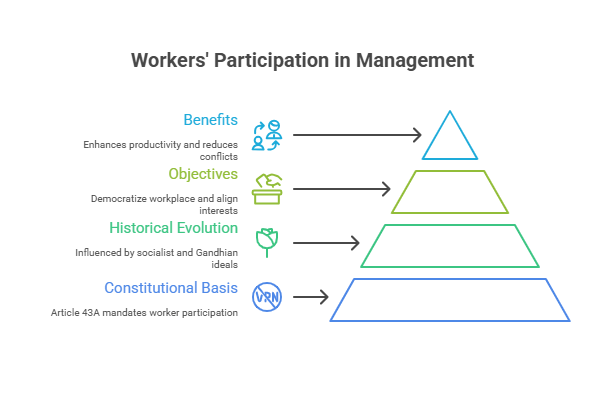
Workers’ participation in management (WPM) refers to the involvement of employees in organizational decision-making processes, ranging from consultation on operational matters to representation on boards, fostering a sense of ownership and cooperation between labor and management. This concept aims to democratize the workplace, reduce conflicts, enhance productivity, and align worker interests with organizational goals.
In India, WPM is enshrined as a Directive Principle in Article 43A of the Constitution (added by the 42nd Amendment, 1976),
directing the state to secure worker participation in industrial management. It evolved from post-independence socialist ideals, influenced by Gandhian principles of trusteeship and ILO recommendations on labor-management cooperation.
For UPSC EPFO (Enforcement Officer/Accounts Officer, Assistant Provident Fund Commissioner) and UPSC ALC (Assistant Labour Commissioner) exams, WPM is a key topic under “Industrial Relations & Labour Laws” and “Human Resource Development,” emphasizing its role in welfare, dispute prevention, and HR policies, with 10-20% weightage.
The material covers concepts, framework, forms, evolution, features, challenges, cases, exam relevance, developments, and practice questions.
Key Concepts in Workers’ Participation in Management
Definition and Objectives
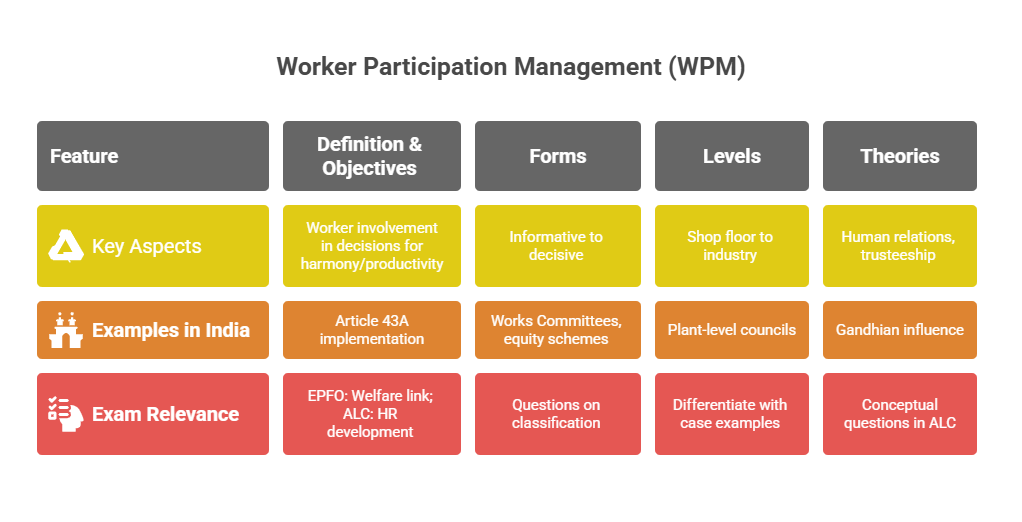
WPM is the systematic involvement of workers in management decisions through consultative or decisional mechanisms, bridging the gap between labor and capital.
Objectives include:
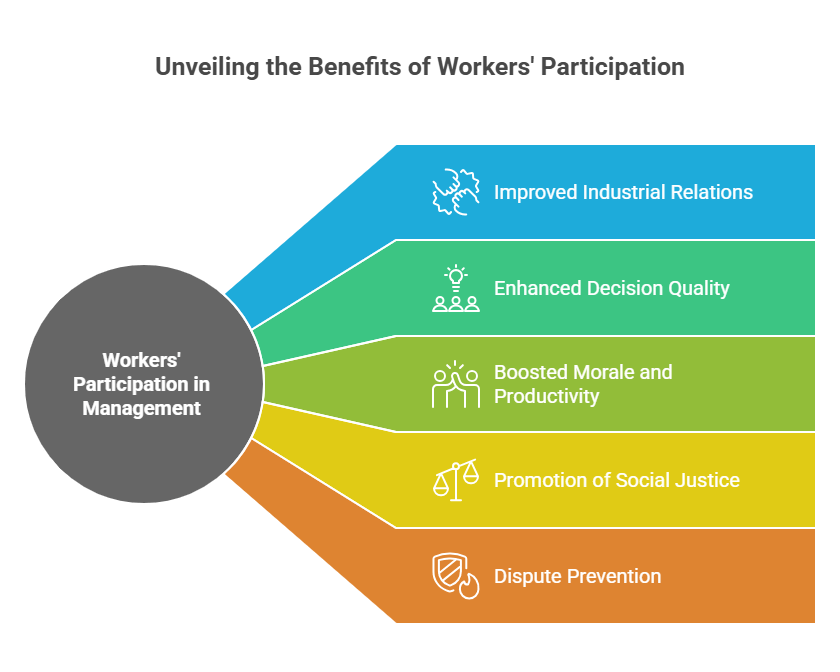
It differs from collective bargaining (negotiation-focused) by emphasizing collaboration over confrontation.
Forms of WPM
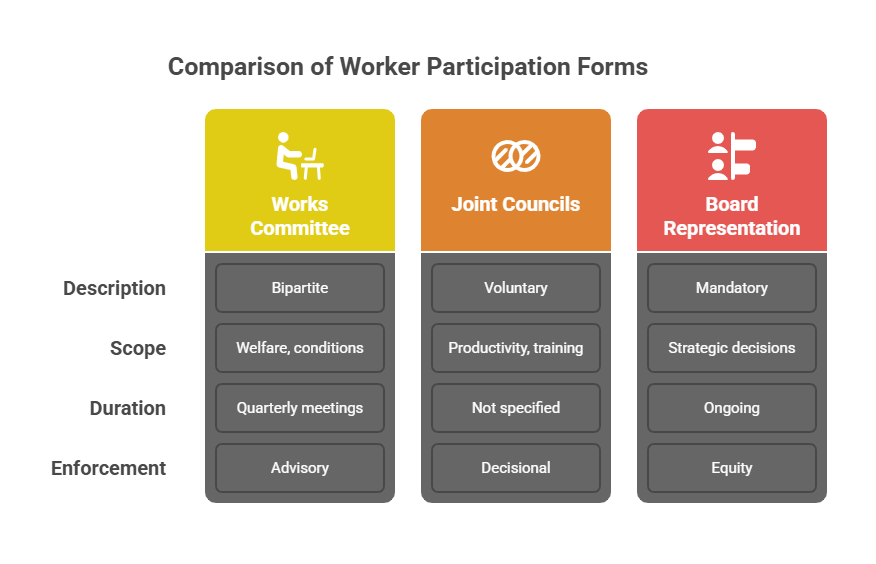
WPM manifests in various forms, classified by degree of involvement:

In India, common forms include Works Committees, Joint Management Councils, and Shop Councils.
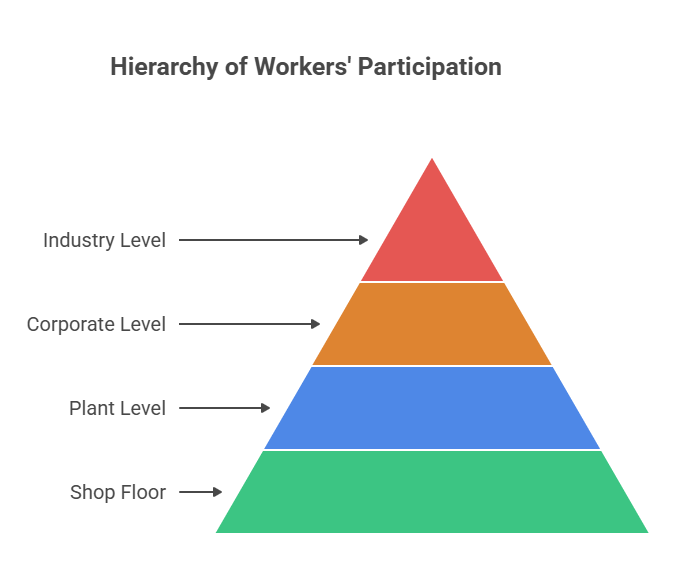
Levels of WPM
Theoretical Foundations
Legal Framework
WPM is supported by constitutional and statutory provisions, with the Industrial Relations Code, 2020, providing the main structure.
Constitutional Basis
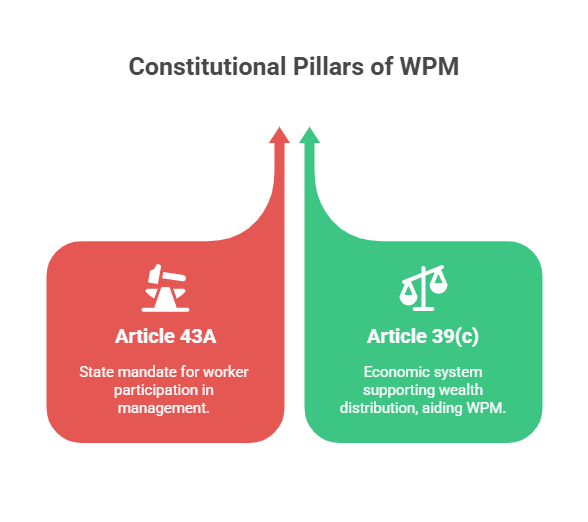
Statutory Provisions
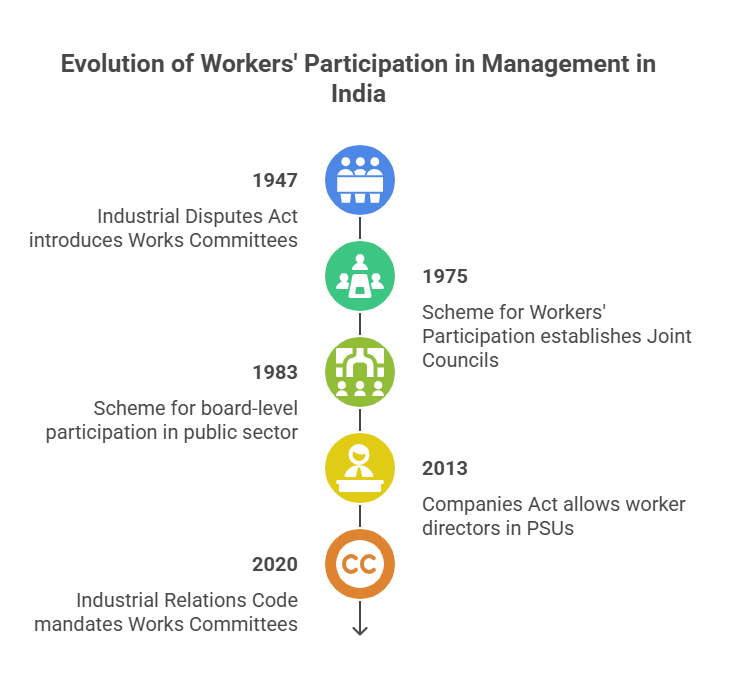
Government Initiatives
- Tripartite forums like Indian Labour Conference recommend WPM models.
- Public sector guidelines mandate worker directors (e.g., in SAIL, ONGC).
The framework emphasizes voluntary adoption, with limited enforcement in private sector.
Historical Evolution in India
WPM in India has progressed through phases:
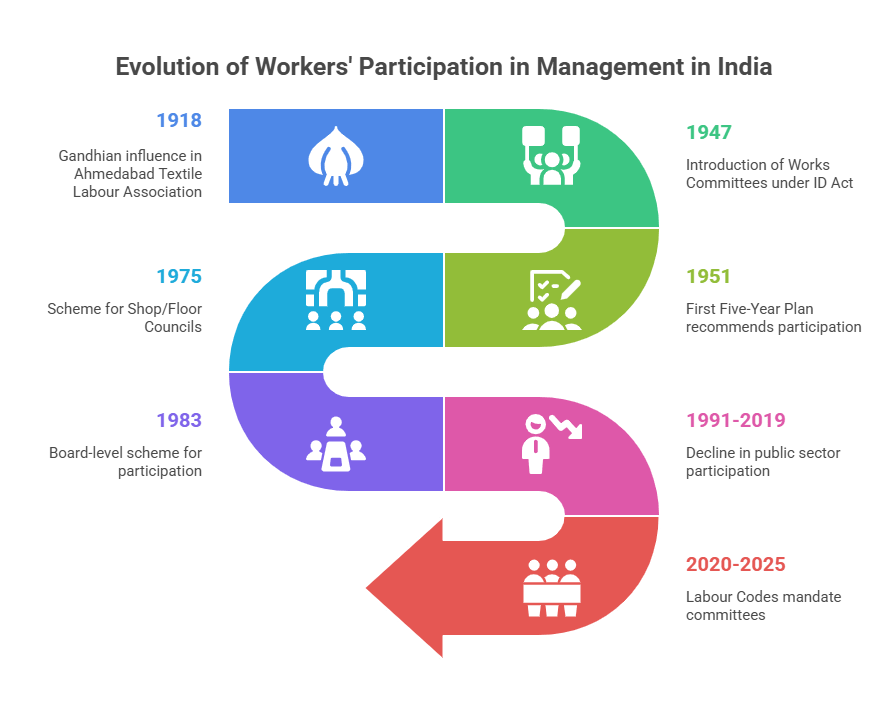
- Pre-Independence (1920s-1947): Gandhian influence in Ahmedabad Textile Labour Association (1918) with joint committees; limited to few industries.
- Post-Independence (1947-1970s): ID Act, 1947, introduced Works Committees; First Plan (1951) recommended participation; 42nd Amendment added Article 43A.
- 1970s-1990s: 1975 Scheme (Shop/Floor Councils); 1983 board-level scheme; Sachar Committee (1979) suggested equity sharing.
- Post-Liberalization (1991-2019): Decline in public sector; voluntary in private (e.g., Tata’s joint councils).
- Labour Codes Era (2020-2025): IR Code mandates committees; 2024 guidelines for gig worker participation.
Key Features of WPM under IR Code, 2020
Challenges in Workers’ Participation in Management
- Tokenism: Committees often advisory, lacking real power, leading to worker disillusionment.
- Limited Implementation: Only 20-30% of eligible units have functional committees; private sector resistance.
- Union Rivalry: Multiple unions hinder effective representation.
- Skill Gaps: Workers lack training for meaningful participation in complex decisions.
- Informal Sector Exclusion: 90% workforce uncovered; gig economy workers have no structures.
- Management Reluctance: Fear of shared control in competitive markets.
Major Case Laws on Workers’ Participation in Management
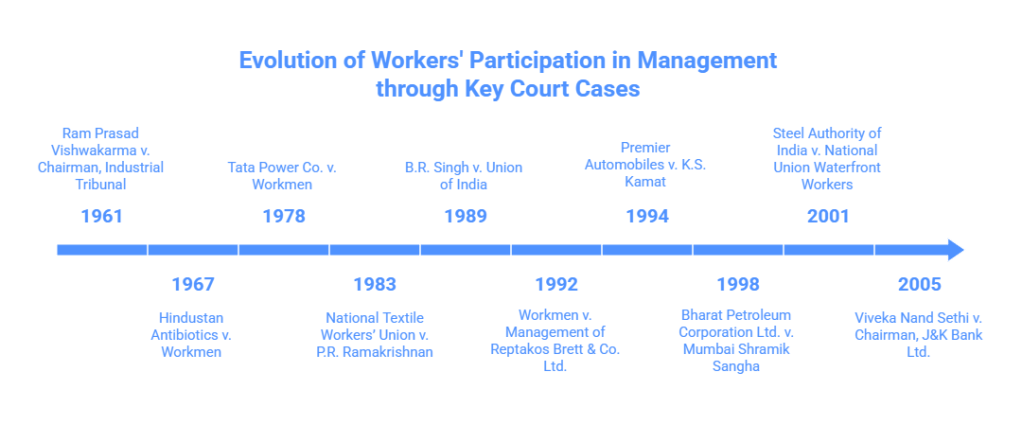
- National Textile Workers’ Union v. P.R. Ramakrishnan (1983): Supreme Court advocated worker directors on boards, recognizing social stake in companies.
- Bharat Petroleum Corporation Ltd. v. Mumbai Shramik Sangha (1998): Emphasized participatory mechanisms for grievance redressal and harmony.
- Ram Prasad Vishwakarma v. Chairman, Industrial Tribunal (1961): Highlighted voluntary participation in settlements as participative.
- Workmen v. Management of Reptakos Brett & Co. Ltd. (1992): Linked participation to fair wage determination.
- B.R. Singh v. Union of India (1989): Union formation as basis for participation, fundamental right.
- Steel Authority of India v. National Union Waterfront Workers (2001): Indirectly supported participation in contract labor decisions.
- Viveka Nand Sethi v. Chairman, J&K Bank Ltd. (2005): Mandatory consultation before actions affecting workers.
- Hindustan Antibiotics v. Workmen (1967): Participation in bonus and welfare decisions.
- Tata Power Co. v. Workmen (1978): Consultative role in dispute prevention.
- Premier Automobiles v. K.S. Kamat (1994): Living wage through participative agreements.

Leave a comment