

🧾 ACCOUNTING & COST ACCOUNTING CONCEPTS
1. Break-even Point (BEP)
- The level of sales where Total Revenue = Total Cost.
- No profit, no loss.
- BEP (Units) = Fixed Costs ÷ (Selling Price per unit – Variable Cost per unit).
- Useful in marginal costing and decision-making.
2. Depreciation
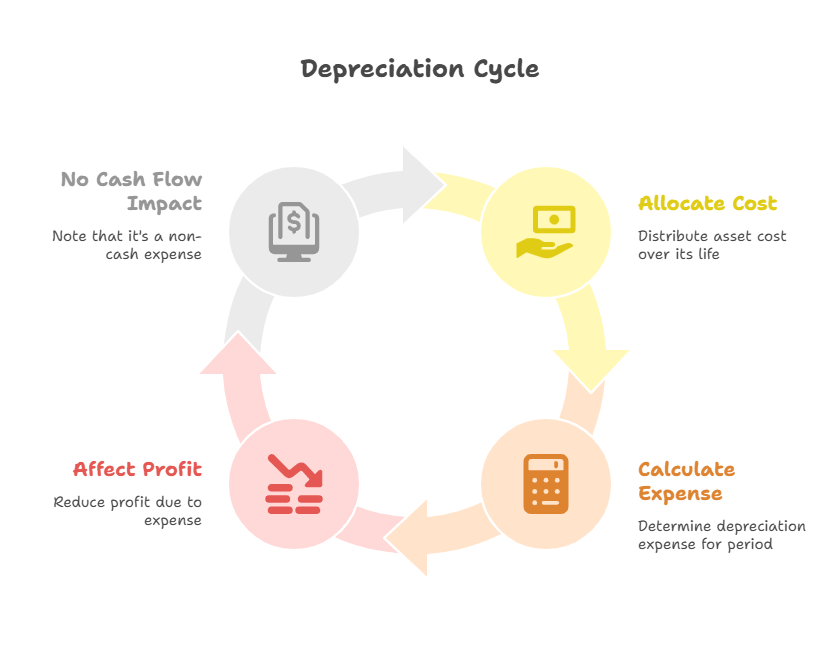
- Systematic allocation of cost of a tangible asset over its useful life.
- Non-cash expense – affects profit, not cash flow.
- Straight-Line Method (SLM): Equal depreciation every year = (Cost – Scrap Value) / Life.
- Written Down Value (WDV): Depreciation % applied on reducing balance.
3. Double Entry System
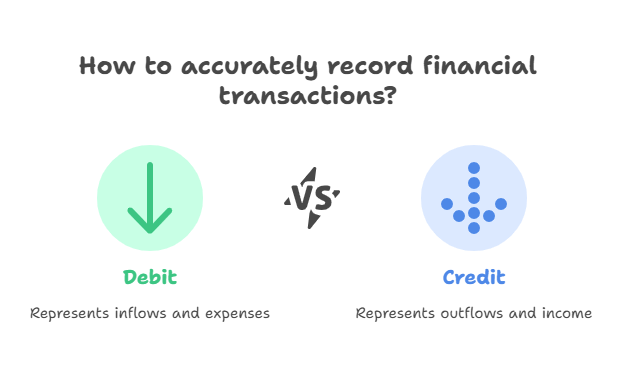
- Every transaction has two aspects: Debit and Credit.
→ Debit what comes in / expenses
→ Credit what goes out / income
4. Ledger & Cash Book
- Journal → primary book of entries (chronological order).
- Ledger → principal book where transactions are classified account-wise.
- Cash Book → records only cash & bank transactions.
5. Final Accounts
Include:
- Trading Account → determines Gross Profit / Loss
- Profit & Loss Account → determines Net Profit / Loss
- Balance Sheet → shows financial position (assets, liabilities, capital)
6. Accounting Concepts & Principles
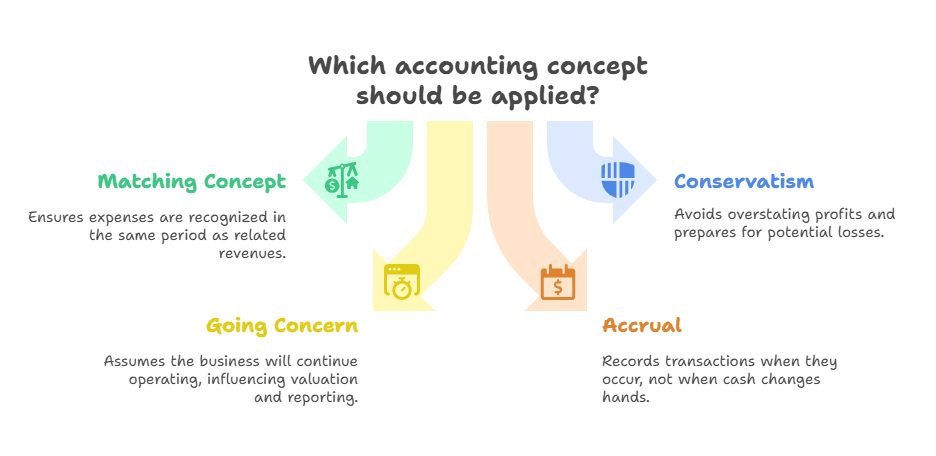
- Matching Concept: Match expenses with related revenues.
- Conservatism (Prudence): Anticipate no profits, but provide for all losses.
- Going Concern: Business will continue.
- Accrual: Record income/expenses when earned/incurred, not when cash received/paid.
7. Reserves & Suspense Account
- Securities Premium Reserve: Premium on issue of shares is transferred here.
- Suspense Account: Temporary holding account for unclassified or unbalanced entries.
8. Valuation & Standards
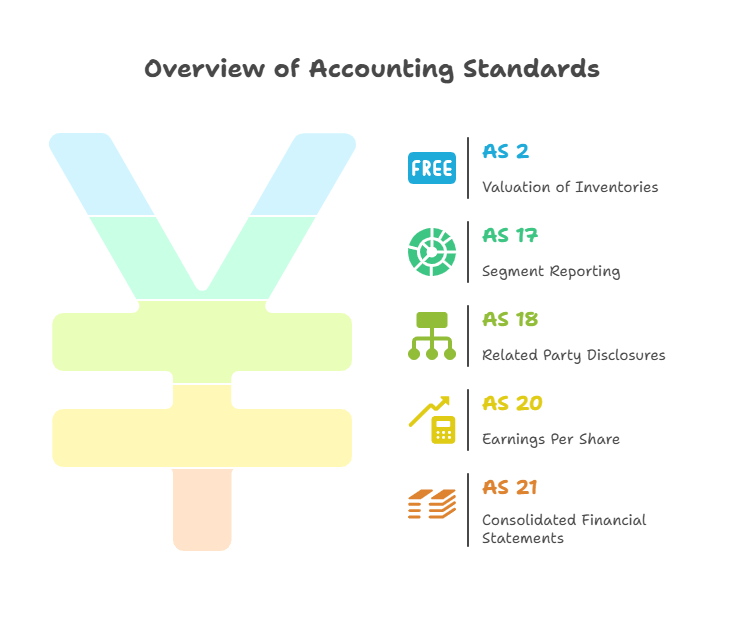
- AS 2 – Valuation of Inventories (Lower of Cost or NRV).
- AS 17 – Segment Reporting.
- AS 18 – Related Party Disclosures.
- AS 20 – Earnings Per Share.
- AS 21 – Consolidated Financial Statements.
💰 FINANCIAL MANAGEMENT CONCEPTS
9. Financial Management
- Concerned with procurement, allocation, and control of financial resources.
- Key decisions:
- Investment (Capital Budgeting)
- Financing (Capital Structure)
- Dividend Policy
10. Working Capital
- Working Capital = Current Assets – Current Liabilities
- Indicates liquidity and short-term solvency.
- Types:
- Gross Working Capital: Total Current Assets
- Net Working Capital: CA – CL
11. Capital Budgeting
- Long-term investment decisions (projects, machinery, etc.).
- Key techniques:
- NPV (Net Present Value): PV of inflows – PV of outflows (considers time value).
- IRR: Discount rate where NPV = 0.
- Payback Period: Time to recover investment (ignores time value).
- Profitability Index: PV inflows ÷ PV outflows.
12. Leverage
- Use of fixed-cost capital (like debt) to magnify returns.
- Financial Leverage: Impact of debt on EPS.
- Operating Leverage: Impact of fixed operating costs on EBIT.
- Combined Leverage: Operating × Financial leverage.
- DuPont Analysis: ROE = (Net Profit Margin × Asset Turnover × Equity Multiplier).
13. Dividend Policy
- Balances shareholder returns and business growth needs.
- Affects market value and wealth of shareholders.
14. Working Capital Financing
- Can be aggressive (short-term borrowings) or conservative (long-term funds).
15. Factoring
- Selling trade receivables to a factor (financial intermediary) for cash.
- Helps in receivables management and liquidity.
16. Treasury & Hedging
- Treasury Management: Managing liquidity, investments, and risk.
- Hedging: Protecting against adverse financial risks (exchange, interest, commodity).
COST & MANAGEMENT ACCOUNTING CONCEPTS
17. Cost Accounting
- Determines cost of products/services for control and decision-making.
- Systems:
- Job Costing: For customized products (e.g. furniture, projects).
- Contract Costing: Long-term jobs like construction.
- Process Costing: Continuous production (cement, chemicals).
- Operating Costing: Service industries (transport, hospitals).
18. Marginal Costing
- Considers variable costs only for decision making.
- Contribution = Sales – Variable Cost
- Useful for BEP, Make or Buy, Pricing, etc.
19. Standard Costing & Variance Analysis
- Sets standard cost for materials, labour, overheads.
- Variance = Actual – Standard.
- Helps in performance evaluation and control.
20. Budgetary Control
- Comparing actual with budgeted performance.
- Budgets act as tools for planning and control.
21. Responsibility Accounting
- Assigns costs and revenues to responsibility centers:
- Cost Center – controls costs.
- Profit Center – controls profit.
- Investment Center – controls ROI.
22. Costing Innovations
- Target Costing: Cost = Target Price – Desired Profit.
- Life Cycle Costing: Considers all costs from design to disposal.
- Kaizen Costing: Continuous improvement and cost reduction.
- JIT (Just-in-Time): Minimizes inventory and carrying costs.
🧮 AUDITING CONCEPTS
23. Auditing Definition
- Systematic and independent examination of financial statements to express an opinion.
24. Types of Audit
- Statutory Audit: Mandated by law (Companies Act, 2013).
- Internal Audit: Conducted by employees to strengthen internal control.
- Tax Audit: As per Section 44AB of Income Tax Act.
- Cost Audit: As per Section 148 of Companies Act.
- Forensic Audit: Detects and prevents frauds.
- Management Audit: Evaluates managerial efficiency.
- Compliance Audit: Checks adherence to laws and regulations.
- Environmental/Social/Performance Audit: Non-financial evaluation (CSR, sustainability).
25. Audit Process & Terms
- Vouching: Checking authenticity of transactions with documentary evidence.
- Verification: Confirming existence and valuation of assets & liabilities.
- Test Checking: Sampling a few transactions instead of all.
- Audit Program: Detailed plan of audit procedures.
- Working Papers: Auditor’s records supporting conclusions (owned by auditor).
- Letter of Engagement: Defines scope, objective, and responsibility of audit.
- Audit Evidence: Should be sufficient and appropriate (SA 500).
- Risk Assessment: Identifying chances of material misstatement (SA 315).
- Sampling Risk: Sample may not represent population.
- Internal Check: Part of internal control to prevent errors.
26. Standards on Auditing (SAs)
- SA 200: Overall objectives of independent auditor.
- SA 500: Audit Evidence.
- SA 570: Going Concern.
27. CARO (Companies Auditor’s Report Order)
- Additional reporting requirements for certain companies (Companies Act).
28. CAG (Comptroller & Auditor General)
- Audits accounts of the Central & State Governments.
29. Peer Review
- Quality review of audit work by another independent auditor (ICAI initiative).
🌐 ACCOUNTING STANDARDS (IND AS / IFRS)
30. IFRS & Ind AS
- Ind AS = IFRS-converged standards (global alignment).
- IFRS 9 / Ind AS 109: Financial Instruments.
- Ind AS 115: Revenue from Contracts with Customers.
- Ind AS 116: Leases – requires right-of-use asset recognition.
- Ind AS 36: Impairment of Assets.
- Ind AS 19: Employee Benefits (including defined benefit plans).
- Ind AS 12: Income Taxes (current and deferred tax).
📈 FINANCIAL ANALYSIS CONCEPTS
31. Ratio Analysis
- Tool of Financial Statement Analysis to assess performance.
- Liquidity Ratios: Short-term solvency (Current Ratio, Quick Ratio).
- Leverage Ratios: Debt usage (Debt-Equity, Interest Coverage).
- Profitability Ratios: Profit margin, ROE, ROA, etc.
- Activity Ratios: Efficiency (Inventory, Receivables turnover).
32. Cash Flow Statement
- Classifies cash flows as:
- Operating Activities
- Investing Activities
- Financing Activities
33. Contingent Liabilities & Prior Period Items
- Contingent Liabilities: Possible obligations disclosed in Notes to Accounts.
- Prior Period Items: Errors or omissions from previous year shown separately.
34. Gross Profit Ratio
- = (Gross Profit ÷ Net Sales) × 100
- Measures efficiency of production and pricing.

Leave a comment