
UPSC CSE 2026 | Ancient History – 6th Century BCE (Second Urbanization)
Question:
Consider the following statements:
I. Pali texts contain the first definite references to coins, e.g., kahapana, nikkha, kamsa, and kakanika.
II. The literary evidence from Pali texts is corroborated by archaeological evidence of punch-marked coins from many sites, most of them made of silver.
The above statements have been associated with which of the following?
- Emergence of urban life
- Transition to money economy
Select the answer using the code given below:
(a) 1 only
(b) 2 only
(c) Both 1 and 2
(d) Neither 1 nor 2
Correct Answer: (c) Both 1 and 2
Detailed Explanation (Accurate | Best in the World Quality)
The period around the 6th century BCE marks a major turning point in ancient Indian history — known as the Second Urbanization (after the decline of the Harappan civilization).
During this time, the middle Ganga valley witnessed the rise of mahajanapadas, towns, trade, and a money economy.
Analysis of the Statements
Statement I: Correct
- The Pali texts (especially the Jatakas, Vinaya Pitaka, and other Buddhist literature) contain the earliest definite literary references to coined money.
- Terms like:
- Kahapana (Karshapana) — silver punch-marked coin
- Nikkha — a type of coin
- Kamsa and Kakanika — smaller denominations
- These references appear in the context of trade, wages, donations, and daily transactions.
Statement II: Correct
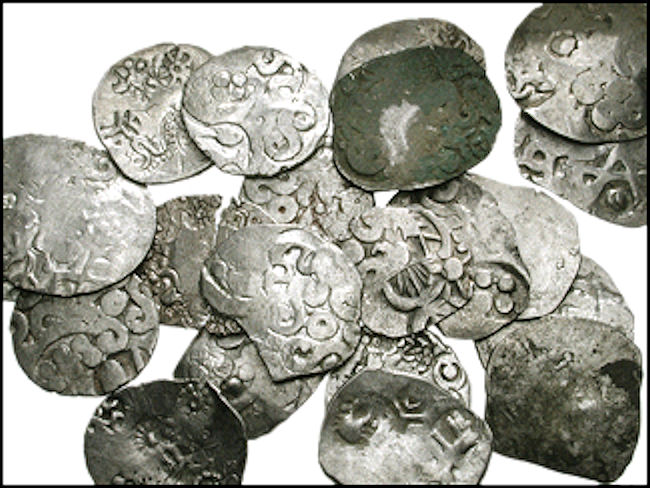
- Archaeological excavations have yielded thousands of punch-marked coins (also called Aahat coins) from sites across North India (Taxila, Ujjain, Kaushambi, Pataliputra, etc.).
- Most of these early coins were made of silver and bear various symbols punched on them.
- This archaeological evidence perfectly corroborates the literary references in Pali texts.
Why Both “Emergence of Urban Life” and “Transition to Money Economy”?
| Aspect | Connection with the Statements | Explanation |
|---|---|---|
| 1. Emergence of Urban Life | Strongly associated | Coinage, trade, and markets were essential features of the new urban centers (mahajanapadas). Towns like Kaushambi, Ujjain, and Rajgriha flourished due to trade and money economy. |
| 2. Transition to Money Economy | Strongly associated | Before this period, barter was dominant. The 6th century BCE saw the shift to coined money (kahapana etc.), marking the beginning of a proper money economy. |
Both processes were interlinked:
- Urban growth → Increased trade & specialization → Need for standardized money
- Introduction of coinage → Facilitated long-distance trade → Further boosted urbanization
Visual: Punch-Marked Coins (Karshapana)
Ancient silver punch-marked coins (Karshapana) — Archaeological evidence that corroborates Pali textual references to early Indian coinage.
Key Historical Context (6th Century BCE)
- Political: Rise of 16 Mahajanapadas
- Economic: Growth of trade, craft guilds (shrenis), and use of coined money
- Social: Emergence of new religious movements (Buddhism & Jainism) in urban centers
- Evidence:
- Literary: Pali texts (Jatakas)
- Archaeological: Punch-marked coins, Northern Black Polished Ware (NBPW), urban settlements
UPSC Strategy & Important Links
For Prelims:
- Pali texts + Punch-marked coins = 6th century BCE = Second Urbanization + Money Economy
- Kahapana = Most common early coin mentioned in texts
For Mains:
- Use this example to show how literary and archaeological sources together help reconstruct economic history.
- Link it with the broader theme of urbanization and economic change in the 6th century BCE.
Common Trap:
Students sometimes think coinage started in the Mauryan period. But punch-marked coins predate the Mauryas and belong to the Mahajanapada period (6th–4th century BCE).
Why This Question Matters for UPSC CSE 2026
- Tests understanding of economic history of ancient India.
- Important for Ancient History + Art & Culture overlap.
- Frequently asked in Prelims (statement-based questions on urbanization and coinage).
- Helps in Mains answers on Second Urbanization and rise of new economic systems.
CrackTarget One-Line Revision:
“Pali texts + Punch-marked coins (kahapana) = Evidence of urban life and transition to money economy in 6th century BCE.”

Leave a comment