

Current Affairs Digest: June 2025
27,403 views
One stop solution for all Major Government Job exams.

Best Study Material and Courses for Upcoming vacancies

Exclusive Preparation Materials

Topic wise detailed study course and Test Paper for next MO examination

Cracktarget offers comprehensive preparation for regulatory body exams like RBI, PFRDA, NABARD, and SEBI by providing tailored study materials, mock tests, and expert guidance. It covers key topics such as banking, securities, pension regulations, and rural development, ensuring a deep understanding of concepts. With real-time practice, performance analysis, and updated content, Cracktarget helps candidates build confidence, improve time management, and stay ahead of the competition, making it an effective tool to excel in these competitive examinations.

27,403 views
27,403 views
IntroductionLabour laws in India regulate employment relationships, wages, working conditions, social security, and industrial disputes, evolving from colonial exploitation to a modern framework aimed at social justice and economic growth. Rooted in the Constitution, these laws address worker welfare, equality,…
27,403 views
27,403 views
IntroductionFundamental Rights, enshrined in Part III (Articles 12–35) of the Constitution of India, are the cornerstone of Indian democracy, guaranteeing individual liberties and protecting citizens against arbitrary state actions. Inspired by the U.S. Bill of Rights, these rights are justiciable,…
27,403 views
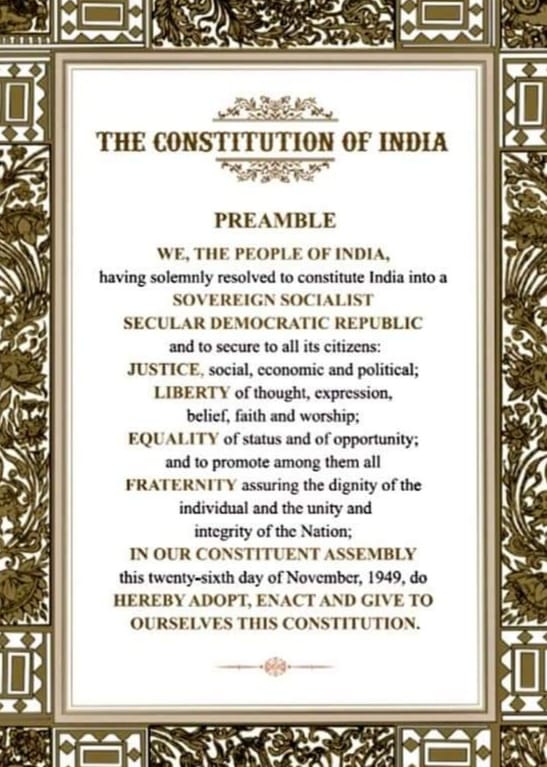
Study Material The Preamble to the Constitution of India is a concise introductory statement that outlines the objectives, philosophy, and guiding principles of the Constitution. Often referred to as the “soul” or “identity card” of the Constitution, it encapsulates the…
27,403 views
The Constitution of India, enacted on November 26, 1949, and effective from January 26, 1950, is a living document that evolves through amendments to address changing socio-political and economic needs. The amendment process, outlined in Article 368, balances flexibility and…

27,403 views
Study Materia The Constitution of India, adopted on November 26, 1949, and effective from January 26, 1950, is a comprehensive document that draws from various sources, including foreign constitutions, historical documents, and Indian legislative frameworks. Its sources reflect a blend…
27,403 views
Quick Snapshot The Indian Constitution, adopted on January 26, 1950, is the supreme law of India’s democracy. Drafted by the Constituent Assembly from 1946 to 1949, it reflects India’s vision for justice, liberty, equality, and unity amidst diversity. For UPSC,…

27,403 views
27,403 views
Legal Foundation and Evolution Key Insight: CAT’s establishment reflects India’s commitment to administrative justice, balancing efficiency with constitutional oversight, though the L. Chandra Kumar ruling integrates it into the broader judicial hierarchy. Structure and Composition Key Insight: CAT’s dual-member bench…
Stay in the loop with everything you need to know.
