
Overview
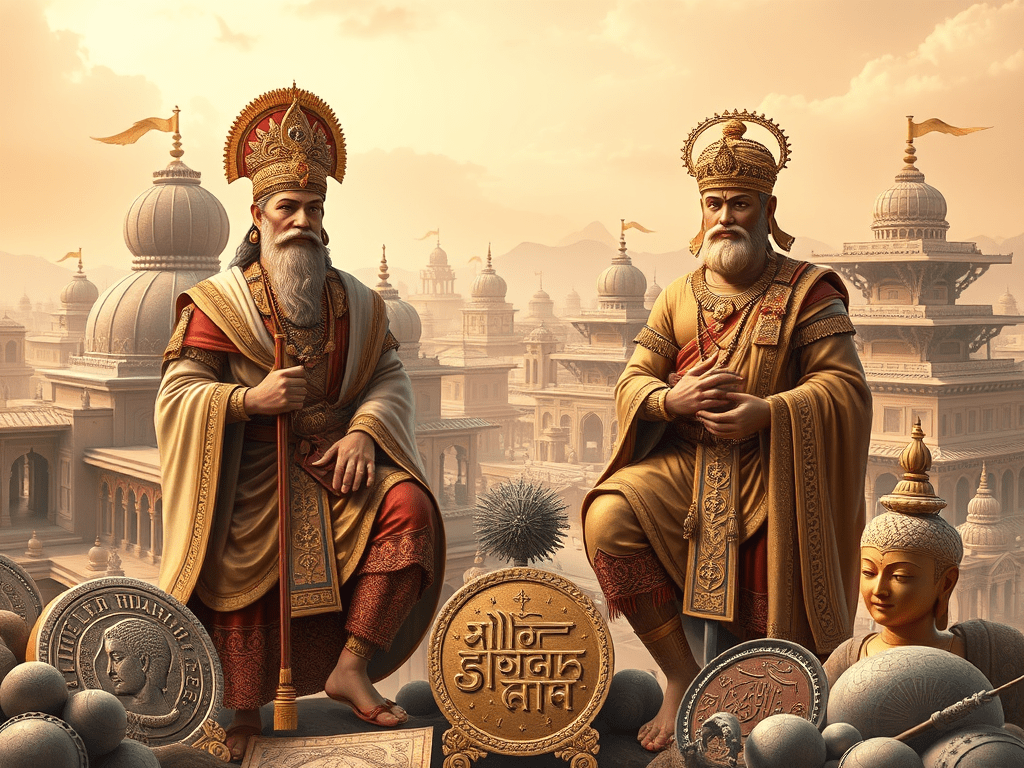
The Kushana (or Kushan) dynasty (circa 1st–3rd century CE) was a Central Asian dynasty that ruled northern India, parts of Central Asia, and the northwest, significantly shaping Indian history through their political, economic, and cultural contributions. Originating from the Yuezhi, a nomadic group from Central Asia, the Kushanas established a vast empire under rulers like Kujula Kadphises and Kanishka I, with capitals at Purushapura (modern Peshawar, Pakistan) and Mathura (Uttar Pradesh).
They facilitated trade along the Silk Road, patronized Buddhism, and developed the Gandhara and Mathura art schools, blending Indian, Greek, and Persian influences.
For UPSC, the Kushanas are a key topic in Ancient Indian History (Prelims) and Indian Heritage and Culture (Mains GS Paper I).
For BPSC, their trade links with Magadha and influence on Buddhist art (connected to sites like Sarnath) are relevant.
1. Historical Context and Origin
- Timeline: Ruled from 1st century CE (30 CE) to 3rd century CE (375 CE), with peak under Kanishka I (~127–150 CE).
- Origin: The Kushanas were part of the Yuezhi, a nomadic Indo-European group from Gansu, China, displaced by the Xiongnu around 2nd century BCE. They migrated to Bactria (modern Afghanistan) and later to India.
- Foundation: Kujula Kadphises (~30–80 CE) unified the Yuezhi tribes and established the Kushana dynasty, conquering Bactria and northwest India.
- Geographical Extent: Covered northern India (Punjab, Uttar Pradesh, Bihar), Afghanistan, Central Asia (Bactria, Sogdiana), and parts of Xinjiang. Controlled key Silk Road routes.
- Capitals:
- Purushapura (Peshawar, Pakistan): Primary political center.
- Mathura (Uttar Pradesh): Cultural and religious hub.
- Sources:
- Inscriptions: Rabatak (Afghanistan, Kanishka’s genealogy), Mathura (Kanishka’s devakula), Sarnath (Buddhist patronage).
- Coins: Gold and copper coins with rulers’ portraits, deities (e.g., Shiva, Buddha, Greek gods).
- Texts: Chinese chronicles (Hou Hanshu), Buddhist texts (Mahavamsa), Puranas.
- Archaeological Sites: Taxila, Mathura, Surkh Kotal (Bactria), Sarnath.
Details to Memorize:
- Timeline: ~30–375 CE; peak ~127–150 CE (Kanishka I).
- Origin: Yuezhi, displaced from Gansu, settled in Bactria.
- Founder: Kujula Kadphises (~30–80 CE).
- Capitals: Purushapura, Mathura.
- Territories: North India, Afghanistan, Central Asia, Xinjiang.
- Sources: Rabatak/Mathura/Sarnath inscriptions, coins, Hou Hanshu, Puranas, Taxila.
2. Political History and Key Rulers
- Early Rulers:
- Kujula Kadphises (~30–80 CE): Unified Yuezhi tribes, conquered Bactria, Gandhara, and Punjab. Adopted Indian titles (Maharaja) and Greek coinage styles.
- Vima Taktu (~80–100 CE): Expanded into northern India, possibly Mathura. Known from Rabatak inscription.
- Vima Kadphises (~100–127 CE): Consolidated empire, introduced gold coins (dinara, modeled on Roman coins), and promoted trade. Adopted Shaivism (Shiva on coins).
- Peak Ruler:
- Kanishka I (~127–150 CE): Greatest Kushana ruler, expanded empire to its zenith.
- Territories: Gandhara, Punjab, Mathura, Pataliputra (Bihar), and Central Asia.
- Titles: Maharajadhiraja (King of Kings), Devaputra (Son of God, per Rabatak inscription).
- Convened Fourth Buddhist Council (~127 CE, Kashmir) to standardize Mahayana Buddhism.
- Patronized Buddhism, built stupas (e.g., Kanishka Stupa, Peshawar).
- Kanishka I (~127–150 CE): Greatest Kushana ruler, expanded empire to its zenith.
- Later Rulers:
- Huvishka (~150–180 CE): Promoted art (Gandhara, Mathura schools) and religious syncretism (Shiva, Buddha, Zoroastrian deities on coins).
- Vasudeva I (~180–220 CE): Last major ruler, adopted Indian names and Shaivism. Empire weakened after his reign.
- Decline:
- By ~375 CE, weakened by Sassanian invasions (Persia), Gupta expansion (India), and internal rebellions.
- Gupta ruler Samudragupta defeated Kushana remnants (~350 CE, Allahabad Pillar inscription).
Details to Memorize:
- Rulers: Kujula Kadphises (30–80 CE), Vima Taktu (80–100 CE), Vima Kadphises (100–127 CE), Kanishka I (127–150 CE), Huvishka (150–180 CE), Vasudeva I (180–220 CE).
- Peak: Kanishka I, Fourth Buddhist Council (~127 CE, Kashmir).
- Titles: Maharaja, Maharajadhiraja, Devaputra.
- Decline: ~375 CE, Sassanians, Guptas (Samudragupta).
- Inscriptions: Rabatak, Mathura, Sarnath.
3. Administration
- Monarchy: Centralized rule under a king with divine status (Devaputra, Rabatak inscription). Advised by a council of nobles and officials.
- Provincial Administration:
- Divided into satrapies (provinces), governed by kshatrapas (satraps) or mahakshatrapas (great satraps).
- Key centers: Taxila (Gandhara), Mathura (Uttar Pradesh), Ujjain (Malwa).
- Local Administration:
- Gramas: Villages managed by gramikas (headmen).
- Nigamas: Towns with guilds (srenis) for trade and crafts.
- Local autonomy allowed for regional diversity (Indian, Greek, Persian traditions).
- Revenue System:
- Taxes: Land tax (bhaga, ~1/6th–1/4th), trade duties, tribute from vassals.
- Officials: Dandapati (revenue collectors), karmantikas (treasurers).
- Land grants to Buddhist monasteries and Brahmins (Mathura inscriptions).
- Military:
- Large army with cavalry, infantry, elephants, and chariots.
- Protected Silk Road routes and borders against Parthians and Sakas.
- Forts at Taxila and Begram (Afghanistan) ensured security.
- Judicial System:
- Based on local customs, Dharmashastras, and Buddhist principles.
- Kings and kshatrapas adjudicated major disputes; villages handled minor cases.
Details to Memorize:
- Monarchy: Devaputra, council of nobles.
- Provinces: Satrapies (kshatrapas, mahakshatrapas); Taxila, Mathura, Ujjain.
- Local: Gramas (gramikas), nigamas (srenis).
- Revenue: Bhaga, trade duties, land grants.
- Officials: Dandapati, karmantikas.
- Military: Cavalry, elephants, forts (Taxila, Begram).
- Judiciary: Dharmashastras, local customs.
4. Economy and Trade
- Agriculture:
- Fertile regions (Gangetic plains, Mathura) supported wheat, rice, and cotton.
- Irrigation systems (canals, wells) enhanced productivity.
- Trade:
- Controlled Silk Road routes connecting China, Central Asia, Persia, and Rome.
- Key Centers: Taxila, Mathura, Ujjain, Barygaza (Broach).
- Maritime Trade: Ports like Barygaza and Muziris linked with Rome (Periplus of the Erythraean Sea).
- Exports: Spices, textiles, gems, ivory, sandalwood.
- Imports: Gold, silver, wine, glassware from Rome.
- Coinage:
- Introduced gold coins (dinara, inspired by Roman aurei) under Vima Kadphises.
- Copper coins with bilingual legends (Greek, Kharoshthi) and deities (Shiva, Buddha, Zoroastrian gods).
- Kanishka’s coins depicted Buddha, a first in Indian coinage.
- Guilds (Srenis):
- Organized artisans, merchants, and traders, managing urban economies.
- Supported by royal patronage (Mathura inscriptions).
Details to Memorize:
- Agriculture: Wheat, rice, cotton; irrigation.
- Trade: Silk Road, Taxila, Mathura, Barygaza.
- Ports: Barygaza, Muziris (Periplus).
- Exports: Spices, textiles, gems.
- Imports: Gold, wine, glass.
- Coins: Gold (dinara), copper; Shiva, Buddha, Greek gods.
- Guilds: Srenis (Mathura inscriptions).
5. Religion and Culture
- Religious Policy:
- Patronized Buddhism: Kanishka convened Fourth Buddhist Council (~127 CE, Kashmir) to promote Mahayana Buddhism. Built Kanishka Stupa (Peshawar).
- Supported Shaivism: Vima Kadphises and Vasudeva I depicted Shiva on coins.
- Syncretism: Worshipped Greek (Heracles), Persian (Mithra), and Zoroastrian deities (Oesho, Anahita).
- Tolerated Jainism and Brahmanism (Mathura inscriptions).
- Language and Literature:
- Official languages: Greek, Prakrit (Kharoshthi/Brahmi scripts), Bactrian (Rabatak inscription).
- Patronized Buddhist texts (Mahavastu, Sutra Pitaka) and Sanskrit literature.
- Kanishka associated with scholars like Ashvaghosha (Buddhacharita) and Nagarjuna (Mahayana philosopher).
- Cultural Synthesis:
- Blended Indian, Greek, Persian, and Central Asian traditions.
- Facilitated cultural exchange via Silk Road trade.
Details to Memorize:
- Religions: Buddhism (Mahayana), Shaivism, Greek/Persian deities, Jainism.
- Council: Fourth Buddhist Council (~127 CE, Kashmir).
- Stupa: Kanishka Stupa (Peshawar).
- Languages: Greek, Prakrit, Bactrian (Kharoshthi, Brahmi).
- Scholars: Ashvaghosha (Buddhacharita), Nagarjuna.
- Syncretism: Indian-Greek-Persian traditions.
6. Art and Architecture
- Gandhara School:
- Region: Gandhara (Peshawar, Taxila).
- Features: Greco-Roman style, realistic human figures, wavy hair, draped robes.
- Themes: Buddha’s life, Jataka tales, Bodhisattvas.
- Sites: Taxila, Takht-i-Bahi, Bamiyan (Afghanistan).
- Mathura School:
- Region: Mathura (Uttar Pradesh).
- Features: Indigenous style, robust figures, Indian motifs (lotus, yakshas).
- Themes: Buddha, Jain Tirthankaras, Hindu deities (Vishnu, Shiva).
- Sites: Mathura, Sarnath (Buddha’s first sermon statue).
- Stupas and Monasteries:
- Kanishka Stupa (Peshawar): Massive structure, 400 feet tall (Chinese pilgrim Xuanzang).
- Taxila: Dharmarajika Stupa, Jaulian monastery.
- Sarnath: Expanded under Kushanas, linked to Magadha (Bihar).
- Sculpture and Iconography:
- Buddha depicted in human form (Gandhara, Mathura), a Kushana innovation.
- Royal portraits (Kanishka’s headless statue, Mathura).
- Coins with deities (Buddha, Shiva, Mithra).
Details to Memorize:
- Gandhara: Greco-Roman, Taxila, Takht-i-Bahi, Bamiyan.
- Mathura: Indigenous, Mathura, Sarnath.
- Stupas: Kanishka Stupa, Dharmarajika, Sarnath.
- Features: Buddha in human form, Jataka tales, royal portraits.
- Bihar Link: Sarnath (Buddhist art).
7. Decline and Legacy
- Decline (~375 CE):
- Sassanian invasions from Persia (Shapur II, ~350 CE).
- Gupta expansion under Samudragupta (~350 CE, Allahabad Pillar inscription).
- Internal rebellions and regional powers (Vakatakas, Pallavas).
- Legacy:
- Trade: Strengthened Silk Road and maritime trade, boosting India’s economy.
- Buddhism: Promoted Mahayana, influencing East Asia (China, Japan).
- Art: Gandhara and Mathura schools shaped Gupta and medieval Indian art.
- Cultural Synthesis: Greco-Buddhist culture influenced global art (e.g., Bamiyan Buddhas).
- Bihar Relevance: Trade with Magadha and Buddhist patronage (Sarnath) linked to Bihar’s heritage.
Details to Memorize:
- Decline: ~375 CE, Sassanians, Guptas, Vakatakas.
- Legacy: Silk Road, Mahayana Buddhism, Gandhara/Mathura art.
- Bihar Link: Sarnath, Magadha trade.
8. Key Memorization Points
- Chronology:
- Dynasty: ~30–375 CE.
- Kujula Kadphises: ~30–80 CE.
- Kanishka I: ~127–150 CE (Fourth Buddhist Council).
- Decline: ~375 CE (Samudragupta, Sassanians).
- Political:
- Capitals: Purushapura, Mathura.
- Territories: North India, Afghanistan, Central Asia.
- Rulers: Kujula, Vima Taktu, Vima Kadphises, Kanishka I, Huvishka, Vasudeva I.
- Administration:
- Monarchy: Devaputra, kshatrapas.
- Provinces: Taxila, Mathura, Ujjain.
- Revenue: Bhaga, trade duties, land grants.
- Economy:
- Trade: Silk Road, Barygaza, Muziris.
- Coins: Gold (dinara), copper; Buddha, Shiva.
- Religion:
- Buddhism (Mahayana), Shaivism, syncretism.
- Council: Fourth Buddhist Council (~127 CE).
- Art:
- Gandhara: Greco-Roman, Taxila, Bamiyan.
- Mathura: Indigenous, Sarnath.
- Stupas: Kanishka, Dharmarajika.
- Sources:
- Inscriptions: Rabatak, Mathura, Sarnath.
- Coins, Hou Hanshu, Puranas, Taxila.
9. Practice Questions for Retention
- Prelims (MCQ):
- Q: The Kushana capital was:
A: Purushapura. - Q: Who convened the Fourth Buddhist Council?
A: Kanishka I. - Q: The Gandhara school of art is known for:
A: Greco-Roman style. - Q: Which Kushana ruler introduced gold coins?
A: Vima Kadphises.
- Q: The Kushana capital was:
- Mains:
- Q: Discuss the administrative and economic contributions of the Kushanas in ancient India. (15 marks)
- Q: Evaluate the Kushanas’ role in promoting Buddhist art and Mahayana Buddhism. (10 marks)
- Q: Analyze the Kushanas’ impact on India’s trade and cultural synthesis. (15 marks)
10. Recommended Resources
- NCERT:
- Themes in Indian History-I (Class 11): Chapter 2, Post-Mauryan kingdoms.
- Download: ncert.nic.in.
- NIOS:
- Indian Culture and Heritage (Code 223): Kushana art.
- Download: nios.ac.in.
- IGNOU:
- EHI-02: Post-Mauryan dynasties.
- Download: egyankosh.ac.in.
- Books:
- India’s Ancient Past by R.S. Sharma.
- Early India by Romila Thapar.
- The Kushana Empire by B.N. Mukherjee.
11. Why This Topic Matters
- UPSC: Essential for Prelims (rulers, art, inscriptions) and Mains (GS I: trade, culture, Buddhism).
- BPSC: Relevant for trade with Magadha and Buddhist art (Sarnath).
- Memorization Value: Factual (rulers, coins, art) and analytical (trade, syncretism) aspects suit both exams.

Leave a comment