

Which Heart Sounds Are Best Heard with the Bell of the Stethoscope?
Master one of the most frequently asked concepts in UPSC CMS, medical entrance exams, and clinical practice. Clear explanation with visuals, technique tips, and clinical correlations.
Which of the following heart sounds are best heard with the bell of the stethoscope?
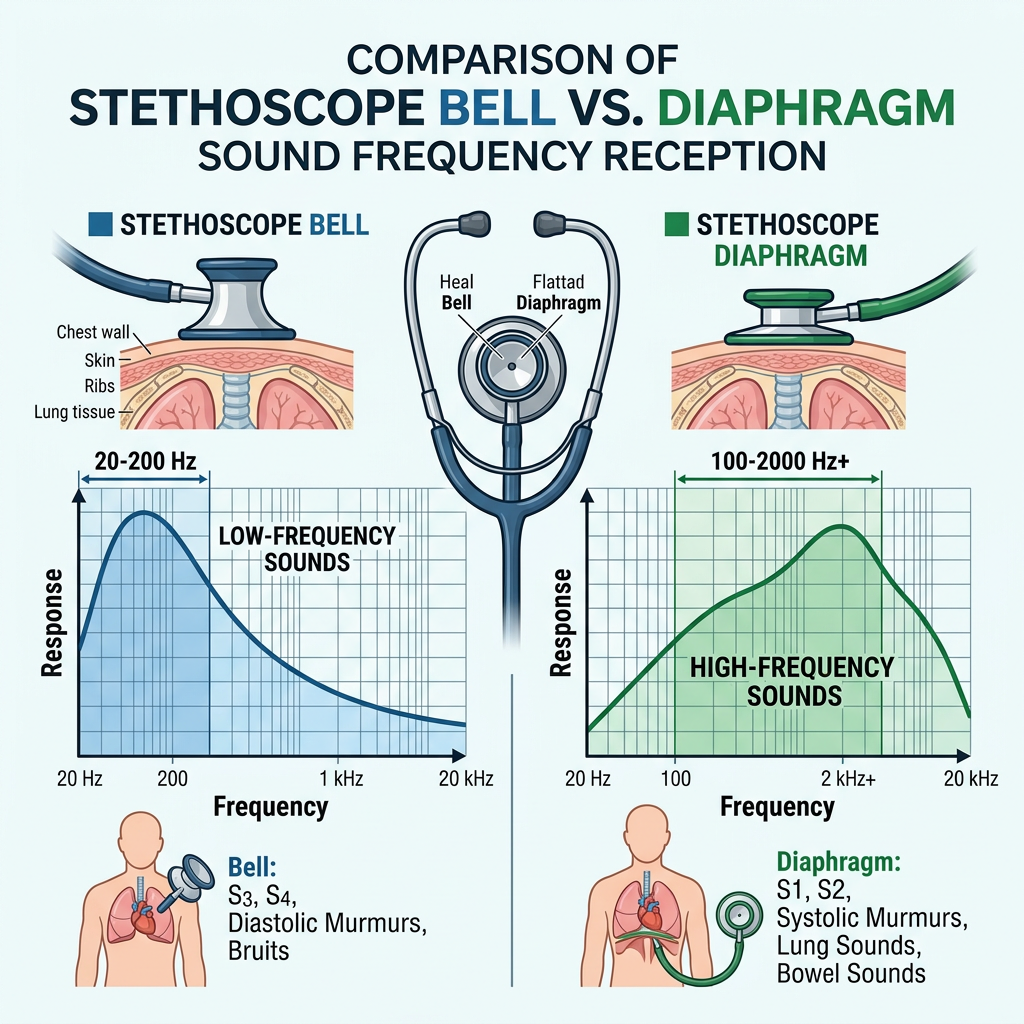
Visual Learning: Bell vs Diaphragm

Bell (light pressure) = Low frequency sounds • Diaphragm (firm pressure) = High frequency sounds
Key Principle
- • Bell with light pressure → transmits low-frequency sounds
- • Diaphragm with firm pressure → filters low frequencies, highlights high-pitched sounds
S3 disappears when you press firmly with the diaphragm. Split S2 becomes clearer with the diaphragm. This is a classic differentiator tested in exams.
Detailed Analysis of Each Option
Opening Snap
High FrequencyHigh-pitched early diastolic sound heard in mitral stenosis (and rarely tricuspid stenosis). Caused by sudden tensing of the stenotic valve leaflets.
Systolic Click
High FrequencyIncludes ejection clicks (aortic/pulmonic stenosis) and midsystolic click of mitral valve prolapse. Sharp, high-pitched sounds.
Third Heart Sound (S3)
Low Frequency ✓Low-pitched early diastolic gallop sound due to rapid ventricular filling. Common in heart failure, volume overload, and young athletes (physiological).
Mid-Diastolic Murmur
Low Frequency ✓Low-pitched rumbling murmur typically of mitral stenosis (or tricuspid stenosis). Often follows opening snap. Best appreciated at apex in left lateral decubitus position.
Quick Comparison Table
| Sound | Pitch | Best Instrument | Typical Location | Common Condition |
|---|---|---|---|---|
| Opening Snap | High | Diaphragm | Apex / Left sternal border | Mitral Stenosis |
| Systolic Click | High | Diaphragm | Apex / Left sternal border | Mitral Valve Prolapse |
| Third Heart Sound (S3) | Low | Bell | Apex (left lateral) | Heart Failure, MR, VSD |
| Mid-Diastolic Murmur (Rumble) | Low | Bell | Apex (left lateral) | Mitral Stenosis |
Clinical & Exam Pearls
- S3 + Mid-diastolic rumble at apex in left lateral position → Think mitral stenosis with heart failure.
- Always compare bell vs diaphragm at the same spot — this is a high-yield differentiator in MCQs.
- Opening snap is absent in heavily calcified mitral valve (advanced MS).
- Midsystolic click in MVP moves earlier with standing/valsalva and later with squatting.
Auscultation Technique Tips
Frequently Asked Questions
Is the opening snap heard with bell or diaphragm?
Why is S3 best heard with the bell?
What is the difference between mid-diastolic rumble and other diastolic murmurs?
Want more high-yield cardiology content?
Access 500+ cardiology MCQs, PYQs, one-liners, and mock tests for UPSC CMS, BPSC, and other medical exams.