
which of the following heart sounds are best heard with the bell of stethoscopе?
I. Opening snap
II. Systolic click
III. Third heart sound
IV. Mid diastolic murmur
Select the correct answer using the code given below:
(a) I and IV
(b) II and III only
(c) III and IV
(d) I, II and III
The correct answer is (c) III and IV
Mastering the Stethoscope –
Bell vs. Diaphragm for Heart Sounds & Murmurs
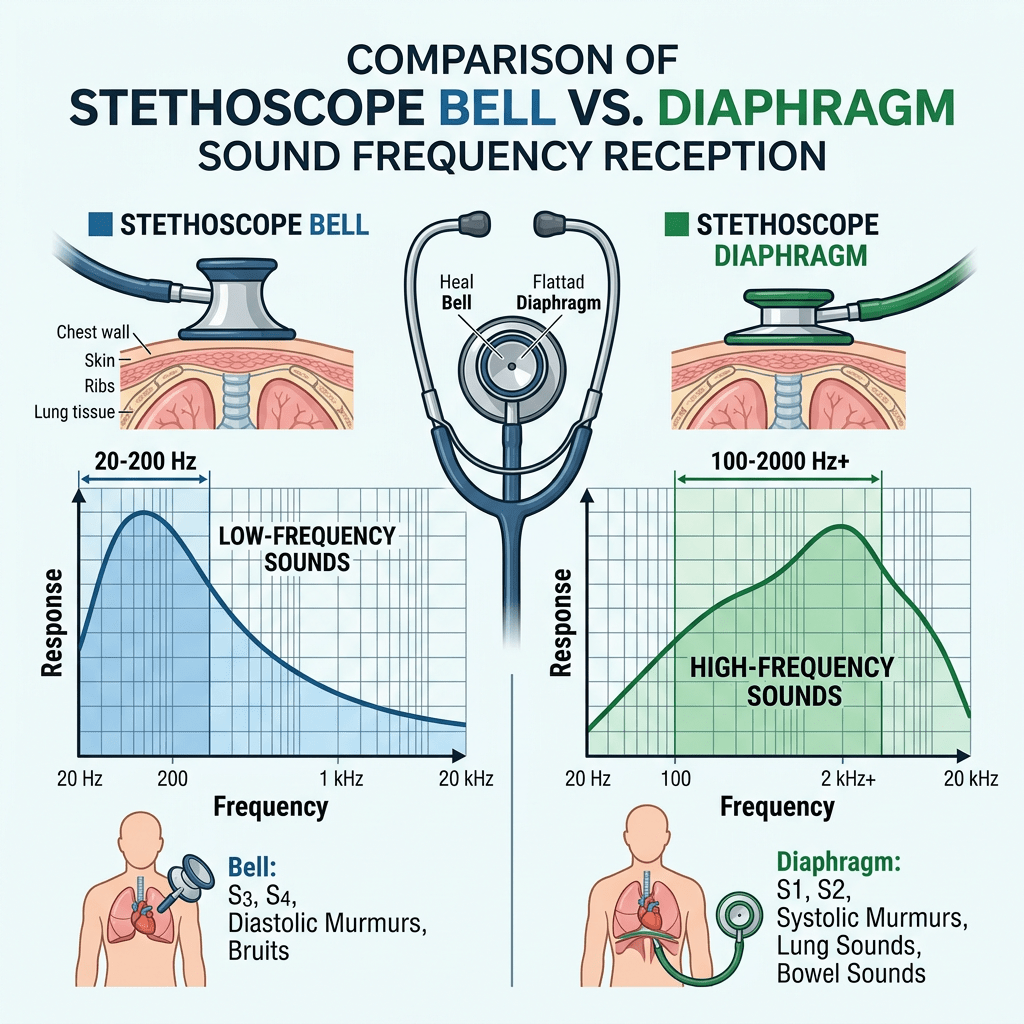
In clinical practice, knowing when to use the bell versus the diaphragm of your stethoscope can make the difference between missing a key finding and making an accurate diagnosis. The bell excels at low-frequency (low-pitched) sounds, while the diaphragm filters out low frequencies to highlight high-frequency (high-pitched) ones. Apply light pressure with the bell—too much pressure turns it into a makeshift diaphragm!
Key Principles
- Bell: Low-pitched sounds (S3, S4, mid-diastolic rumbles).
- Diaphragm: High-pitched sounds (S1/S2 splits, clicks, snaps, most systolic murmurs, early diastolic murmurs like aortic regurgitation).
Analyzing the Specific Sounds
I. Opening Snap This is a high-pitched, sharp early diastolic sound (often from mitral stenosis). It is best heard with the diaphragm, commonly at the lower left sternal border or apex. It can be confused with S3, but its higher pitch and timing help differentiate it.
II. Systolic Click Typically a high-pitched mid-to-late systolic sound (e.g., mitral valve prolapse). Use the diaphragm at the apex. Maneuvers like squatting can alter its timing.
III. Third Heart Sound (S3) A low-pitched early diastolic “gallop” sound, often indicating volume overload or heart failure. Best heard with the bell at the apex in the left lateral decubitus position. It should fade when you switch to the diaphragm.
IV. Mid-Diastolic Murmur Classic low-pitched rumbling murmur (e.g., mitral stenosis). Heard best with the bell at the apex in left lateral position, often after an opening snap. This is the classic “diastolic rumble.”
Why the Answer is III and IV (Option c)
Only S3 and the mid-diastolic murmur are consistently low-frequency and optimized for the bell. Opening snaps and systolic clicks are higher-pitched and clearer with the diaphragm.
Clinical Tips for Better Auscultation
- Always compare both sides of the stethoscope on the same patient.
- Position matters: Left lateral for mitral sounds (bell), sitting/leaning forward for aortic regurgitation (diaphragm).
- Practice in quiet environments—low-pitched sounds are subtle.
- S3 disappears with firm pressure (diaphragm mode), while high-pitched sounds persist.

Leave a comment