
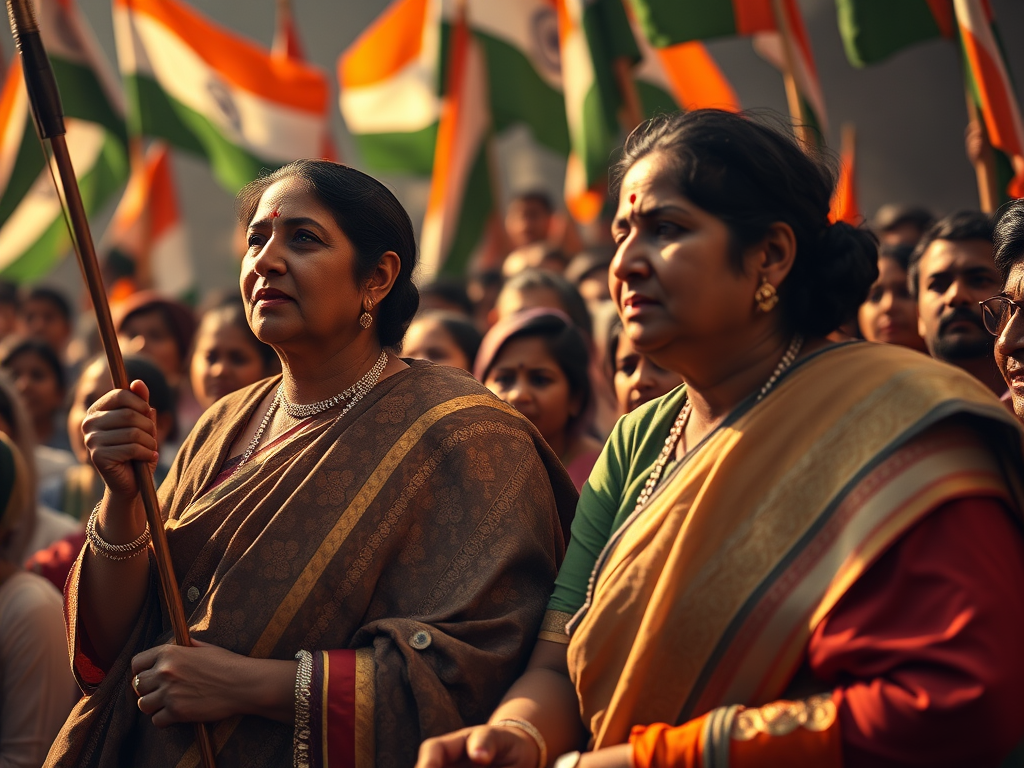
The participation of women in the Indian independence movement represented a significant shift from traditional societal roles, contributing to both political activism and social reform. Women leaders emerged as pivotal figures, advocating for self-rule while challenging patriarchal norms and colonial oppression. Influenced by education, nationalist ideologies, and global feminist movements, they engaged in protests, organizational leadership, and intellectual discourse. Prominent individuals such as Annie Besant and Sarojini Naidu exemplified this involvement, inspiring mass mobilization and integrating gender equality into the broader struggle for freedom. Their efforts not only advanced the cause of independence but also laid the groundwork for women’s empowerment in post-colonial India.
Key Women Leaders and Their Contributions
Women leaders brought diverse perspectives, often combining nationalism with social reforms like education, widow remarriage, and anti-caste initiatives. Below are profiles of select figures, highlighting their roles.
Annie Besant
Annie Besant (1847–1933), a British-born theosophist and social reformer, became a staunch advocate for Indian self-rule after relocating to India in 1893. Initially involved in the Theosophical Society, she transitioned to politics, emphasizing cultural revival and education.
- Political Engagement: Besant founded the Home Rule League in 1916, demanding dominion status for India and mobilizing public opinion through newspapers like New India and Commonweal. She presided over the Indian National Congress session in Calcutta in 1917, the first woman to do so, advocating for constitutional reforms.
- Social Reforms: She established the Central Hindu College (later Banaras Hindu University) and promoted women’s education, linking it to national progress. Besant supported labor rights and opposed child marriage.
- Influence: Her internment by British authorities in 1917 sparked widespread protests, elevating her as a symbol of resistance. Though her influence waned post-Gandhian era due to ideological differences, she bridged moderate and extremist factions.
Sarojini Naidu
Sarojini Naidu (1879–1949), known as the “Nightingale of India,” was a poet, orator, and political activist from Hyderabad. Educated in England, she combined literary prowess with nationalist fervor, becoming a prominent voice for women’s rights.
- Political Career: Naidu joined the Indian National Congress in 1905, participating in the Swadeshi Movement by promoting indigenous goods. She led delegations to London advocating for women’s suffrage and presided over the INC session in Kanpur in 1925, the second woman to hold this position.
- Role in Movements: During the Non-Cooperation Movement, she encouraged women to boycott foreign goods and courts. In the Civil Disobedience Movement, Naidu led the salt satyagraha in Dharasana in 1930 after Gandhi’s arrest, facing police brutality. She was imprisoned multiple times, including during the Quit India Movement.
- Advocacy for Women: As the first woman Governor of Uttar Pradesh post-independence, Naidu championed gender equality, co-founding the Women’s Indian Association in 1917 to address issues like child marriage and widowhood.
Other Notable Women Leaders
Several other women played crucial roles, expanding the movement’s inclusivity:
- Kamaladevi Chattopadhyay (1903–1988): A socialist and freedom fighter, she organized women’s participation in the Civil Disobedience Movement, leading processions and courting arrest. Post-independence, she revived handicrafts and promoted cultural self-reliance.
- Aruna Asaf Ali (1909–1996): Known as the “Grand Old Lady of Independence,” she hoisted the Indian flag during the Quit India Movement in 1942, evading arrest for years while leading underground activities.
- Vijayalakshmi Pandit (1900–1990): Sister of Jawaharlal Nehru, she served as a minister in the United Provinces and later as India’s first woman ambassador to the United Nations, advocating for decolonization globally.
- Begum Rokeya Sakhawat Hossain (1880–1932): A pioneer in Muslim women’s education, she founded schools and wrote Sultana’s Dream, critiquing patriarchy and colonialism.
- Muthulakshmi Reddy (1886–1968): The first woman legislator in British India, she fought against the Devadasi system and promoted health reforms.
These leaders demonstrated resilience, often balancing domestic responsibilities with public activism.
Participation of Women in Key Movements
Women’s involvement evolved from supportive roles to frontline leadership, significantly amplifying the movement’s reach.
- Swadeshi Movement (1905–1911): Women boycotted foreign cloth, organized bonfires, and promoted khadi, with figures like Sarojini Naidu and Swarnakumari Devi leading awareness campaigns.
- Non-Cooperation Movement (1920–1922): Thousands of women picketed liquor shops, schools, and courts, surrendering titles and jewelry. This marked mass entry into politics, with women forming groups like the Rashtriya Stree Sabha.
- Civil Disobedience Movement (1930–1934): Women defied salt laws, faced lathi charges, and managed households during male arrests. Over 80,000 women were imprisoned, symbolizing gender solidarity.
- Quit India Movement (1942): With male leaders jailed, women like Aruna Asaf Ali and Usha Mehta operated underground radios and led protests, enduring severe repression.
- Other Contributions: Women participated in revolutionary activities (e.g., Pritilata Waddedar in armed raids) and international advocacy, petitioning for suffrage and representation.
Their participation challenged stereotypes, fostering a narrative of equality within nationalism.
Challenges Faced by Women Activists
Women encountered multifaceted obstacles, navigating both colonial and societal barriers:
- Patriarchal Constraints: Traditional norms restricted mobility and public roles, with many facing family opposition or balancing activism with household duties.
- Colonial Repression: British authorities targeted women through arrests, violence, and propaganda, portraying them as disruptors of social order.
- Communal and Class Divisions: Muslim and lower-caste women faced additional marginalization, though leaders like Begum Rokeya worked to bridge gaps.
- Limited Representation: Early constitutional reforms offered minimal women’s suffrage, achieved partially in 1919 and expanded in 1935, but full equality remained elusive until independence.
Despite these hurdles, women’s perseverance transformed the movement into an inclusive force.
Timeline of Key Contributions
The following table outlines major milestones in women’s participation, illustrating their progressive impact.
| Year | Event | Description | Key Figures Involved |
|---|---|---|---|
| 1905 | Swadeshi Movement | Women lead boycotts and promote indigenous industries. | Sarojini Naidu, Swarnakumari Devi |
| 1916 | Home Rule League Founded | Demand for self-government mobilizes women. | Annie Besant |
| 1917 | Women’s Indian Association Established | Focus on education and rights. | Sarojini Naidu, Annie Besant |
| 1917 | INC Presidency | First woman president of Congress. | Annie Besant |
| 1925 | INC Presidency | Advocacy for women’s suffrage. | Sarojini Naidu |
| 1930 | Salt Satyagraha | Women break salt laws and lead raids. | Sarojini Naidu, Kamaladevi Chattopadhyay |
| 1931 | Karachi Resolution | INC commits to women’s equality. | Multiple leaders |
| 1942 | Quit India Movement | Underground leadership and flag hoisting. | Aruna Asaf Ali, Usha Mehta |
| 1946 | Constituent Assembly | Women contribute to drafting the Constitution. | Vijayalakshmi Pandit, others |
| 1947 | Independence | Women assume roles in governance. | Sarojini Naidu (Governor) |
Legacy and Impact
The role of women in the independence movement left an enduring legacy, embedding gender equality in India’s constitutional framework through provisions like universal suffrage and anti-discrimination clauses. Leaders like Besant and Naidu inspired subsequent generations, influencing policies on education, health, and political representation. Their participation democratized nationalism, proving women’s agency in nation-building and setting precedents for global feminist movements. Post-independence, this foundation facilitated advancements in women’s rights, though challenges persist, underscoring the ongoing relevance of their contributions to equitable societal progress.
Leave a comment