
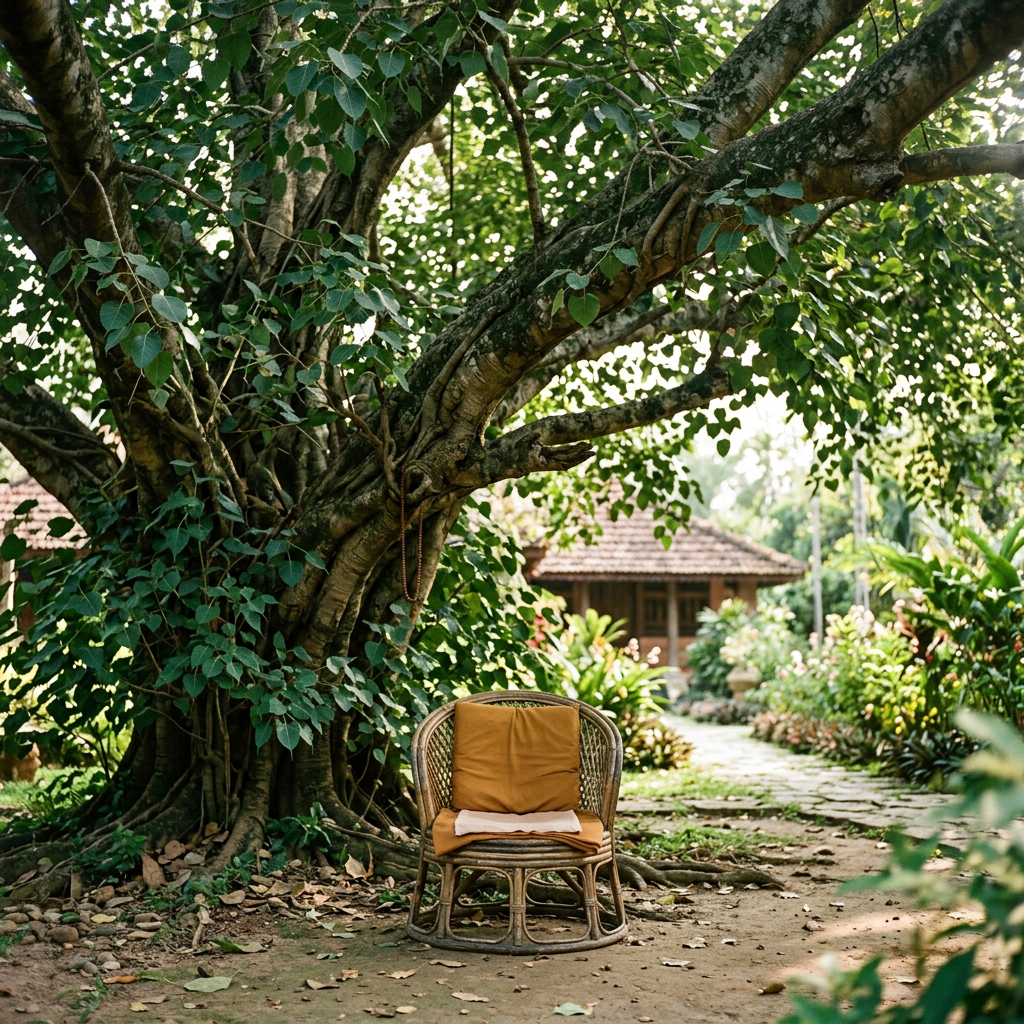
What does an empty seat represent in early Buddhist iconography?
Correct Answer: (a) The meditation of the Buddha
Detailed Explanation (NCERT-Based | 100% Accurate)
This is a high-yield conceptual question from Early Buddhist Art (Aniconic Phase).
Source: NCERT Class 12 – Themes in Indian History Part-I, Chapter 4: Thinkers, Beliefs and Buildings
“Many early sculptors did not show the Buddha in human form — instead, they showed his presence through symbols.
The empty seat was meant to indicate the meditation of the Buddha, and the stupa was meant to represent the mahaparinibbana.”
This single line from NCERT is the final authority for this question in UPSC.
Symbol → Event Mapping (Memorise This Table)
| Symbol | Represents | Event in Buddha’s Life | Site Example |
|---|---|---|---|
| Empty Seat / Throne | Meditation of the Buddha | Enlightenment under Bodhi Tree | Sanchi, Bharhut |
| Stupa | Mahaparinibbana | Final Passing / Great Decease | Sanchi |
| Wheel (Dharmachakra) | First Sermon | Dharmachakra Pravartana at Sarnath | Sanchi |
| Riderless Horse | Mahabhinishkramana | Great Renunciation | Sanchi |
| Bodhi Tree | Enlightenment | Attainment of Nirvana | Sanchi, Bharhut |
| Footprints (Buddhapada) | Buddha’s Presence / Path | Journey of Dharma | Bharhut |
Why Other Options Are Wrong
- (b) The Buddha’s First Sermon → Symbol = Wheel (not empty seat)
- (c) The Buddha’s Mahaparinibbana → Symbol = Stupa (relic mound)
- (d) The Buddha’s Mahabhinishkramana → Symbol = Riderless Horse leaving the palace
Common Trap: Students confuse “absence” (empty seat) with death (Mahaparinibbana). But NCERT clearly separates them.
Historical Context: Aniconic Phase of Buddhist Art
Time Period: c. 3rd century BCE – 1st century CE
Why no human images of Buddha?
- Early Buddhist art followed aniconic tradition (symbolic representation).
- Avoided anthropomorphic depiction of the Buddha (especially under Hinayana influence).
- Artists used symbols + narrative reliefs to tell stories from Jatakas and Buddha’s life.
Major Sites of Aniconic Art:
- Sanchi Stupa (Madhya Pradesh) – Most important for UPSC
- Bharhut Stupa (Madhya Pradesh)
- Amaravati (Andhra Pradesh)
At these sites, you will see beautiful stone railings and toranas with:
- Empty throne under Bodhi tree being worshipped by devotees, animals, and celestial beings
- Wheel being venerated
- Riderless horse scenes
- Stupa worship
Visual Examples from Early Buddhist Sites
Image: Early Buddhist relief showing worship of symbols (empty throne/stupa context) — typical aniconic representation.
Image: Sanchi/Bharhut style torana relief depicting narrative scenes with symbolic representation of the Buddha (empty space or throne under tree often appears in such panels).
UPSC Strategy & Quick Revision
For Prelims 2026:
- Always link Symbol → Specific Event
- NCERT is supreme for this topic
- Remember: Empty Seat ≠ Death. Death = Stupa
Mnemonic (Easy to Remember):
“Empty Seat for Sitting (Meditation)
Stupa for Stopping (Final End)
Wheel for Teaching
Horse for Running Away (Renunciation)”
Why This Question Matters
- Tests conceptual clarity between symbols and events
- Regularly asked in UPSC Prelims (directly or in match-the-following)
- Part of Art & Culture + Ancient History synergy
- Helps in Mains answer writing on cultural developments
CrackTarget Pro Tip:
Whenever you see options related to Buddhist symbols, close your eyes and recall the NCERT line:
“Empty seat = Meditation of the Buddha. Stupa = Mahaparinibbana.”
This single line has helped thousands of aspirants score full marks in such questions.
Prepared with 100% accuracy for UPSC CSE 2026
Based on NCERT + Standard References (no coaching material contradictions)
#UPSC2026 #ArtAndCulture #BuddhistIconography #SanchiStupa #CrackTargeT

Leave a comment